How to use it
What this tool is useful for
Use the Shao Yong time or number formula to create a primary hexagram, changed hexagram, and moving line while keeping classical text separate from real evidence.
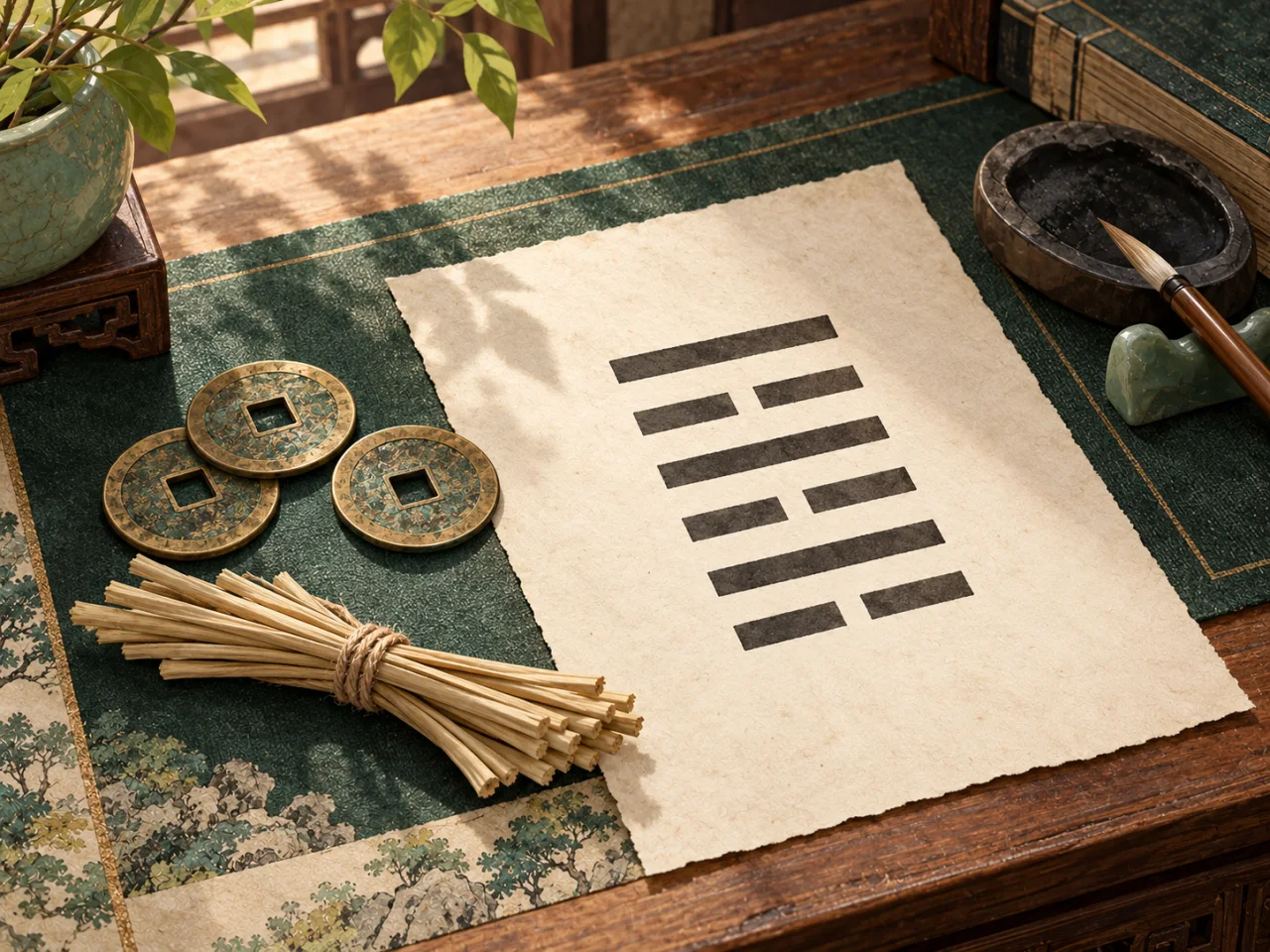
Divination
Apply the disclosed Shao Yong arithmetic to the current time or three numbers, preserve the primary hexagram, changed hexagram, moving line, and classical source text, then record evidence and counterevidence without forecasting an outcome.
Output preview
The output below shows what this tool can document. Input details and examples are explained in the next section.
3 input details explained below
Casting record
Preserves method, time or numbers, trigrams, and changing line.
Hexagram structure
Shows primary and changed hexagrams with key terms.
Source boundary
Separates classical text, site cultural gloss, and question text that never enters the formula.
Before starting, confirm that dates, times, and other details are accurate, and note which items are required or optional. Do not replace missing required information with a guess.
One concrete question
type in required
Defines the decision or situation that the result should address.
Example: What should I verify before the next step?
What to enter: Remove accidental extra spaces and enter only the information requested.
If you leave it out: The tool cannot produce a reliable result without this required value.
Number 1
type in optional
Provides information needed for the result.
Example: 1-99
What to enter: Remove accidental extra spaces and enter only the information requested.
If you leave it out: The tool will continue with reduced detail and will not infer the missing value.
Number 2
type in optional
Provides information needed for the result.
Example: 1-99
What to enter: Remove accidental extra spaces and enter only the information requested.
If you leave it out: The tool will continue with reduced detail and will not infer the missing value.
Number 3
type in optional
Provides information needed for the result.
Example: 1-99
What to enter: Remove accidental extra spaces and enter only the information requested.
If you leave it out: The tool will continue with reduced detail and will not infer the missing value.
This tool uses the details you enter on the page to produce a result. It is free to use, and your information is not sent to a third-party AI service.
Complete example
The written review question is kept beside the record but never enters the arithmetic. Only the three seeds below determine the trigrams and moving line.
Calculate 8 mod 8 and 16 mod 8 for the two Kun trigrams, then use (8 + 16 + 24) mod 6 for moving line 6. Flip only the sixth line and compare both binary figures before reading any text.
The hexagram pair cannot understand the question or choose an action. Contracts, measurements, safety, health, legal, and financial issues require their own evidence and qualified advice.
How to use it
Use the Shao Yong time or number formula to create a primary hexagram, changed hexagram, and moving line while keeping classical text separate from real evidence.
Inspect how time or three numbers become upper trigram, lower trigram, and moving line through modulo arithmetic.
Record at least two cultural interpretations with supporting evidence and counterevidence.
Do not substitute a hexagram for legal, medical, financial, safety, or factual verification.
Uses year-branch number, lunar month, lunar day, and hour-branch number to derive trigrams and moving line.
Uses three values from 1 through 99 as transparent trigram and moving-line seeds.
Flips one binary line to form the changed hexagram without treating that operation as a future direction.
Displays Zhouyi Judgement and Image as historical material and labels the site paraphrase as a cultural gloss.
Preserves method, time or numbers, trigrams, and changing line.
Shows primary and changed hexagrams with key terms.
Separates classical text, site cultural gloss, and question text that never enters the formula.
Captures competing readings, support, counterevidence, a reversible step, and a stop condition.
Keep the question, casting mode, time or numbers, and hexagram pair to prevent hindsight changes.
Record at least two interpretations rather than selecting the most flattering one as fact.
Record facts first after 7-14 days, then compare support, counterevidence, and factors the hexagram never represented.
Question text does not change the casting result, so the hexagram cannot understand context or prove a causal connection.
The question stays on the current page and must not contain names, contact details, medical records, account data, or other identifiers.
Use professional advice and real evidence for consequential decisions.
The page applies disclosed arithmetic to the current time or three numbers, producing an upper trigram, lower trigram, moving line, primary hexagram, and mechanically changed hexagram. It preserves the inputs, binary figures, Zhouyi Judgement, and Image text.
The written question remains beside the result for later review but never enters the formula. The generated hexagram therefore cannot understand the question or establish a causal connection to it.
The current local clock time is converted to a lunar date. The common Shao Yong formula on this page uses the year-branch number, lunar month, lunar day, and hour-branch number.
Number mode accepts three integers from 1 through 99. The first forms the upper trigram, the second forms the lower trigram, and the sum of all three forms the moving line. Every number and step remains visible so you can check the result again.
The random button only creates three random numbers. It adds no accuracy. Identical numbers produce an identical hexagram pair, but a repeated result does not validate the interpretation.
The Judgement and Image are displayed as historical Zhouyi source text. The site summary is labelled as a modern cultural paraphrase. Both may contain language about fortune, advance, retreat, or action, but neither is presented as a factual statement about the current question.
Keep at least two competing readings, supporting evidence, counterevidence, a reversible step, and a stop condition. Do not let the first appealing interpretation become the only story.
The question stays on the current page and is not saved after you refresh or close it. Do not enter names, contact details, medical records, account data, contract text, or other identifying information.
Contracts, health, law, finance, employment, relationship safety, and emergencies require real evidence and qualified advice. A hexagram cannot establish fortune, success probability, another person’s intent, or a future direction.
Write one concrete question before casting, then save the selected method, local date and time or all three numbers, primary hexagram, changing line, changed hexagram, and the action you chose. Do not repeatedly cast until a preferred answer appears. Review the record after the event or within fourteen days and compare the symbolic reading with what actually happened. Contracts, safety, health, money, and legal facts still require direct evidence and qualified advice.
Time mode uses the current moment, year-branch number, lunar month, lunar day, and hour-branch number. Number mode uses three chosen integers. The same numbers produce the same result, but that only shows the formula was applied consistently.
The older page did not show every step. This version displays the calendar conversion, all three numbers, both trigrams, the moving line, and both hexagrams so you can check the result.
No. The question does not change the formula. It remains only on the current page, so the result cannot understand the question’s meaning or context.
No. Repeated casting encourages selection of the answer you already wanted. Save the first record, verify the real facts, choose a low-risk next step, and review later. Reformulate only when the situation or the question has materially changed.
Keep reading
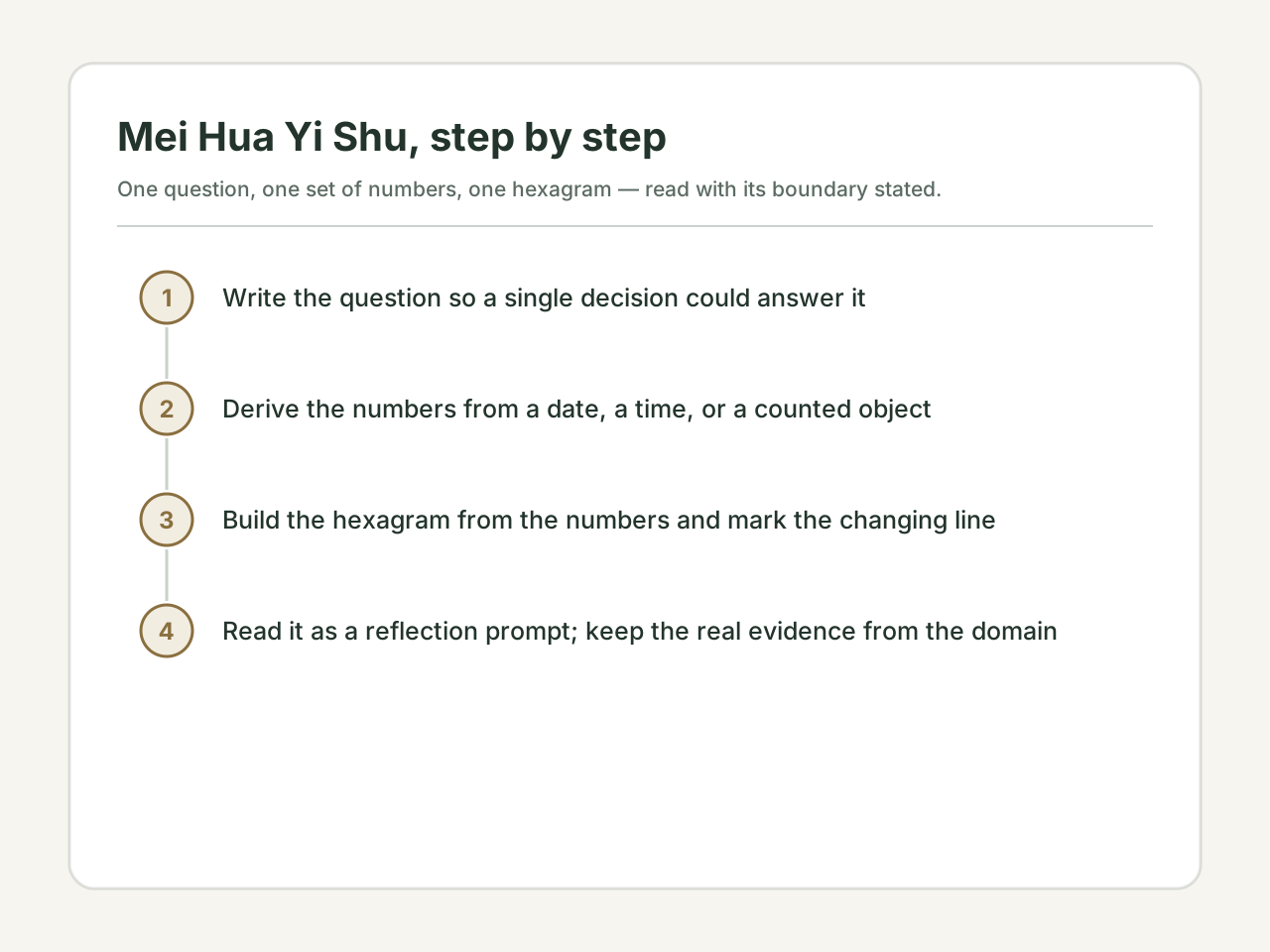
I Ching
A beginner-friendly guide to Mei Hua Yi Shu divination, including triggers, trigrams, hexagrams, moving lines, and interpretation.
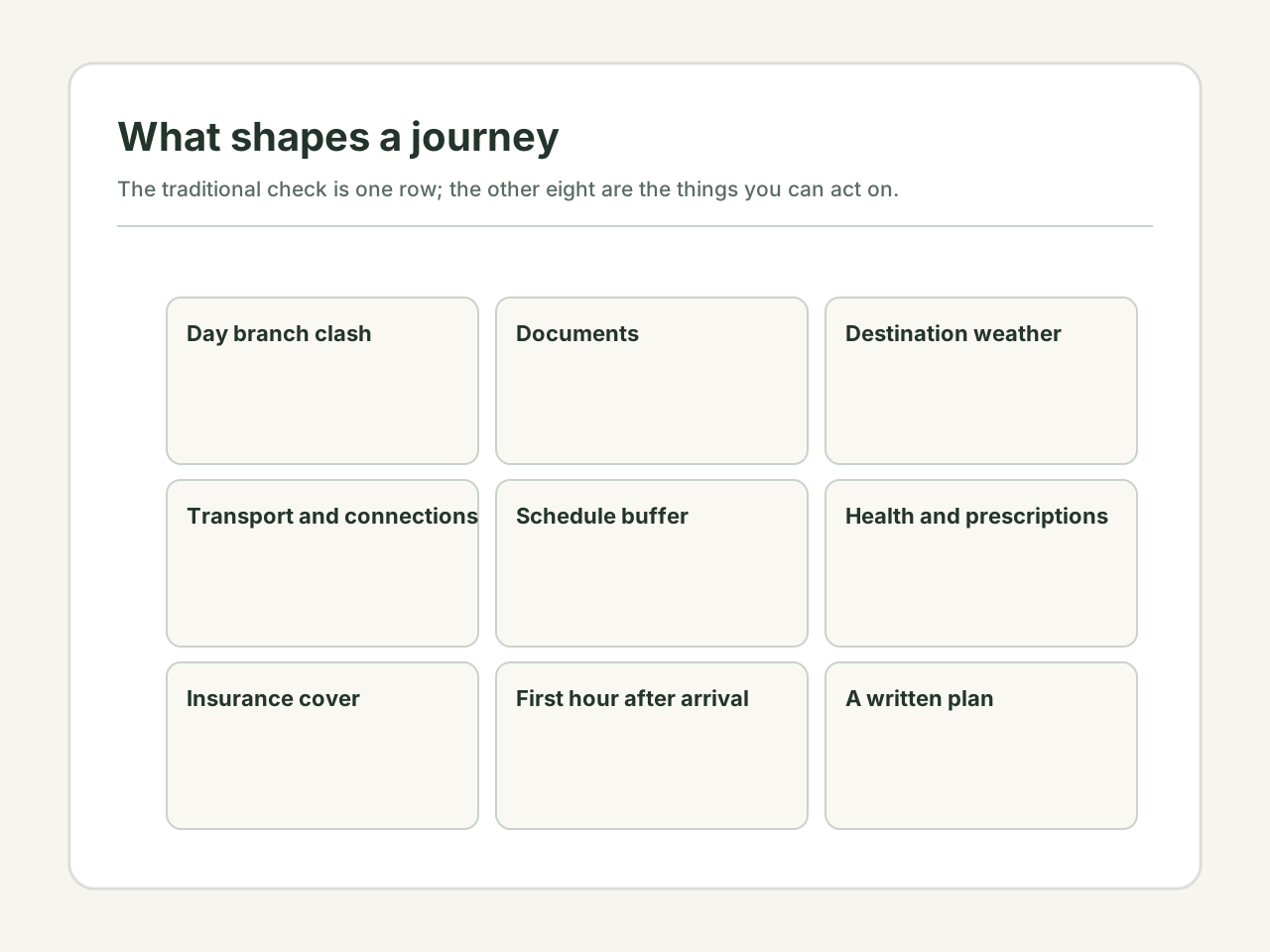
Date Selection
A practical guide to selecting safe and auspicious travel dates — traditional principles, direction considerations, and personal compatibility for journeys.
Try next