Articles
Chinese metaphysics guides
Start with clear, careful guides that explain the tradition, the practical use case, and the limits of each method.
Showing 15 of 147 articles
Featured articles
Recently published
BaZi
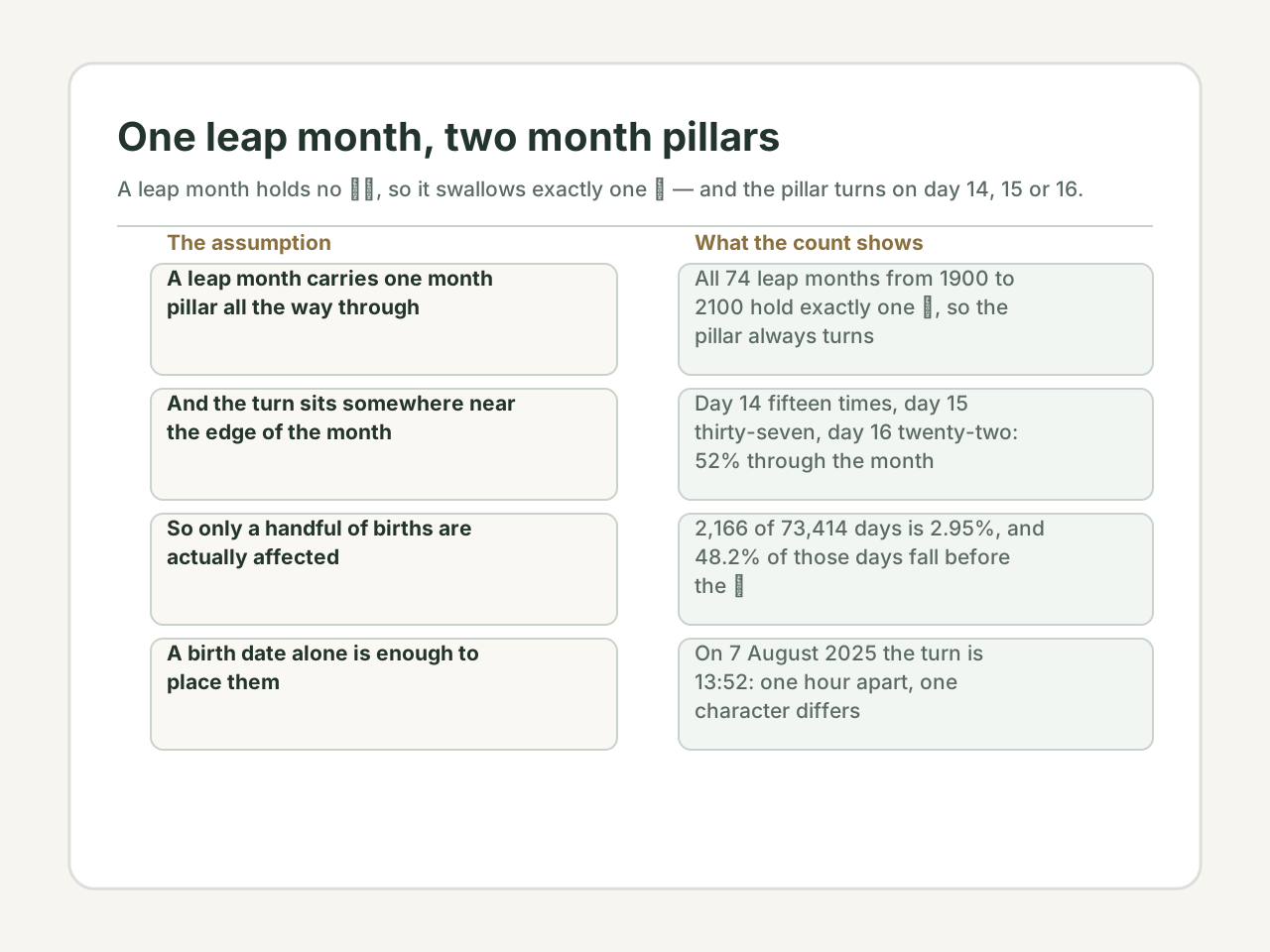
Born in a Leap Month: The Month Pillar Splits the Month
A leap month holds no 中氣, so it always swallows exactly one 節 — and the month pillar turns on day 14, 15 or 16. All 74 leap months from 1900 to 2100, counted.
Feng Shui
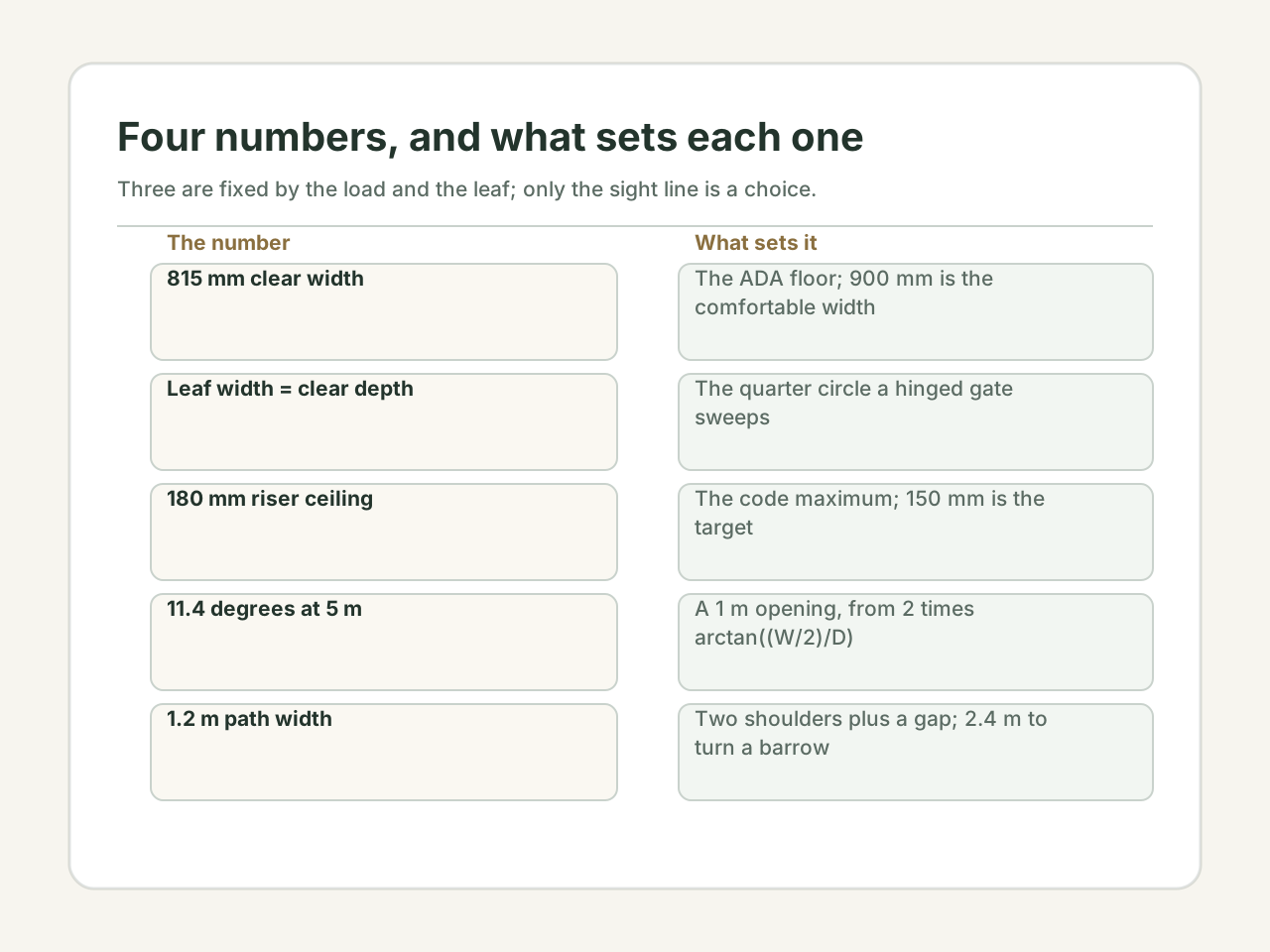
Garden Gates and Paths: Four Measurements Before Style
A gate is four measurements: the clear opening the widest load needs, the quarter circle the leaf sweeps, the 180 mm riser ceiling, and the angle the opening frames. Only the last is a design choice.
Feng Shui
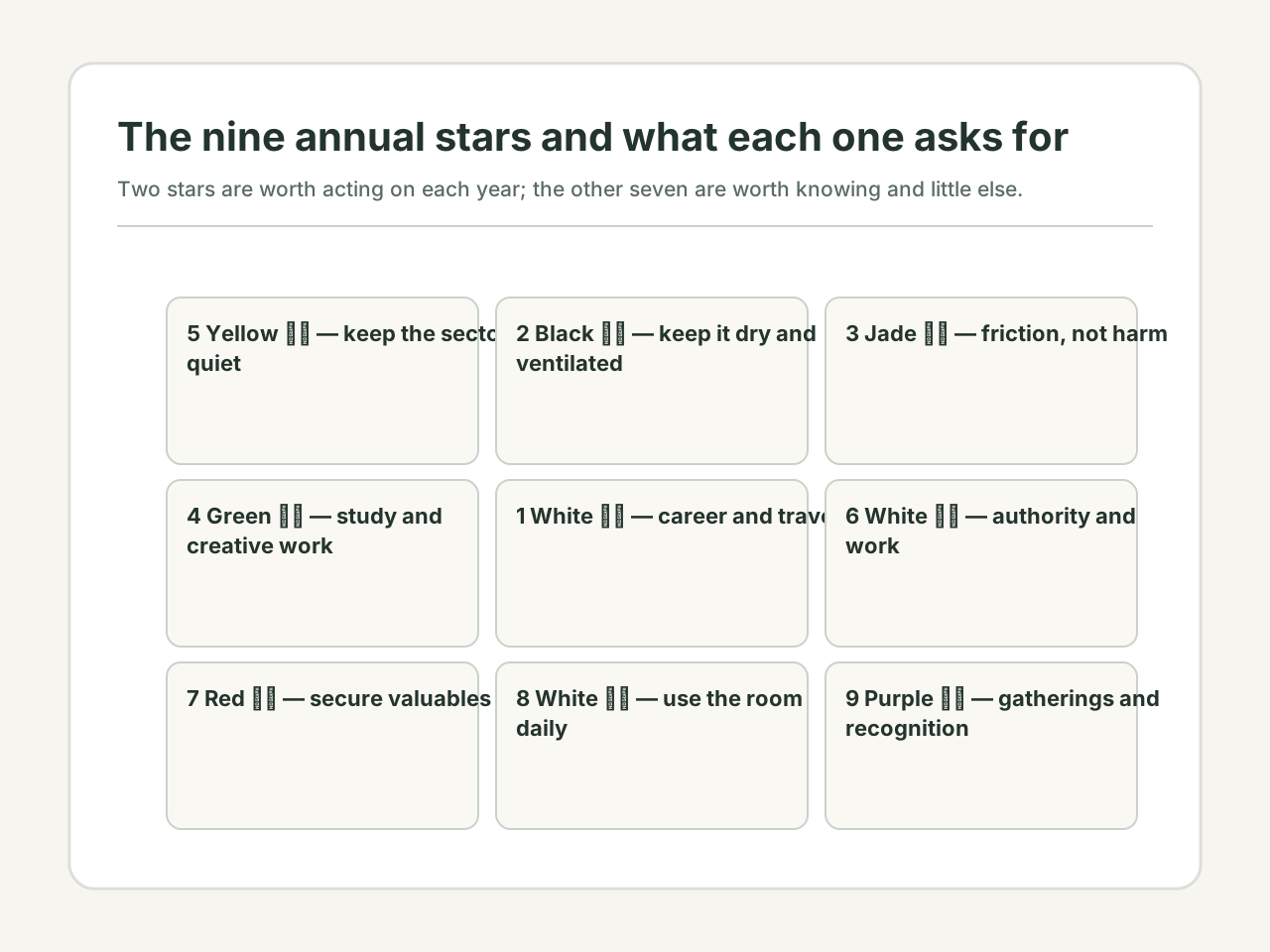
Annual Flying Stars in Xuan Kong Feng Shui
Learn how the annual flying-star layer is arranged across the nine palaces and read alongside a building chart. These traditional labels are interpretive references, not evidence of physical effects or guaranteed outcomes.
Article library
All articles
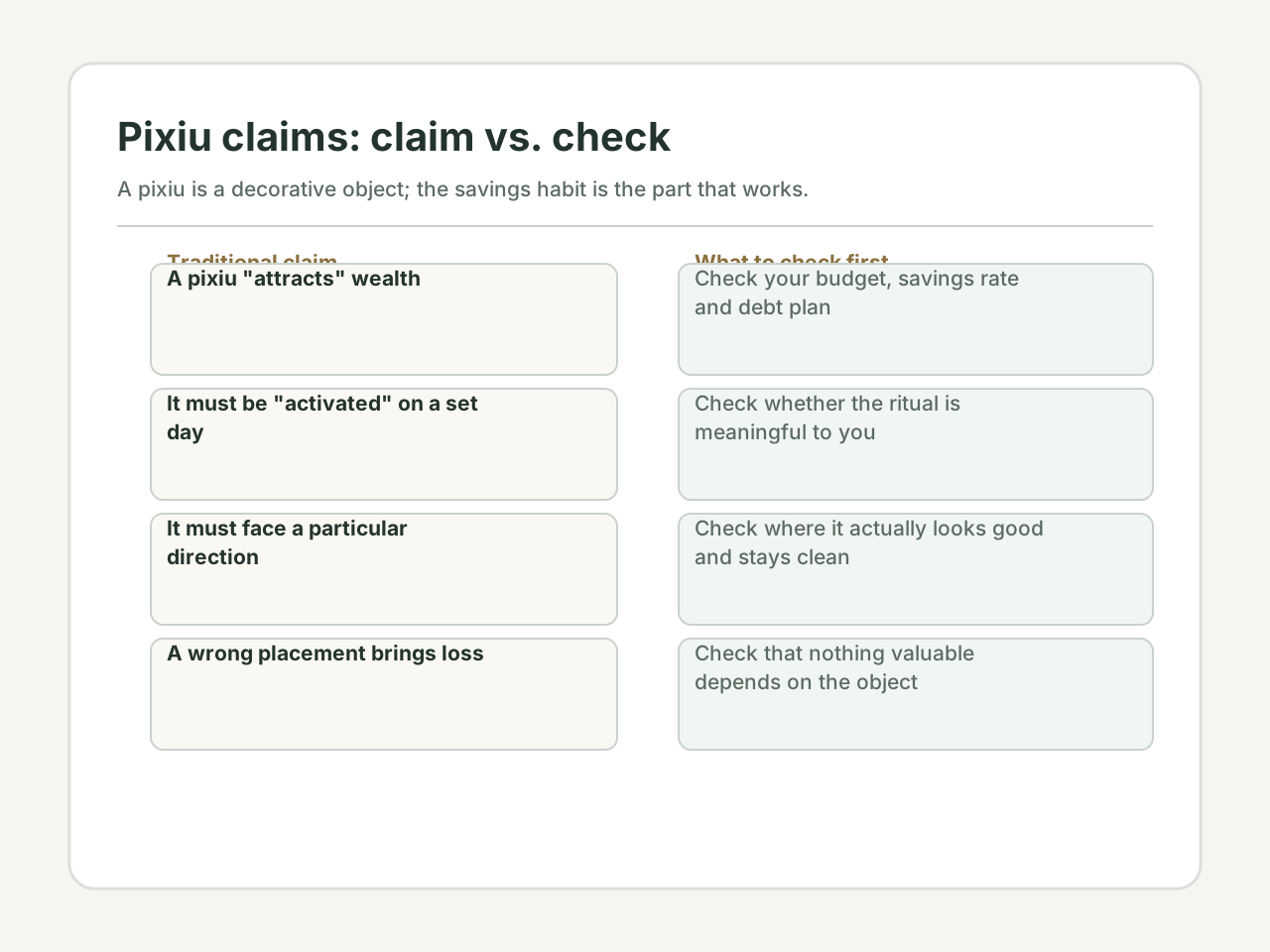
Pixiu Activation: What the Rite Covers, and What the Piece Weighs
開光 names a consecration rite for images, performed by clergy in a temple, not a label on a box. What the word covers, and a weight test that tells brass from resin.
Read article
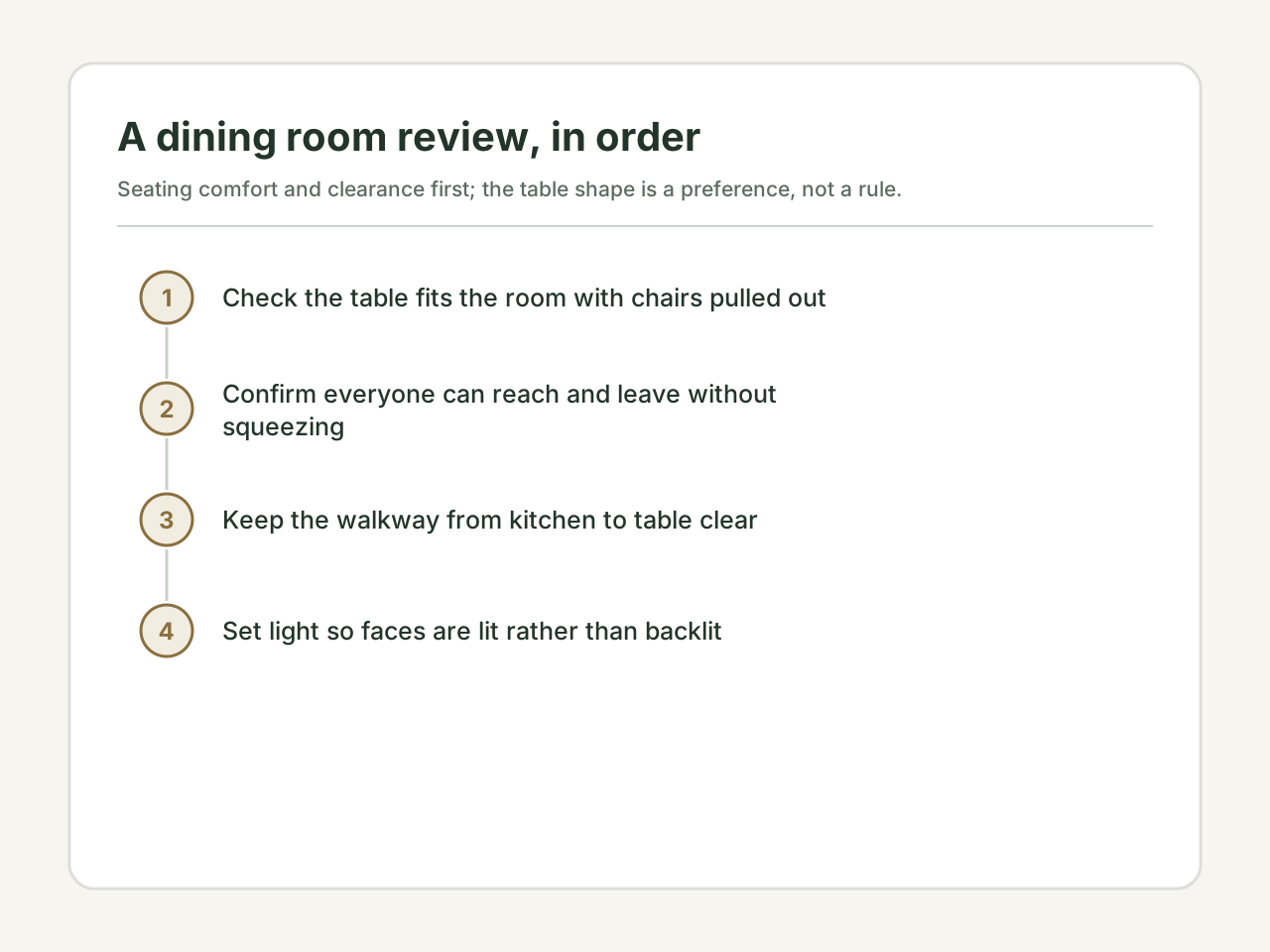
Dining Room Feng Shui Guide
Learn dining room feng shui basics for table placement, lighting, mirrors, colors, and a warmer family eating space.
Read article
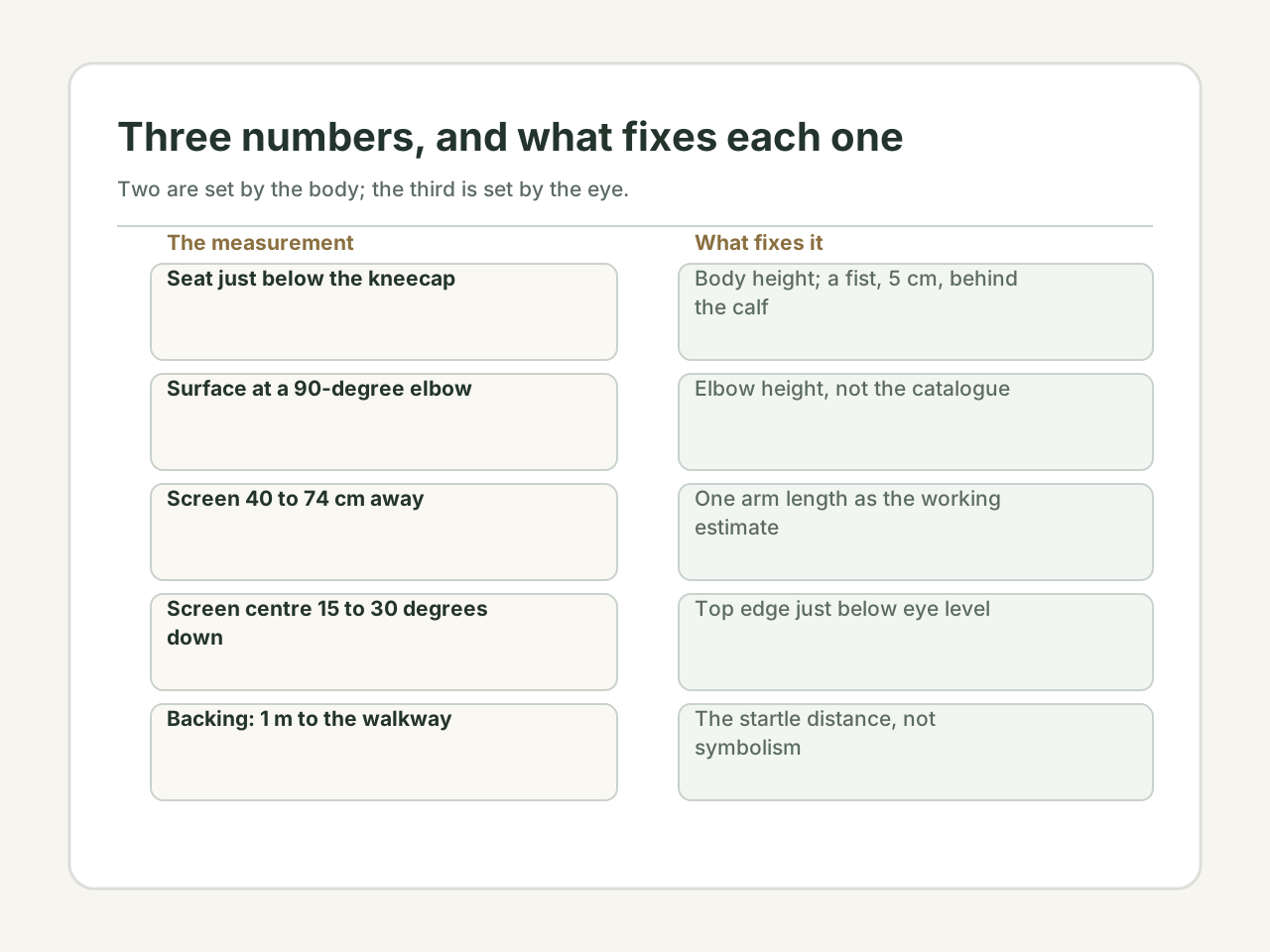
Office Desk Feng Shui: Three Measurements Before Any Direction
A desk is three adjustments before it is a direction: seat height, work-surface height, and screen distance. The figures for each, and how to check them in five minutes.
Read article
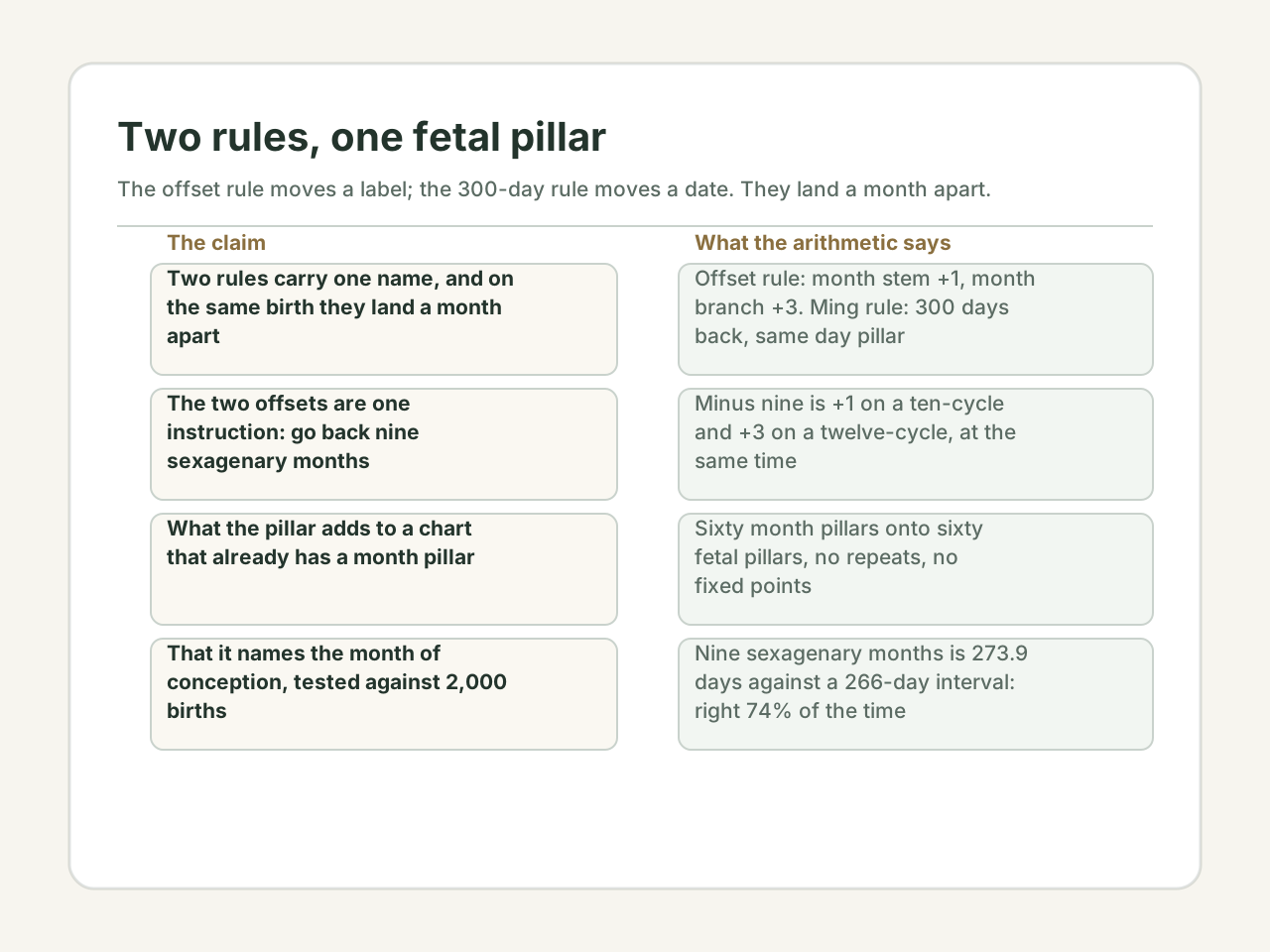
Tai Yuan: Two Rules Share One Name
One rule adds a stem and three branches to the month pillar; a Ming compilation counts back three hundred days instead. Both are called the fetal-origin pillar, and they land on different months.
Read article
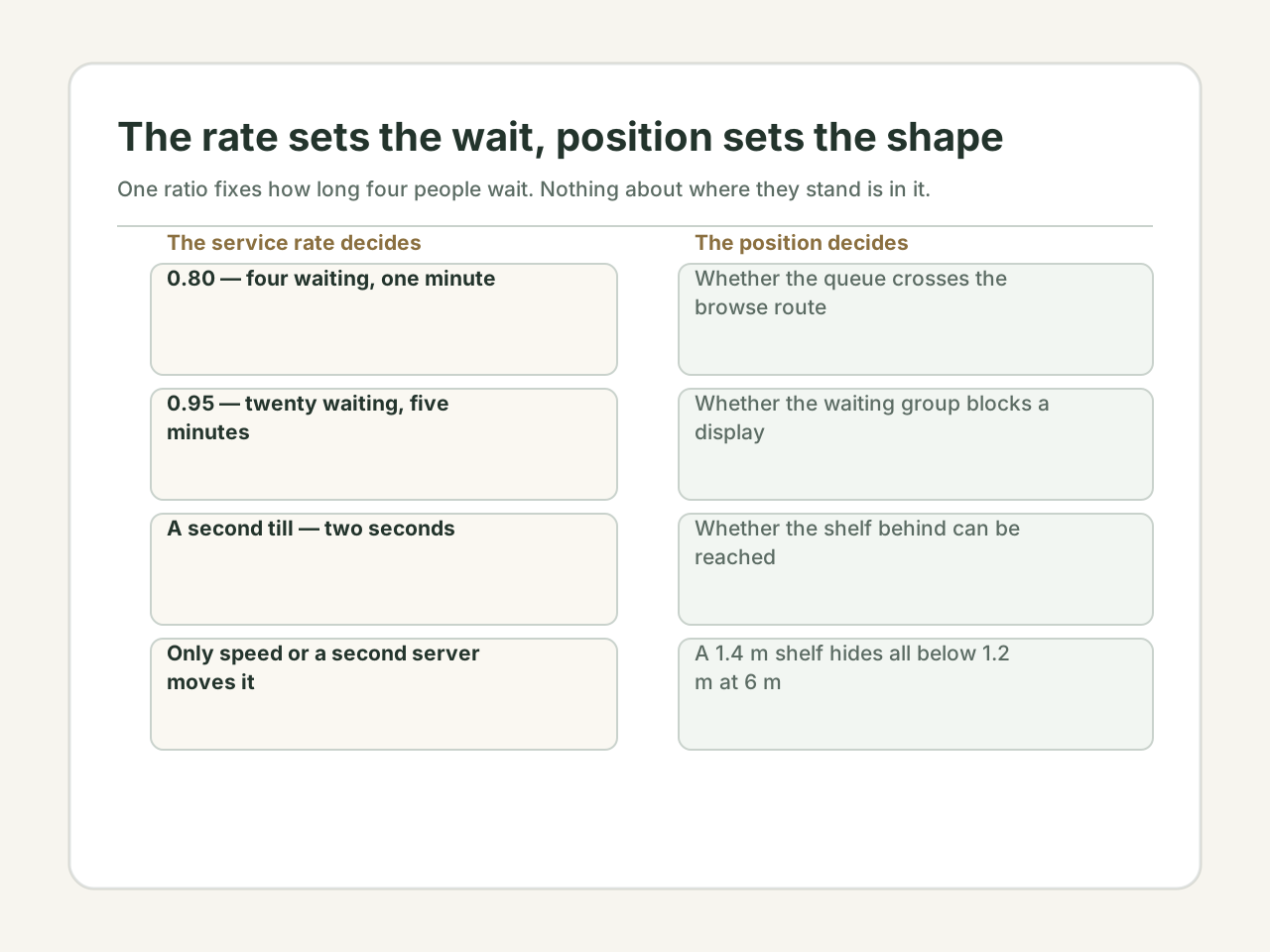
Cashier Position: Three Queues, One Sightline Height, One Counter Height
A till is a queueing system before it is a corner. The service rate sets the wait, a 1.4 m shelf hides everyone below 1.2 m, and only 915 mm of counter is fixed by code.
Read article
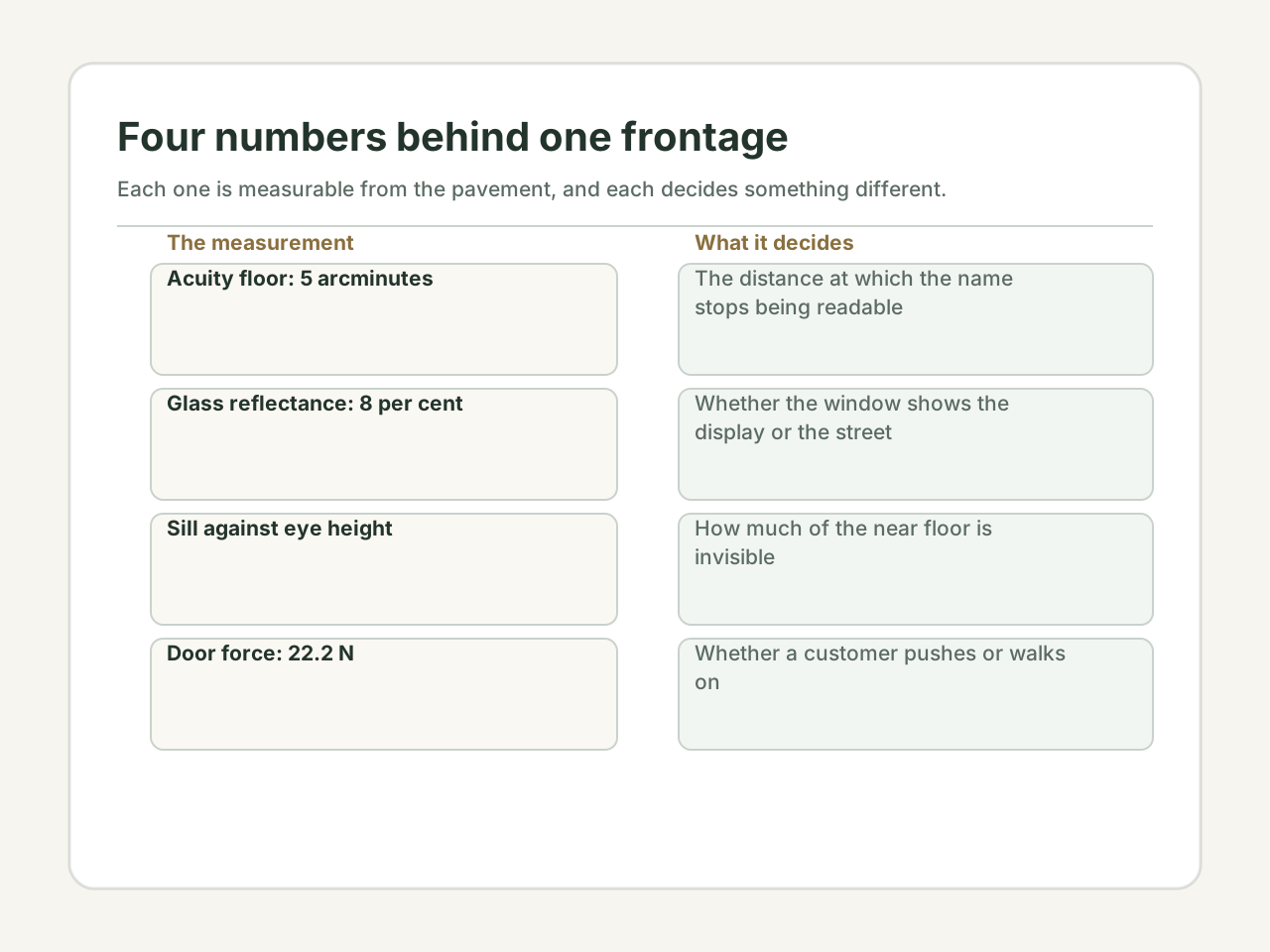
Storefront Entrance Feng Shui: Sign Distance, Glass, and Door Force
A shop entrance is three measurements before it is a direction: the cap height the sign needs at its distance, the brightness at which glass becomes a mirror, and the door force.
Read article
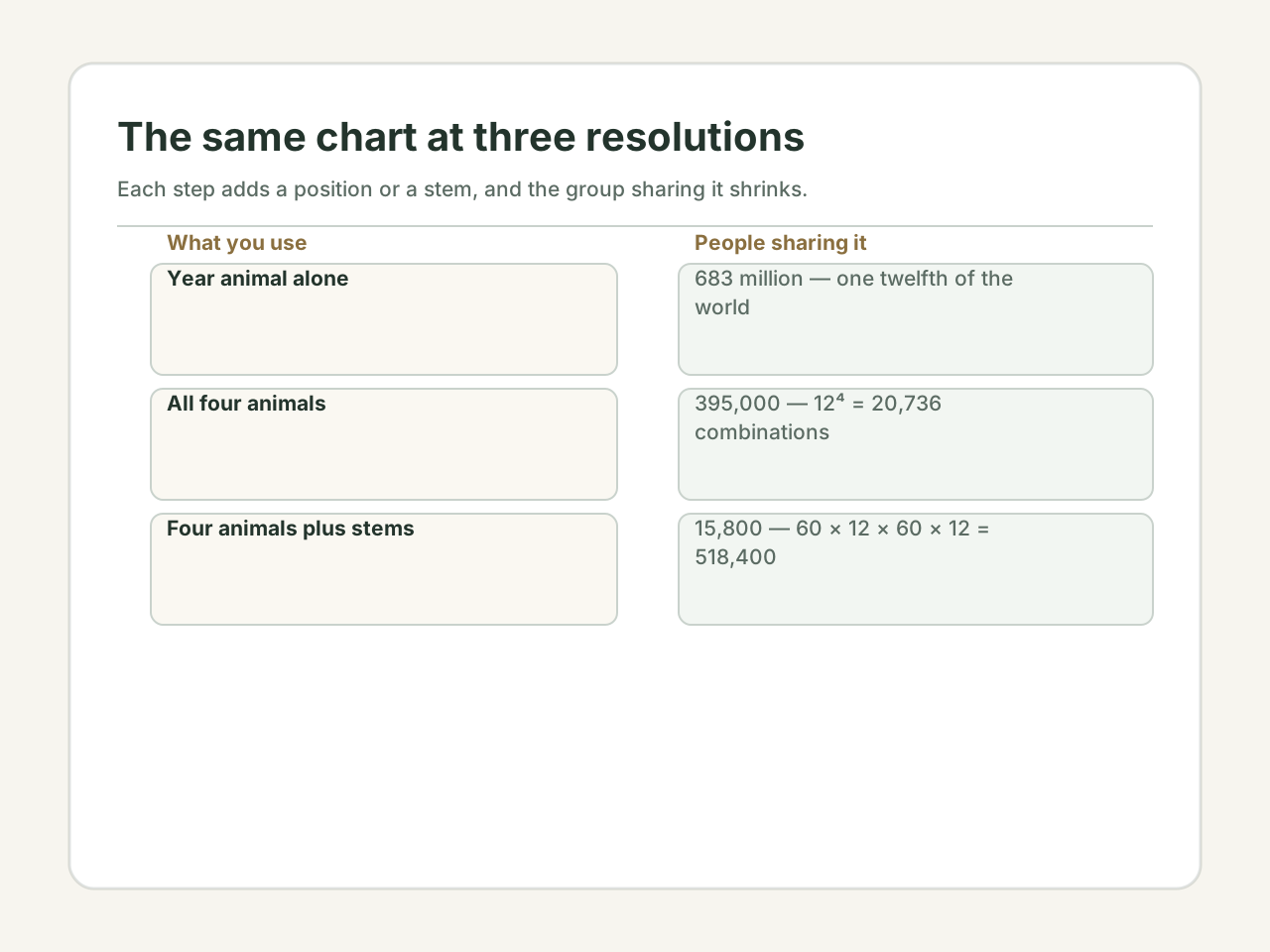
Four Animals in One Chart, and What the Count Says
A chart carries four animals, not one. 20,736 four-animal combinations, 42.7% of charts repeating one, and six readable pairs: the arithmetic behind the set.
Read article
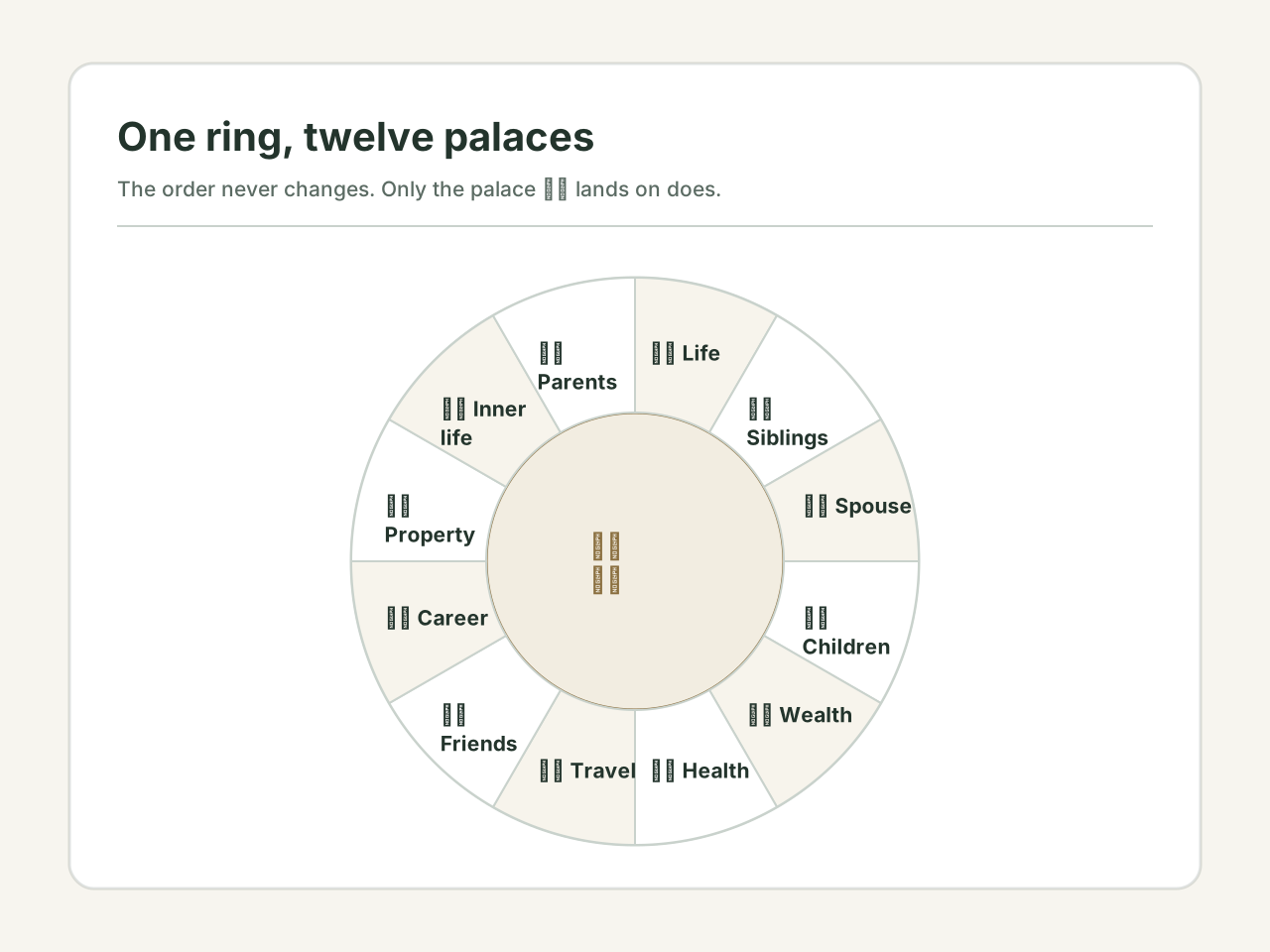
The Twelve Palaces: What 命宫 Fixes and What It Cannot
The twelve palaces are one fixed ring and 命宫 only sets where it starts, because its two inputs cancel. The twelve questions, the 4/8/6 offsets, and why 命宫 plus 身宫 still leaves two birth moments.
Read article
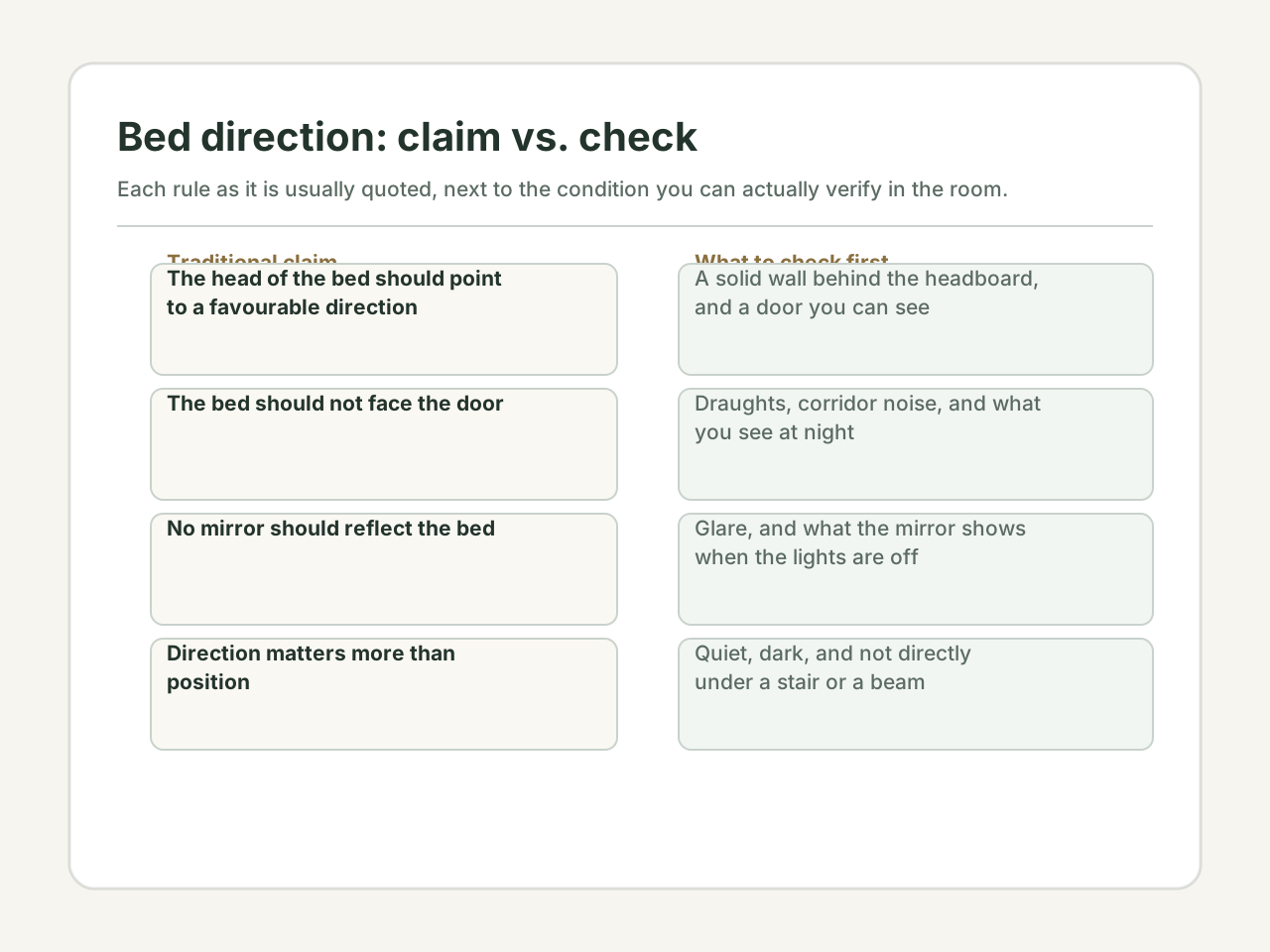
Bed Placement: The Wall Comes First, the Direction Second
Bed placement in Eight Mansions is two decisions: which wall can take a headboard, then which favourable direction that wall gives. A worked example shows the conflict no table resolves.
Read article
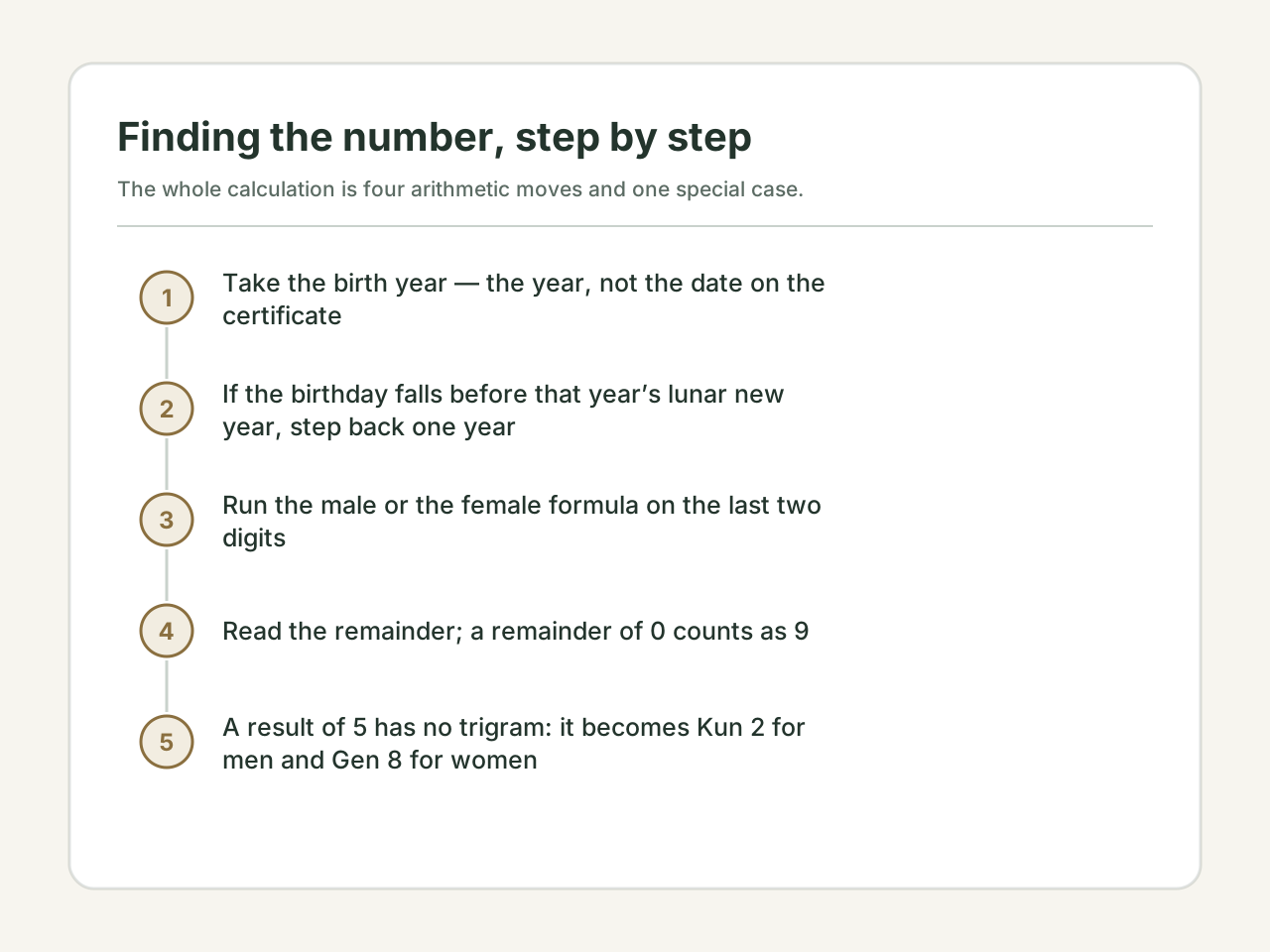
Ming Gua: The Formula, and the Three Places It Breaks
Ming gua in one modular step: 2 minus the year for men, the year plus 4 for women, mod 9. The two-digit shorthand fails in all 100 years after 1999, and the fold at five doubles one gua.
Read article
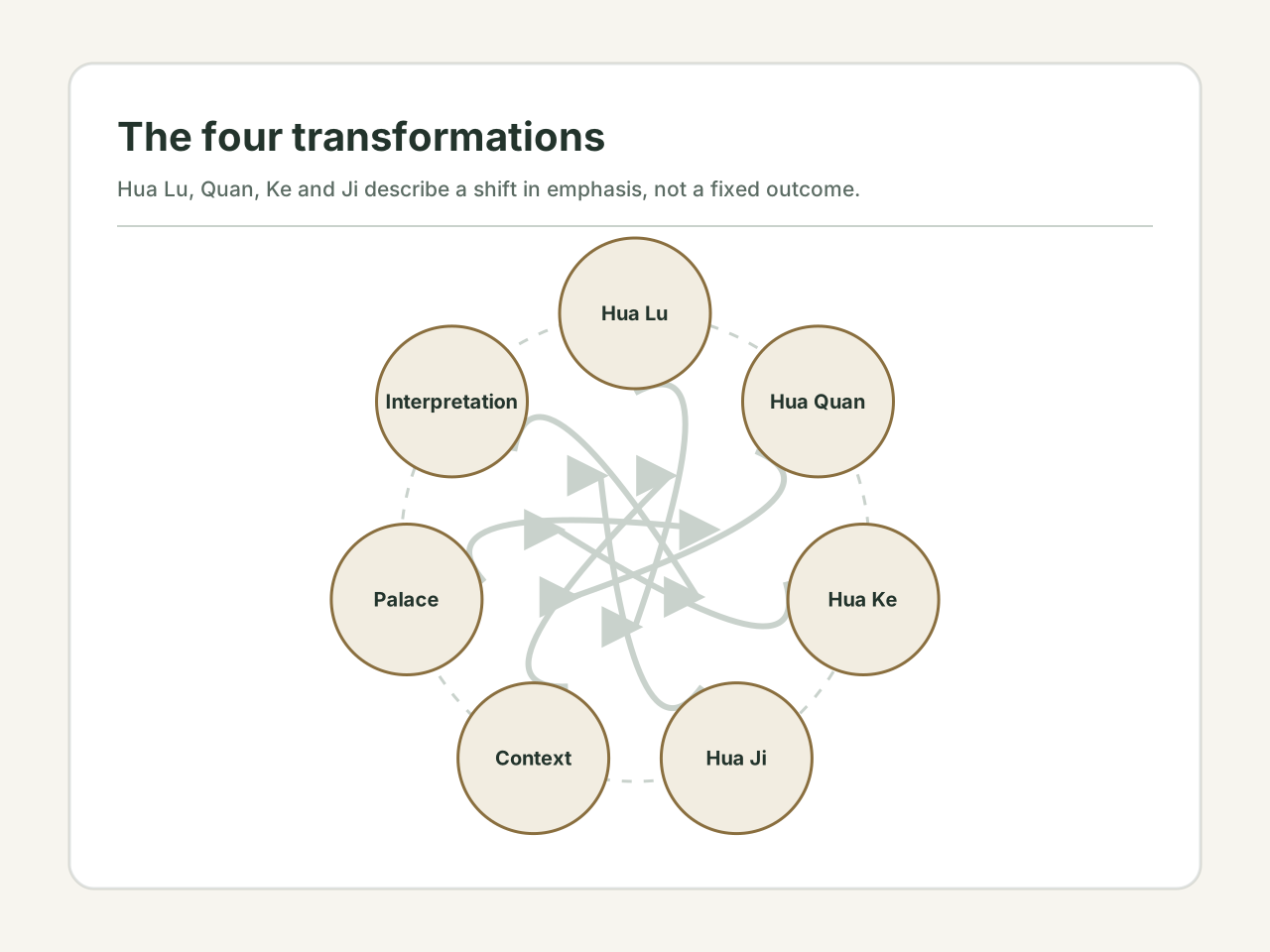
Four Transformations in Zi Wei Dou Shu: A 40-Cell Table, Not a Rhyme
The Four Transformations attach labels to stars, not extra stars. Write the ten-stem table out and count it: fifteen stars, eight holding both a Lu and a Ji, and four stems where lines of practice disagree.
Read article
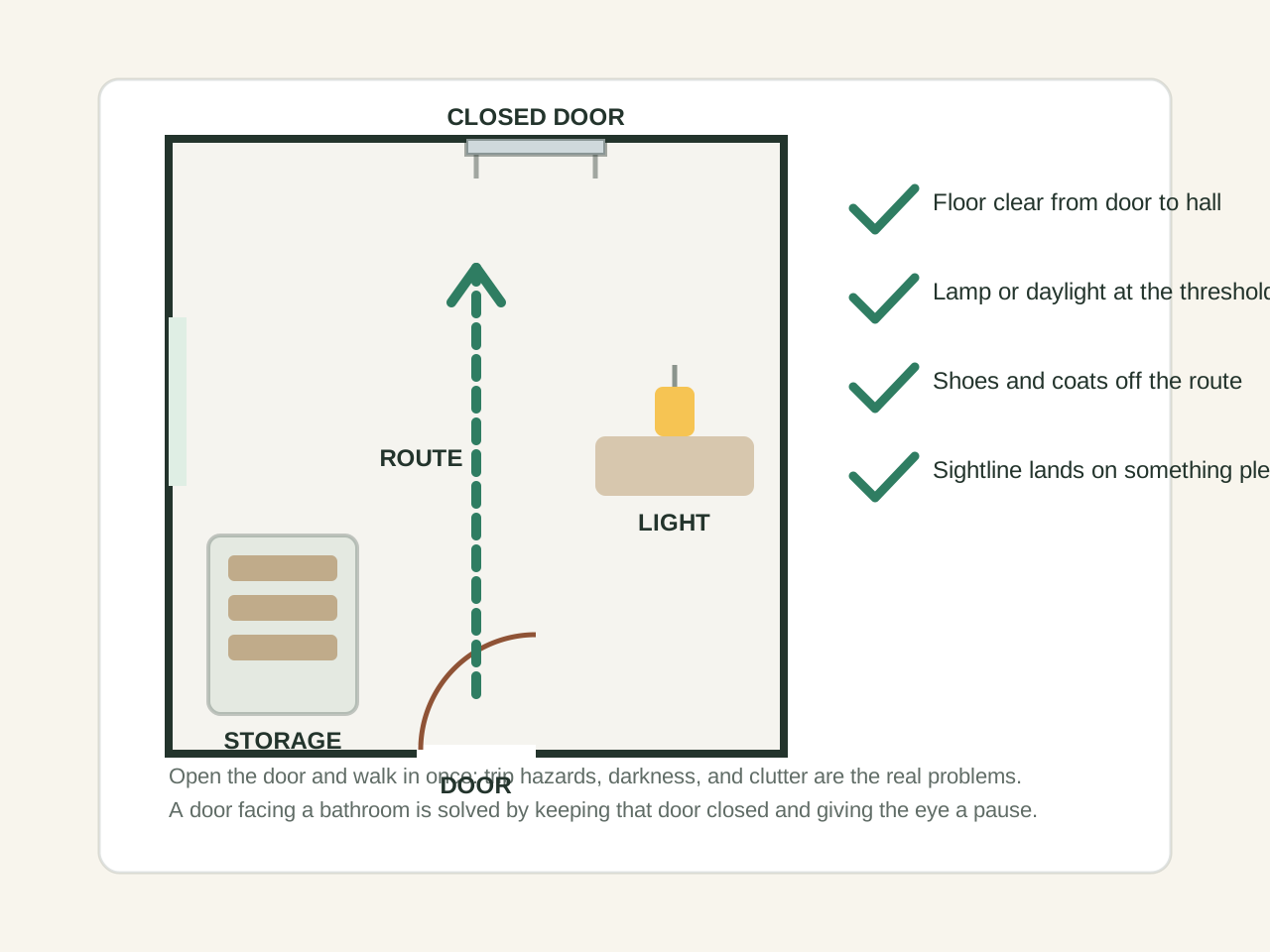
Front Door Feng Shui: Which Rules Can Actually Be Measured
Front door feng shui sorted by what can be measured: the stack pressure behind a straight run, the width a screen really needs, and the threshold that trips people.
Read article
Choose a useful path
Match the guide to the decision you actually need to make
The article library prioritizes durable guides that work well as starting points. Choose by the question you have and the facts you can confirm; you do not need to apply every traditional rule to yourself.
1. Start with the real problem
Use the BaZi guides for calendar assumptions and chart structure; use home or office guides for a space you can inspect. Safety, moisture, structure, electricity, consent, and professional obligations always take priority over a traditional preference.
2. Read method before recommendation
Open the topic overview first, then choose an article that matches the room, information, or decision involved. Before using a checklist or calculator, see what you need to prepare and when the result does not apply.