BaZi

BaZi Work and Resource Reflection Tool

Inspect a reproducible Four Pillars and element-count record, compare broad cultural work associations with real evidence, and define a reversible 30-day test without aptitude, income, or timing scores.

From input to output

See what the tool uses and what it returns

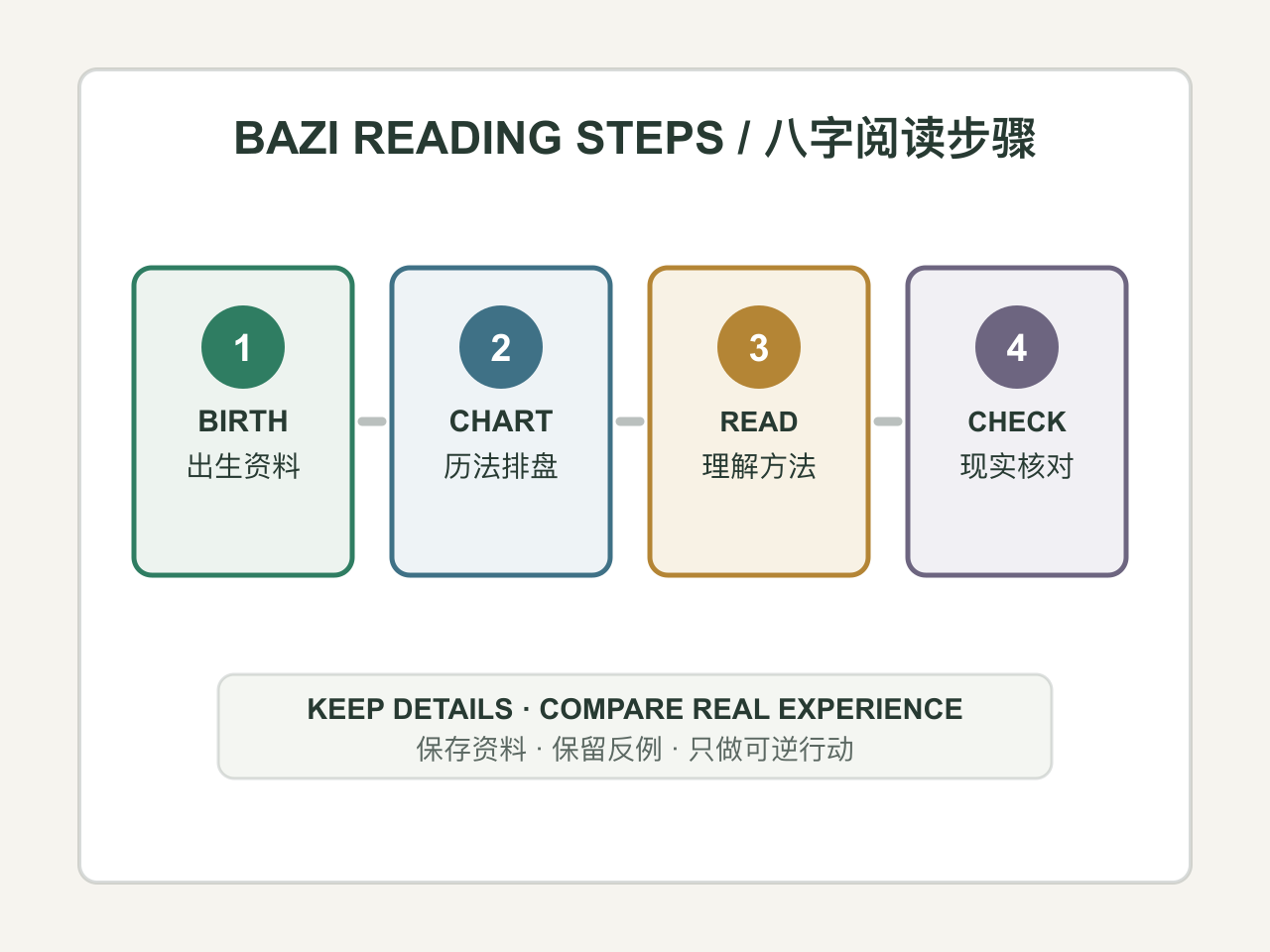
Check the required information and report structure before entering personal data. Missing details reduce precision instead of being silently invented.

Input example

  1. 1

    Birth date

    Establishes the calendar and timing data used by the calculation.

  2. 2

    Local birth time

    Adds the time pillar or time-dependent detail when the method supports it.

Output structure

  1. 1

    Traditional association record

    Shows the visible count and related task examples without declaring a preferred career.

  2. 2

    Evidence worksheet

    Asks for work samples, feedback, conditions, costs, and evidence that contradicts the theme.

  3. 3

    Resource habits

    Frames money themes as planning and risk-control questions rather than predictions.

What you need before you start

Review the exact fields, example values, validation rule, and effect of missing data before starting. Never accept an invented default for a required birth field.

Birth date

required

date required

Establishes the calendar and timing data used by the calculation.

Example: 1990-06-15

Validation: Use a valid calendar date that is not in the future.

If missing: The tool cannot produce a reliable result without this required value.
Local birth time

required

time required

Adds the time pillar or time-dependent detail when the method supports it.

Example: 12:00

Validation: Use a valid local time; leave it blank only when the field is optional.

If missing: The tool cannot produce a reliable result without this required value.
How it works

This live tool calculates the result directly from the information shown on the page. You can use it right away without payment, and the form is not sent to an AI model.

Reproducible worked example

Worked example: from raw counts to one reversible test

This example uses the same fictional date as the technical chart so the intermediate record can be checked across tools. The work labels are cultural prompts added after the calculation, not measured traits.

Complete example input

Gregorian birth date
1990-06-15
Local clock time
12:30

Corresponding output

Four Pillars record
庚午 · 壬午 · 辛亥 · 甲午
Eight-character surface counts
Wood 1 · Fire 3 · Earth 0 · Metal 2 · Water 2
Declared cultural labels
Metal Day Master · Fire highest raw count · Earth zero count · Wood wealth-element label
None of these labels scores aptitude, pay, promotion, employability, or investment return.
Reality-check output
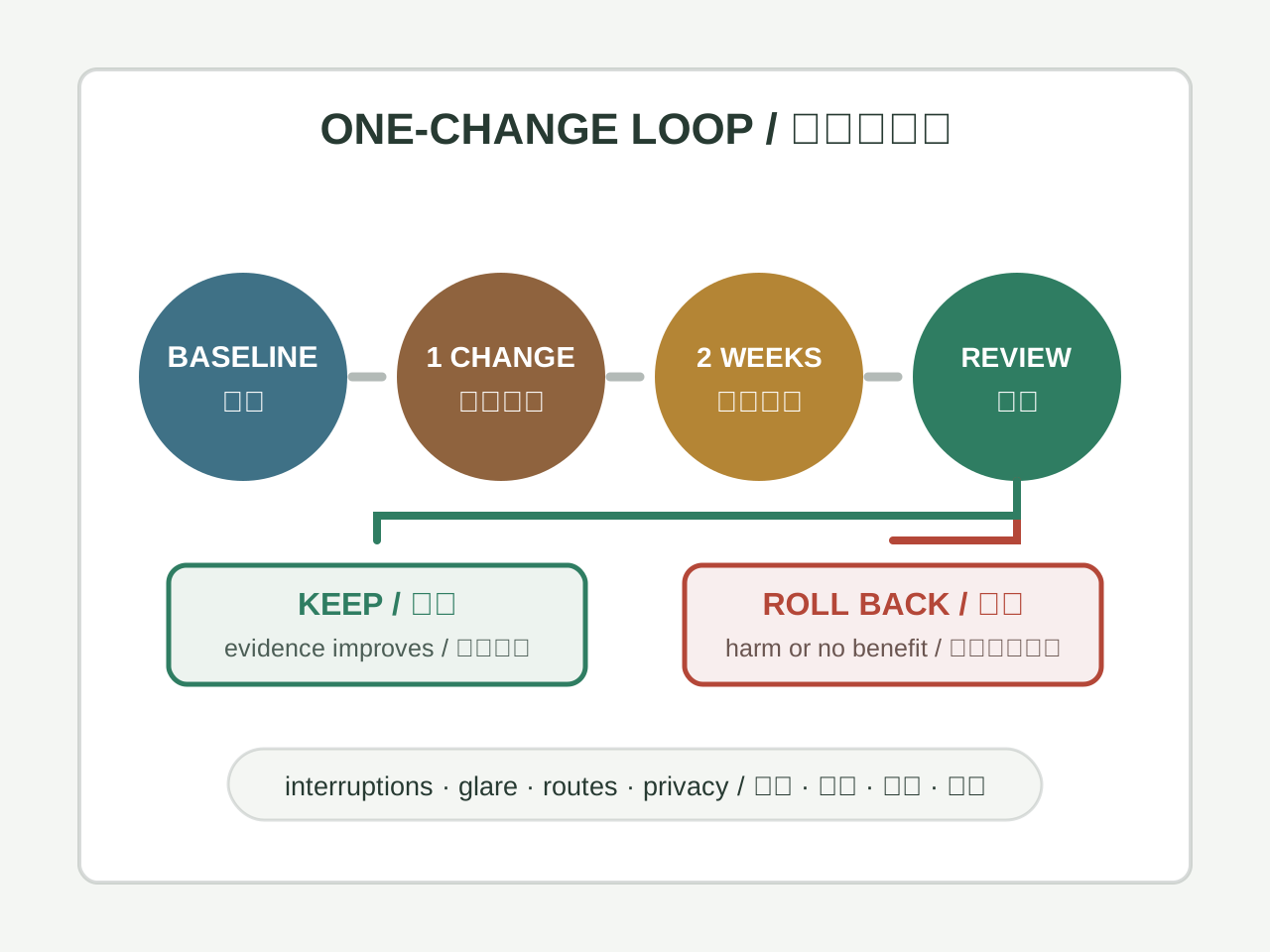
Choose one 30-day task experiment with a cost limit, evidence list, review date, and stop condition.

How to verify it

Reproduce the pillar string and raw counts in the Four Pillars tool. Then test only one task theme against completed work, feedback, time, cost, conditions, and counterevidence.

What this example cannot prove

Do not resign, borrow, invest, reject work, change insurance, or make a business decision because of the Day Master, a count, or the traditional wealth-element label.

Tool specification

Professional details

Use a BaZi-inspired profile to organize questions about work style, skill development, resource habits, and practical career planning.

Work and resource reflection worksheetHigh sensitivityReview every quarter or after a role change

Use cases

Recommended

Reflect on work style

Compare profile themes with actual tasks, environments, strengths, and recurring friction.

Recommended

Plan skill development

Translate broad element themes into specific skills, experiments, and review dates.

Not recommended

Choose investments or predict income

The result is not financial advice and does not predict salary, returns, promotion, or business success.

Method basis

Day Master and element counts

Shows the calculated chart record and the exact cultural labels used; it does not score aptitude.

Task-context comparison

Turns broad associations into examples that must be checked against completed work and contrary evidence.

Reality check

Requires the user to compare symbolic interpretation with skills, evidence, constraints, and opportunity.

Report structure

Traditional association record

Shows the visible count and related task examples without declaring a preferred career.

Evidence worksheet

Asks for work samples, feedback, conditions, costs, and evidence that contradicts the theme.

Resource habits

Frames money themes as planning and risk-control questions rather than predictions.

Thirty-day test

Provides one reversible experiment with evidence and stop conditions.

Actions and boundaries

Choose one career experiment

Test a skill, task type, or work environment before making an irreversible change.

Run a quarterly review

Record evidence from completed work and update the plan.

Financial decisions

Do not use the reading as investment, tax, debt, insurance, or business advice.

Employment decisions

Compare any theme with qualifications, labor conditions, compensation, and professional guidance.

What the tool actually calculates

The tool displays the Four Pillars, Day Master, and visible element counts for the eight stem-branch characters. It then uses one disclosed cultural mapping to show task examples associated with the largest visible count and the traditional 'wealth element' controlled by the Day Master.

These labels do not measure aptitude, personality, job fit, salary, credit, investment return, or future timing. The count also omits hidden-stem weighting, season, strength, and competing school methods.

Separate the result into auditable layers

Keep the calculation record, cultural association, and real-world evidence in separate fields.

  • Chart record: save the four pillars, Day Master, and five visible counts so another tool can reproduce them.
  • Cultural examples: treat task labels as prompts, not as jobs recommended for the user.
  • Counterevidence: record completed work that does not match the selected theme.
  • Real conditions: check qualifications, pay, contract terms, working conditions, health needs, and family responsibilities.
  • Resource boundary: use an actual budget, debt, cash flow, and professional advice rather than a traditional wealth label.

Run one low-risk 30-day test

Choose one reversible experiment: complete a small project, interview someone in a role, shadow a task, lead one meeting, or finish one course module. Define the question, time and cost limits, evidence, and review date before starting.

Review the work sample, feedback, effort, conditions, and counterevidence first. If the evidence does not support the theme, revise it; do not use an element explanation to dismiss the record.

Decisions this tool must not trigger

Do not resign, borrow, invest, buy insurance, reject a qualified opportunity, or change necessary medical or caregiving arrangements because of an element label. The tool does not identify an industry, role, business, or investment that will succeed.

Employment, contracts, tax, debt, insurance, business, and investment choices require verifiable information and qualified advice from the relevant domain.

What to preserve in the review record

Keep the input, tool version, chart result, original question, experiment, time and money cost, supporting evidence, counterevidence, and stop condition. Write the record before reading the interpretation so any outcome cannot be relabelled as a match afterward.

Test one theme at a time. Stop when the experiment affects safety, compliance, essential income or care, or exceeds the declared cost limit.

Turn a career theme into evidence

Choose one reported strength and define a small work experiment, such as leading one meeting, documenting a process, or testing a new skill for thirty days. Record the result, feedback, effort, and constraints. Keep labour-market evidence, qualifications, finances, health, and personal responsibilities ahead of any element label. The report cannot promise a promotion, salary, business result, or investment return.

Does this predict my income or investment luck?

No. The tool shows a reproducible chart record and labels from one declared cultural convention. It produces no income, aptitude, promotion, investment-return, or timing score and is not financial or employment advice.

What should I use the result for?

Use it to write a falsifiable question and one reversible 30-day test. Compare the theme with completed work, qualifications, conditions, feedback, cost, and contrary evidence before changing a job or financial commitment.

Can the report tell me which job will make the most money?

No. It can organize traditional work themes and reflection questions, but income depends on skills, market demand, location, opportunity, negotiation, and risk. Compare real job descriptions, training costs, pay data, and personal constraints before making a career decision.

How can I test one career theme without making a risky move?

Choose a reversible thirty-day experiment: interview someone in the role, complete a small project, take one course module, lead one meeting, or compare current job postings. Define the skill, time cost, evidence, and review date before starting. Record feedback and contrary evidence. Do not resign, borrow, invest, or reject a qualified opportunity because of an element label or timing statement. Career and income decisions require labour-market information, financial planning, health considerations, and the user’s real responsibilities.

Keep reading

Related articles

Try next

Related tools