Floor selection is not a lucky number game
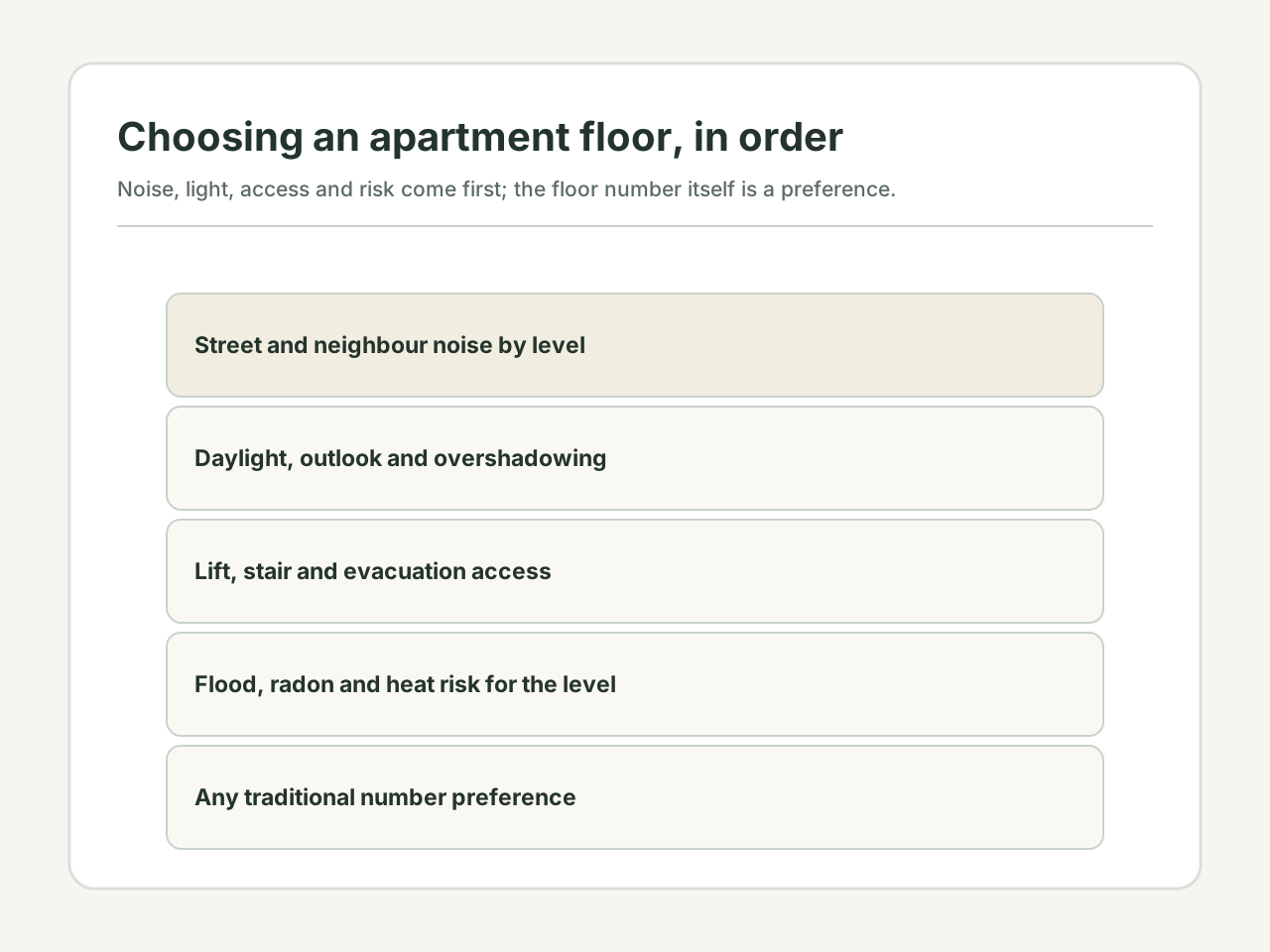
A lot of floor-selection feng shui online is about lucky and unlucky numbers — avoid the 4th floor (sounds like 'death' in Chinese), choose the 8th floor (sounds like 'wealth'). This is numerology, not feng shui, and it has nothing to do with how a floor actually feels to live on. The real feng shui of floor selection is about three things: your relationship to the ground, your relationship to the sky, and what is between you and both.
Different floors create different living experiences, and the feng shui tradition gives you a vocabulary for thinking about those differences. But no floor number is inherently good or bad. The question is whether the floor supports the kind of life you want to live.
Low floors (ground to 3rd): what you gain and what you lose
Low floors are the most connected to the ground — literally, in feng shui terms, the most connected to Earth energy. This is traditionally considered grounding and stable. The practical trade-offs:
| What you gain | What you lose | How to compensate |
|---|---|---|
| Direct access to the ground and street — no waiting for lifts | Less privacy — passers-by can see in, and you hear street noise | Sheer curtains, tall indoor plants, and white noise (a fan or air purifier) to mask street sound |
| Cooler in summer — the ground insulates against heat | Less natural light — neighbouring buildings and trees block the sun | Maximise artificial light with warm-toned bulbs (2700K-3000K). Use mirrors to bounce light from windows into darker corners |
| Easier for people with mobility issues, children, or pets | Higher risk of damp, pests, and flooding | Check for signs of damp before renting or buying. A dehumidifier is a worthwhile investment for ground-floor flats |
| Usually cheaper than higher floors | Closer to street-level pollution — car exhaust, dust | Air purifier with a HEPA filter. Keep windows closed during rush hour; open them at night |
Middle floors (4th to 10th): the balanced option
Middle floors are the feng shui 'Goldilocks zone' for most people. They are high enough to escape street noise and low-level pollution, but not so high that you feel disconnected from the ground. The practical benefits:
- Better natural light than low floors, without the wind and temperature extremes of high floors.
- Better privacy — you are above the sightlines of most pedestrians and street-level windows.
- Lift dependency is moderate — you can take the stairs in a pinch, which is not true above the 10th floor for most people.
- In an earthquake or fire, middle floors are easier to evacuate than high floors and less vulnerable to ground-level hazards than low floors.
- The main trade-off: you are in the middle of the building's noise profile. You hear neighbours above and below. This is the most common complaint about middle-floor living, and it is worth checking before you commit — visit at different times of day.
High floors (11th and above): the view comes with conditions
High floors are traditionally considered 'too far from the ground' in classical feng shui — disconnected from Earth energy, exposed to too much wind (which scatters qi). The modern reading is more nuanced:
- The view is the main asset. A high floor with a view of water, greenery, or open sky is genuinely uplifting. A high floor with a view of another building's wall is just a low floor with a longer lift ride.
- Wind is a real factor. Above the 15th floor, wind speeds increase noticeably. Windows that rattle, whistling sounds, and constant air movement are not just annoying — they make a space feel unsettled. Check the window seals and ask about wind on windy days.
- Lift dependency is total. If the lift breaks, you are climbing stairs. This is a practical concern, not a feng shui one, but it affects how you feel about coming home.
- High floors sway slightly in strong winds, which some people register as motion sickness without realising the cause. If you are sensitive to motion, test this by standing still and focusing on a fixed point during a windy day.
- The best high-floor apartments have a balcony or a large window that opens — something that reconnects you to the outside air. A sealed, air-conditioned high-rise box is the worst of both worlds: disconnected from the ground and disconnected from the sky.
A worked example: choosing between the 2nd and the 18th floor
A single professional in her 30s is choosing between two flats in the same building: a 2nd-floor flat overlooking a quiet side street, and an 18th-floor flat with a panoramic city view. The 18th floor is 15% more expensive.
The feng shui analysis: the 2nd floor has a large tree directly outside the living room window, which blocks light but also provides privacy and a green view. The street is quiet, and the flat feels grounded — you can hear birds, see people walking dogs, and feel connected to the neighbourhood. The downside: the bedroom faces the building's bin storage area, and on collection days there is noise at 6am.
The 18th floor has spectacular light and a view that makes the flat feel twice its size. But the wind is constant — the windows whistle, and the balcony is unusable on windy days (which is most days above the 15th floor). The lift takes 45 seconds, and during rush hour you wait. The flat feels exciting but not restful.
She chose the 2nd floor, spent the 15% savings on better furniture and noise-reducing curtains for the bedroom, and has not regretted it. The decision was not about floor numbers. It was about whether she wanted a home that felt like a retreat (2nd floor) or a lookout (18th floor). She wanted a retreat.
Apartment floor selection feng shui: what to expect, and what not to
Floor selection is about how you want to live — connected to the street or above it, in the quiet or in the light, grounded or elevated. No floor number is lucky or unlucky. The 4th floor is not cursed, and the 8th floor is not a wealth magnet. What matters is whether the floor gives you the light, privacy, noise level, and access that work for your life. Visit at different times of day, stand in the rooms quietly, and ask yourself: does this feel like home, or does it feel like a hotel? The answer is more useful than any floor-number superstition.
Disclaimer: This content is for informational and cultural reference purposes only. It does not constitute professional medical, legal, financial, or psychological advice. Readers should exercise their own judgment and consult qualified professionals for specific concerns.