The ceiling is the room's lid — and your body knows it
Feng shui treats the ceiling as the counterpart to the floor: the floor grounds, the ceiling covers. The classical idea is that a ceiling should feel like a protective canopy, not a weight pressing down. The practical version is that ceiling height, shape, and finish affect how spacious or oppressive a room feels, and people register that physically before they register it consciously.
The one rule that holds: a ceiling should not feel like it is coming at you. Anything that draws your eye upward and makes you aware of the ceiling as a presence — low clearance, sharp angles, dark colours, a beam running directly over where you sit or sleep — is the ceiling equivalent of a sofa back to the door.
Three ceiling problems that actually make a room uncomfortable
These are not exotic taboos. They are common architectural features that people live with every day, and each has a plain reason for why it bothers people:
- Low ceilings (under 2.4m / 8ft). The most common complaint. A low ceiling makes a room feel compressed, and in a room where you spend hours — bedroom, office, living room — that compression accumulates into a low-grade feeling of being hemmed in. The fix is not to raise the ceiling but to draw the eye up: vertical lines, upward-facing wall lights, lighter ceiling colour than walls.
- Exposed beams running over a bed or desk. The tradition says beams create 'cutting qi' (sha qi) that presses down on whoever is underneath. The practical version: a heavy structural element directly above where you sleep or work reads as a threat, and your body stays slightly on alert. The fix is to reposition the bed or desk so the beam is not directly overhead, or to soften the beam visually with fabric or paint.
- Mirrored or highly reflective ceilings. This is almost always a mistake. A mirrored ceiling is disorienting — it doubles the visual field and makes the room feel unstable. The tradition bans mirrored ceilings in bedrooms specifically, and the practical reason is obvious: nobody sleeps well under a reflection of themselves.
Ceiling height and design by room
Different rooms have different relationships with the ceiling. Here is what works in practice, not by element theory but by how each room is used:
| Room | Ideal ceiling | What to avoid | Fix if it is wrong |
|---|---|---|---|
| Living room | 2.7m+ (9ft+), or a sloped ceiling that rises toward the seating area | Flat, low ceiling under 2.4m; dark ceiling colour | Paint ceiling white or near-white; add uplighting or a tall floor lamp |
| Bedroom | 2.4m–2.7m (8–9ft), flat and calm | Beam directly over the bed; mirrored ceiling; sloped ceiling that drops above the headboard | Move bed away from beam; use a canopy or fabric to soften the ceiling visually |
| Kitchen | 2.4m+ (8ft+), flat, easy to clean | Low ceiling over the cooking area that traps heat and steam | Install a good extractor fan; keep the ceiling light and clean |
| Study / Office | 2.7m+ (9ft+), or a ceiling that feels open | Low ceiling directly above the desk; beam above the chair | Move desk to the tallest part of the room; use a light-coloured ceiling |
| Bathroom | 2.2m+ (7ft+), moisture-resistant | Dark ceiling that makes a small room feel smaller | Light ceiling colour; good ventilation to prevent mould |
Exposed beams: what the tradition really means
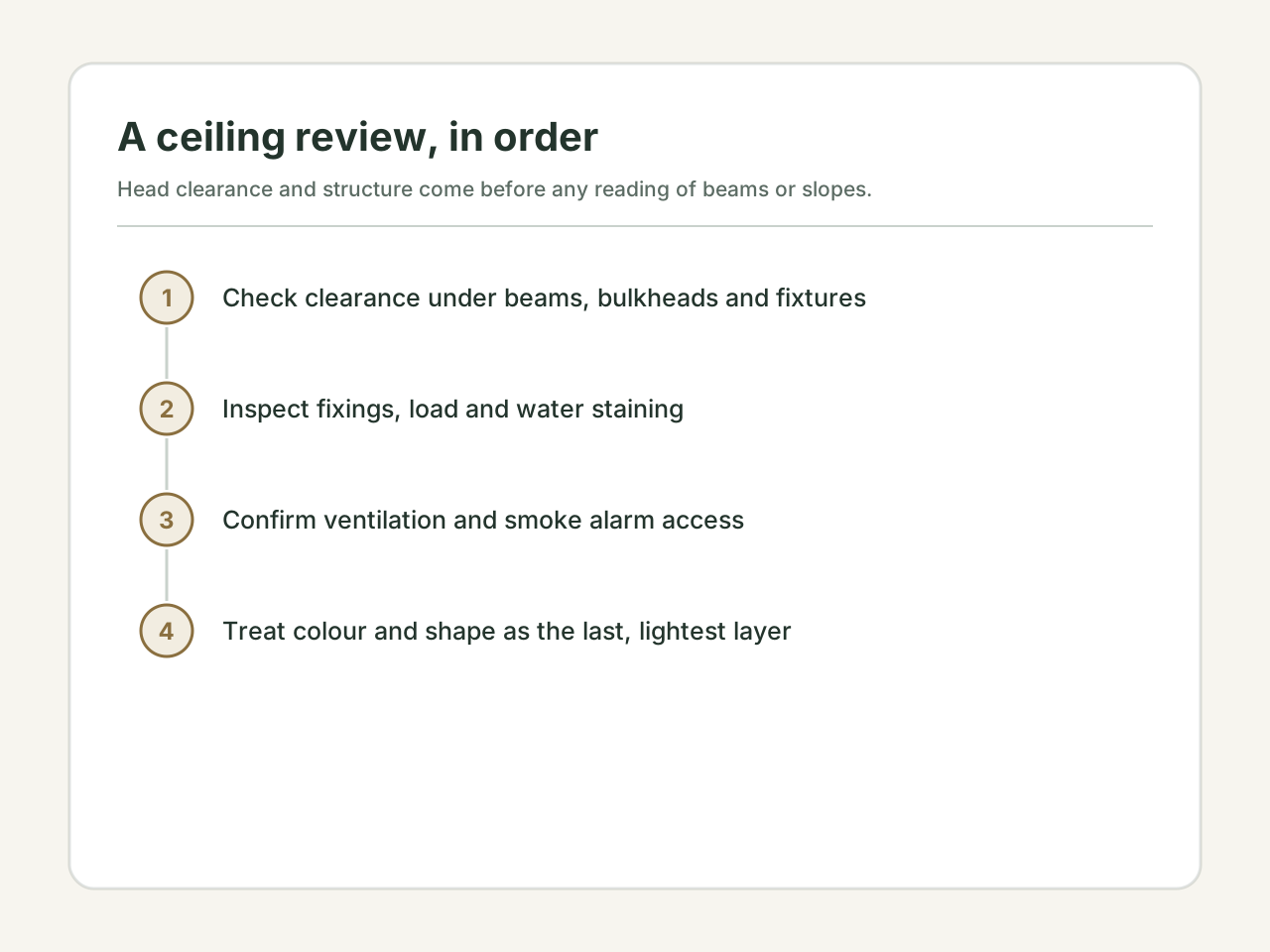
The feng shui warning about beams is one of the tradition's most widely repeated rules, and it is also one of the easiest to understand in practical terms. A beam is a heavy structural element. When it runs directly above where you sleep or work, it creates a visual weight that your brain registers as a potential hazard — even if you know rationally that the beam is secure.
The classical texts talk about beams 'cutting' the energy of a room. The modern reading: a beam divides the space visually and creates a zone of compression underneath it. You can test this yourself. Sit under a beam for ten minutes, then sit in an open part of the same room. Most people feel a subtle but real difference in how relaxed they are.
The fix is not to remove the beam — that is structural work. Instead: reposition the bed or desk so the beam is not directly overhead; if you cannot move the furniture, soften the beam by wrapping it in fabric, painting it the same colour as the ceiling, or adding a false ceiling panel below it to create a flat surface.
A worked example: the low-ceiling bedroom
A couple lives in a 1950s apartment with 2.3-metre (7.5-foot) ceilings throughout. The bedroom is 12 square metres. The ceiling is flat, white, and untextured — not a beam in sight — but the room feels oppressive. They sleep poorly, and the wife says she feels 'like the ceiling is sitting on her chest.'
The feng shui diagnosis is straightforward: the ceiling is too low for a bedroom where people spend eight hours a night. The practical fix involves three changes, none of which require construction. First, they lower the bed by removing the box spring and using a lower bed frame, which increases the perceived distance to the ceiling. Second, they paint the ceiling a very pale blue-white (not pure white, which can feel harsh) to create a sense of sky. Third, they add two upward-facing wall sconces that wash the ceiling with light, effectively making it recede visually.
The result: the room feels taller by about 20 centimetres of perceived height. They sleep better — not because the ceiling changed, but because the room no longer reads as a container closing in on them. The cost was two cans of paint and two wall lights.
Ceiling colour and finish
Most ceilings are white, and for good reason. White recedes; it makes the ceiling feel higher and less present. But there are cases where a non-white ceiling works:
- A very tall ceiling (3m+ / 10ft+) in a room that feels cavernous can be brought down visually with a slightly darker colour — a warm light grey or a soft beige. This makes the room feel more intimate.
- A ceiling painted the same colour as the walls (but slightly lighter) creates a seamless envelope that works well in small rooms where you want to avoid visual breaks.
- Glossy or semi-gloss ceiling finishes reflect light and can make a low ceiling feel higher, but they also show every imperfection. Use them only on smooth, well-prepared surfaces.
- Avoid dark, saturated colours on ceilings unless the room is very tall and very well-lit. A dark ceiling in a normal-height room feels like a lid closing.
Where the tradition ends for ceiling design and feng shui
Ceiling design is about one thing: does the room feel spacious enough for what you do in it? A ceiling that is too low, too dark, or visually interrupted by beams creates a persistent sense of compression. A ceiling that is light, high enough, and visually quiet lets the room breathe. But the ceiling does not determine your fortune, your career, or your health. It is an architectural feature that affects how a room feels — and how a room feels affects how you feel in it. Fix the ceiling if it bothers you. If it does not, move on to something that matters more.
Disclaimer: This content is for informational and cultural reference purposes only. It does not constitute professional medical, legal, financial, or psychological advice. Readers should exercise their own judgment and consult qualified professionals for specific concerns.