Curtain colour is a room decision, not a cosmic one
Curtain colour is one of the most-asked feng shui questions and one of the least important. The tradition ties colours to the five elements, and the idea is that a room's colour palette can support or undermine its intended use. The practical version is simpler: curtain colour affects how much light enters a room, how warm or cool it feels, and whether the room reads as calm or stimulating.
The single most important curtain decision is not colour but opacity. A curtain that blocks too much light in a room that needs it, or lets in too much light in a room that needs darkness, is a bigger problem than any colour choice. Get the light level right first, then choose a colour that supports the room's purpose.
Room by room: what actually works
The five-element colour system is a useful shorthand, but the real decision is about the room's function:
| Room | What the room needs | Colours that support it | Colours to avoid |
|---|---|---|---|
| Bedroom | Calm, darkness, rest | Soft blues, warm greys, muted greens, lavender | Bright red, orange, or anything that reads as stimulating |
| Living room | Warmth, gathering, flexibility | Warm neutrals, soft yellows, earth tones, sage green | Stark white, cold grey, or anything that reads as impersonal |
| Kitchen | Cleanliness, energy, warmth | Cream, warm white, soft yellow, light green | Dark colours that absorb light in a room that needs to feel clean |
| Study or home office | Focus, clarity, calm energy | Soft green, light blue, warm grey | Dark, heavy colours that make the room feel smaller |
| Children's room | Play, rest, flexibility | Soft pastels, light green, warm yellow | Overly dark or overly stimulating colours |
A worked example: the bedroom that was too bright
A bedroom with a large east-facing window gets full morning sun. The current curtains are thin white cotton that let in every lumen. The room is bright and cheerful, but the occupant wakes up at sunrise every day and cannot sleep past 6 a.m. The feng shui concern is not about colour or element balance; it is about light control.
The fix: replace the thin curtains with blackout curtains in a soft navy or charcoal. The colour choice is secondary to the opacity, but a dark, cool colour reinforces the bedroom's role as a restful space. If the room feels too dark during the day, add a sheer layer underneath the blackout curtain so you can have light during the day and darkness at night. This is a light management problem, not a feng shui problem, and the fix is mechanical.
The five-element colour shorthand, and when to use it
If you want to engage with the five-element system, here is the honest version. It is a framework for variety, not a prescription:
- Wood (green, teal): associated with growth and upward movement. Useful in a study or a room that feels stagnant. A green accent wall or green curtains in a home office can feel fresh and focused.
- Fire (red, orange, bright pink): associated with energy and visibility. Best used as an accent. Red curtains in a bedroom are a bold choice that most people find too stimulating for sleep.
- Earth (yellow, beige, terracotta): associated with stability and grounding. The safest and most versatile family. Earth tones work in almost any room and are unlikely to feel wrong.
- Metal (white, grey, metallic): associated with clarity and precision. Clean and modern, but can feel cold. Warm it with texture or pair it with wood tones.
- Water (dark blue, black): associated with depth and calm. Dark blue curtains in a bedroom support rest; black curtains are dramatic and work best in a room with ample natural light.
Why curtain colour cannot attract wealth, and what it can do
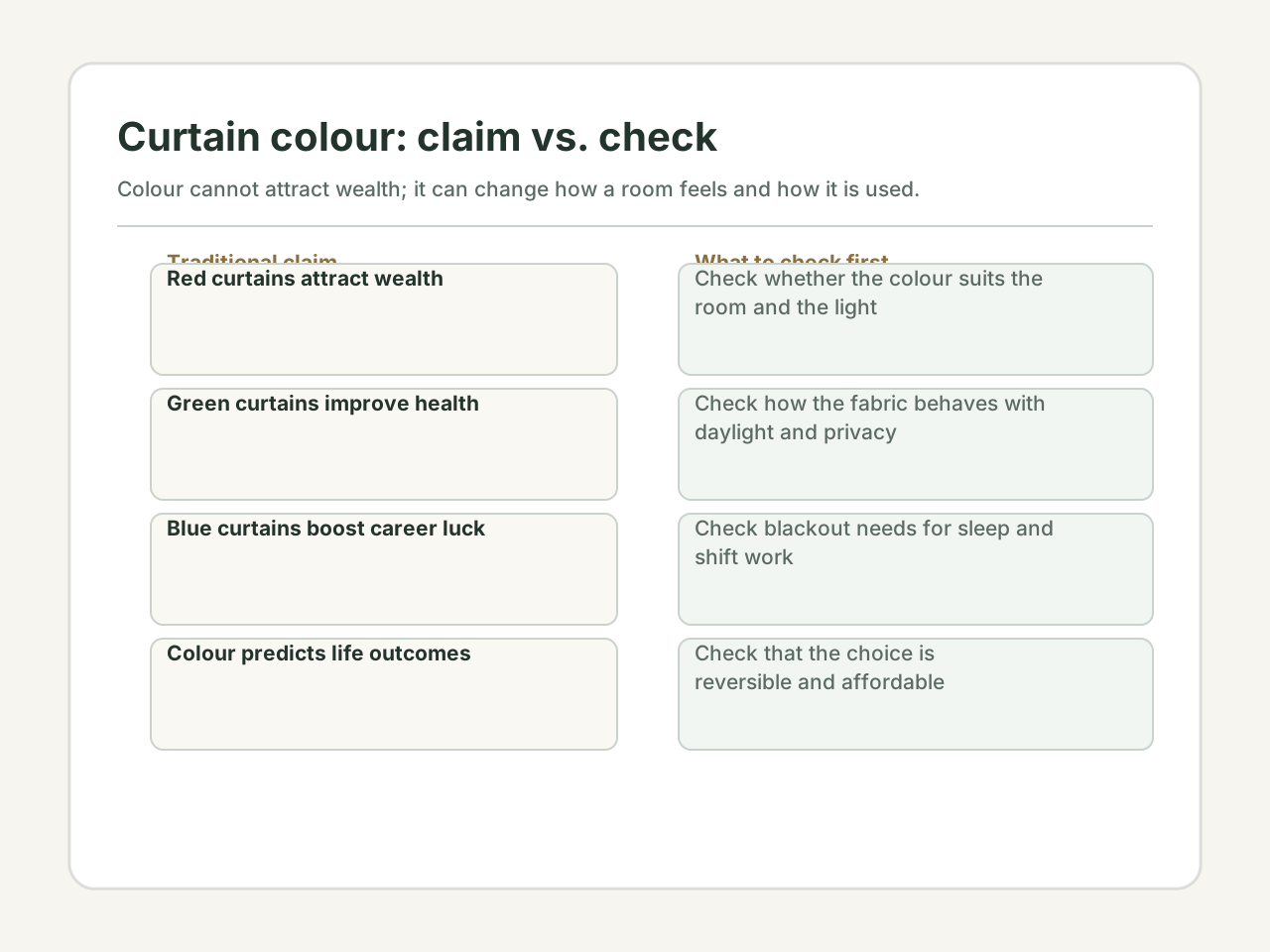
The internet will tell you that red curtains attract wealth, green curtains improve health, and blue curtains enhance career luck. These are marketing claims, not feng shui principles. The colour of your curtains does not predict or influence your life outcomes. It affects how a room feels, and that is a worthwhile consideration on its own. Choose curtain colours that make the room feel right for its purpose, and ignore the promises.
Disclaimer: This content is for informational and cultural reference purposes only. It does not constitute professional medical, legal, financial, or psychological advice. Readers should exercise their own judgment and consult qualified professionals for specific concerns.