Kitchen colour is about appetite first, theory second
Kitchen feng shui colour gets dressed up in five-element theory, but the honest order is the other way round: a kitchen colour works when the room feels clean, the food looks good, and you actually want to cook in it. The element framework is a useful way to describe those feelings, not a rulebook that overrides them. If a scheme reads as fresh and easy to keep clean, it is already most of the way to good feng shui.
A safe base, with colour kept to the small things
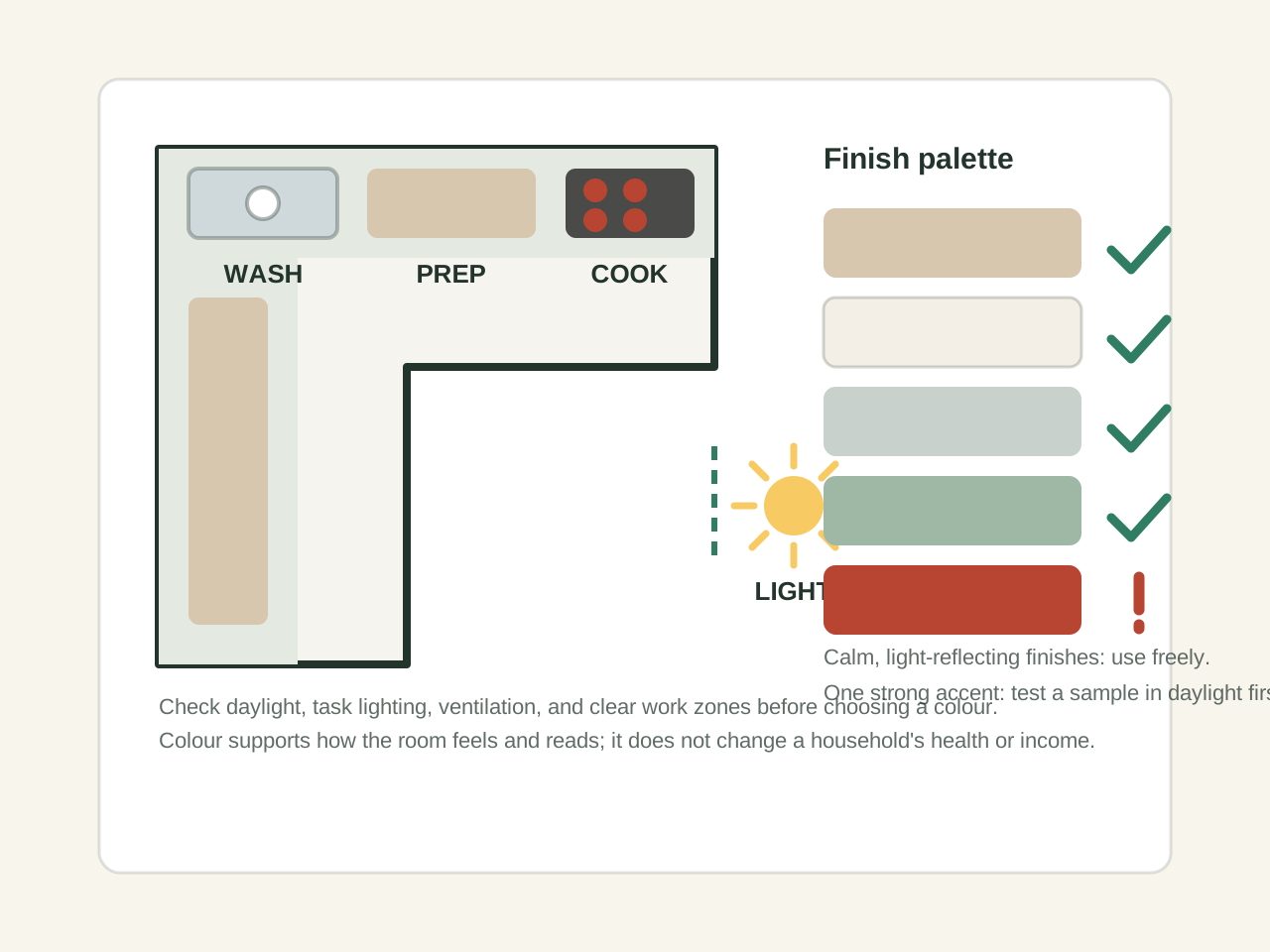
The reliable structure is a calm base plus small accents, because cabinetry and walls are expensive to change and easy to tire of:
- Base (cabinets, walls, counters): white, warm white, soft grey, or light wood. These read as clean and make a small kitchen feel larger.
- Accents (tiles, a kettle, tea towels, one wall): this is where colour belongs, because you can change it cheaply when you tire of it.
- Light first: a dim kitchen needs warmer, brighter light and a lighter base before it needs any so-called lucky colour.
- Cleanability beats symbolism: a colour that hides grease and wipes clean does more for the room than any element rule.
The five-element shorthand, and its one real caveat
If you want the traditional layer, here is the short version, with the caveat that matters: a kitchen already mixes Fire (the stove) and Water (the sink), so the usual advice is not to pile on more strong Fire-red.
| Element | Typical colours | How it reads in a kitchen |
|---|---|---|
| Wood | Light green, natural wood | Fresh and calm; pairs well with most bases |
| Fire | Red, orange | Energising but easy to overdo; keep to accents, not whole walls |
| Earth | Beige, soft yellow, terracotta | Warm and grounding; good for a cold, dim kitchen |
| Metal | White, grey | Clean and bright; the safest base |
| Water | Blue, black | Cooling; small doses only, as it can feel cold over large areas |
A worked example: a small north-facing kitchen that feels cold and dim
A galley kitchen faces north, gets little direct sun, and reads as cold and a bit gloomy. The instinct to add a lucky red would only make a cramped room louder.
The practical fix leans on Earth and Metal rather than Fire: keep the cabinets a warm white, add under-cabinet lighting with a warmer bulb, and bring warmth in through accents, a wooden board, a soft-yellow blind, terracotta crockery on open shelves. The room ends up warmer and brighter, which is what good kitchen feng shui actually means here.
What to keep light on, and the honest limit
A few things are worth avoiding, mostly because they make the room harder to live in: large areas of high-saturation red (restless), big blocks of black (cold, and they show every smudge), and heavy pink (tiring over time). None of this decides your health or your family's luck; it decides whether the room is pleasant at 7am. Treat the element theory as a vocabulary for mood and cleanliness, and let how the kitchen actually feels be the final word.
Disclaimer: This content is for informational and cultural reference purposes only. It does not constitute professional medical, legal, financial, or psychological advice. Readers should exercise their own judgment and consult qualified professionals for specific concerns.
Sources and review basis
Traditional references explain historical vocabulary and context. Official practical sources support only the observable safety, comfort, or environmental points noted in the article; they do not validate metaphysical claims.
Traditional reference
Huangdi Zhaijing (黄帝宅经)Wikisource digital text · Accessed 2026-07-14
Historical context for traditional residential orientation and spatial vocabulary. Modern recommendations are reviewed separately.
Practical source
US EPA: Indoor Air QualityUnited States Environmental Protection Agency · Accessed 2026-07-14
Practical background for ventilation, pollutants, combustion sources, and indoor air concerns.