The living room is a test of one thing: how it feels to sit in it
Most living room feng shui mistakes come from the same root problem: the room was arranged for how it looks from the doorway, not for how it feels when you are actually in it. Classical Form School (峦头) asks whether a room supports gathering, and the plain-language version of that is whether people settle into it or drift through it.
If you fix nothing else, fix the feeling of entry. Walk into your living room and stop at the threshold. What your eye lands on first, and whether the room invites you further in or blocks you with a sofa back, is the single most useful signal the whole tradition has to offer.
The five mistakes that quietly drain a room
These are not exotic taboos; they are things you can spot in ten minutes, and most have a plain reason sitting underneath the tradition:
- Sofa back to the door. The most common layout mistake. Your body registers being approached from behind as low-level stress even when you are awake. The fix is to angle the sofa or add a console behind it so the door is in view.
- TV as the single focal point. A room where every seat faces the screen is a room that cannot host conversation. The feng shui tradition calls this a room with no balance; the practical version is that it turns a living room into a viewing room.
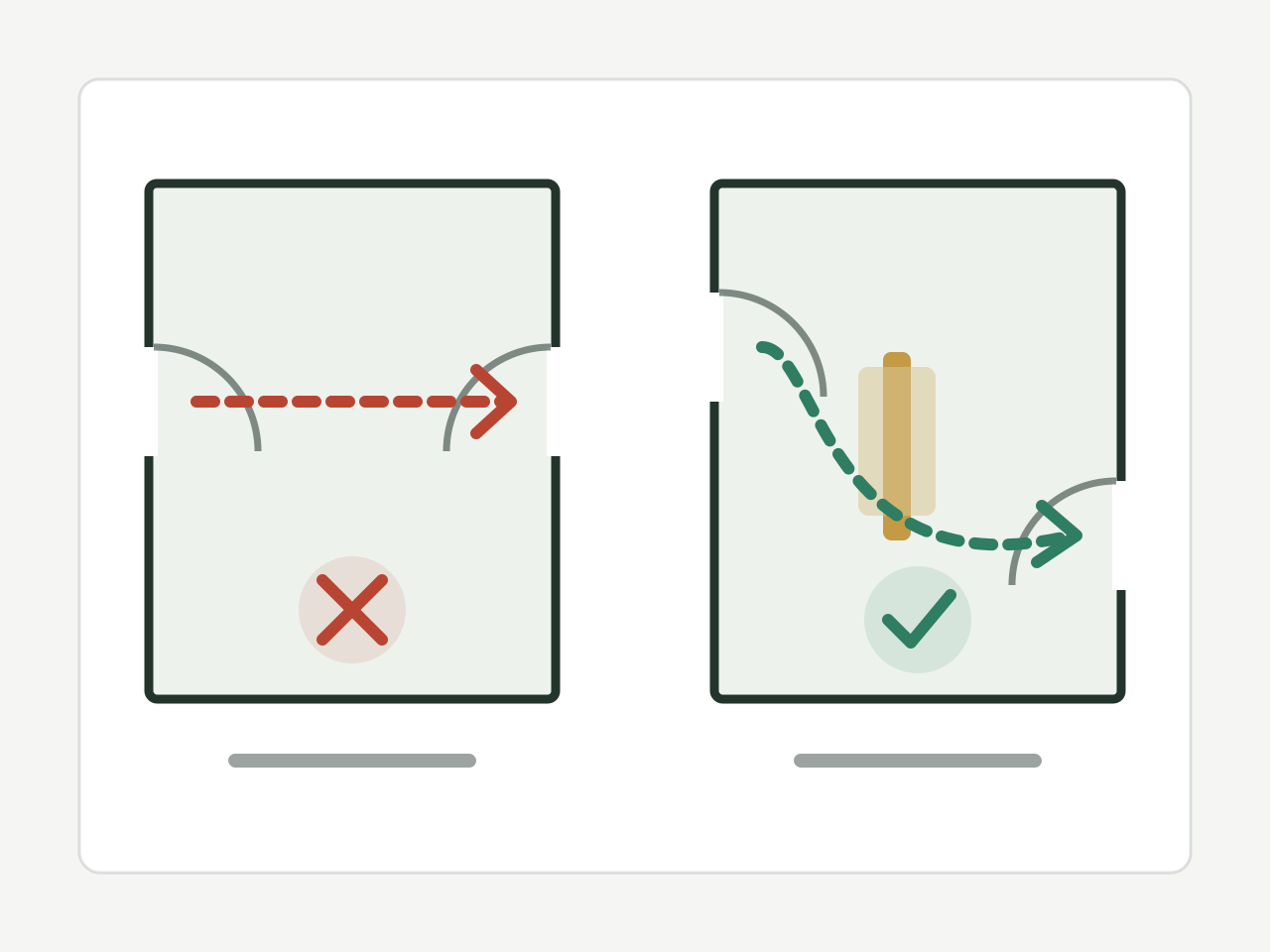
- Walkways cutting through the seating area. If the main path from door to window or door to corridor runs between the sofa and the coffee table, people never really settle. The room reads as a hallway with furniture in it.
- Dead corners filled with things you never use. A dark corner piled with boxes, broken lamps, or exercise equipment you have not touched in a year is what the tradition calls stagnant energy. The practical version: it is a mood drain every time you glance at it.
- One harsh overhead light and nothing else. A single ceiling fixture on full brightness makes the room feel like a waiting room. Layers of light, a floor lamp, a table lamp, a dimmable overhead, are the cheapest way to change how a room reads.
A worked example: the room where the sofa cannot face the door
A typical living room in a narrow apartment has the door on one long wall and the TV outlet on the opposite wall. The sofa naturally goes against the third wall, which puts its back to the door. This is the textbook mistake, and most people cannot avoid it without blocking the room.
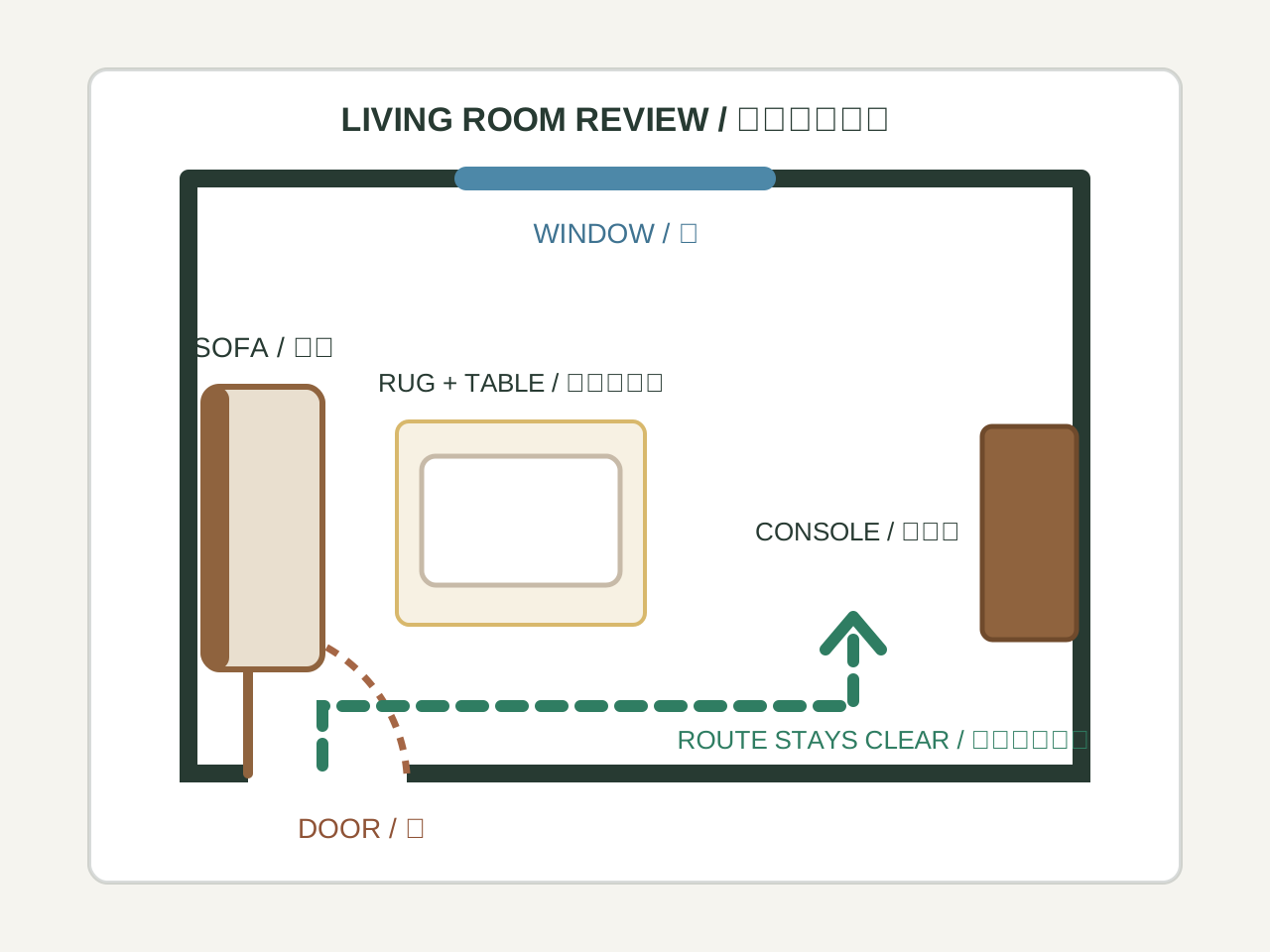
The sensible fix is not to rearrange the whole room. Place a slim console table or a low open shelf behind the sofa, add a lamp on it, and angle a mirror on the wall opposite the door so the door is reflected into view from the sofa. If the door is visible in the mirror, your body reads the room as safer. Keep a clear path from the door into the seating area so the room feels open rather than barricaded.
Tradition versus sense: what the rules actually mean
Some living room rules are worth knowing because they point at real experience. Others are filler. Here is a quick filter:
| Common rule | What it is really about | How to use it |
|---|---|---|
| No sharp corners pointing at seats | Visual discomfort from a protruding edge, especially at eye level | Round the corner with a plant or a soft edge; do not over-read it |
| Sofa should have a solid wall behind it | The command position again: support plus sightlines | A console or a high-backed sofa does most of the job when a wall is not available |
| No clutter under the coffee table | The room's centre should feel open, not blocked | Keep the space under the table clear; a single basket or tray is fine |
| Balance the five elements in the room | A shorthand for variety: wood, metal, fabric, colour, light | Variety is good; a checklist of exactly five objects is not necessary |
| Avoid too much red or fire colours | A visually hot room can feel restless | Red as an accent is fine; red on every wall is a lot for daily living |
The quick fix list: what actually changes a room
If you only have an afternoon, do these in order. They are the interventions that make the biggest difference per minute spent:
- Clear the visible floor by one third. Remove anything that is on the floor but not furniture. The room will feel larger immediately.
- Add one lamp at seated height. A light source below eye level, on a side table or the floor, changes the room from an overhead-lit box to a layered space.
- Give every seat a surface. A side table or a stool within arm's reach of every chair and sofa seat makes the room usable.
- Remove one piece of furniture. Most living rooms have one too many. The room will breathe better without it.
- Open the curtains or blinds fully during the day. Natural light is the single most underused feng shui tool.
What this can and cannot do
A well-arranged living room supports conversation, relaxation, and the feeling that you are home rather than in transit. That is a real benefit, and it is worth the effort. What it does not do is predict family harmony, wealth, or health, and any guide that promises those outcomes from moving a sofa is overclaiming. Treat the tradition as a practical design lens, keep what makes the room feel better, and leave the rest.
A living-room review you can repeat
Start with the route instead of the rule. Draw the room as it is used on an ordinary evening: where people enter, where bags and shoes land, which seats are taken first, how the lamps and screen are used, and where children or pets cross. Mark doors, windows, radiators, storage, and any cable or trip hazard. This single drawing usually explains a complaint that a symbolic layout rule would describe as an unlucky seat.
Most living-room problems are practical. A sofa with nothing behind it may simply sit inside the walking path; a dark corner often needs a lamp rather than an ornament; a screen facing a bright window produces glare for half the day. Check daylight, glare, ventilation, damp, noise, seating distance, and whether every person can cross the room without stepping around furniture. Correct the practical cause first, then decide whether any traditional preference is still worth testing.
Change one thing at a time and write down what you expect to improve. Test the cheapest reversible option — moving a lamp, shifting a chair, adding a screen or a shade — for at least seven days, then compare your notes with the baseline. Keep the change only when the observation and every household member agree. A traditional preference can act as a secondary filter between two arrangements that both already work; it must not override access, safety, or another resident’s needs.
- Record the evening route and the original complaint in the same notebook.
- Separate a safety, damp, or wiring defect from a comfort preference.
- Keep one observation that contradicts the explanation you expected.
What the classical source can and cannot support
The Huangdi Zhaijing (宅经) reference listed below is a historical text about dwelling selection and orientation language. It helps a reader check whether a modern explanation still resembles the tradition it claims to follow. It does not establish that a seat direction, mirror, or ornament changes health, income, relationships, or events.
When a claim concerns air, moisture, or light, use a source that measures those things. The US EPA indoor-air reference supports checking ventilation, combustion sources, damp, and pollutants; it does not support a claim that a compass direction improves wellbeing. Where the two kinds of evidence disagree, treat the measurable condition as the priority and keep the traditional note as cultural context rather than instruction.
If the room is rented, shared, or constrained by structure, wiring, or waterproofing, describe a range of acceptable options instead of one required arrangement. State plainly which parts of a suggestion are traditional and which are practical, and stop the test if anyone in the household reports discomfort, allergy symptoms, or difficulty moving through the room.
Living-room change log
Keep one row per change so the observation, the reason, and the decision stay together. A useful log records what you expected, what actually happened, and who was affected, so a later review does not depend on memory.
| Issue | Baseline observation | Reversible test | Review | Keep or revert |
|---|---|---|---|---|
| Route blocked by the sofa | Clear width at the doorway measured at 40 cm | Shift the sofa 20 cm toward the wall | 7 days | Keep only if the gap stays clear |
| Dark corner opposite the window | Lamp switched off after 18:00; corner feels shadowed | Add a floor lamp with no fixed wiring | 7 days | Keep if reading light improves without new glare |
| Afternoon glare on the screen | Glare recorded between 14:00 and 17:00 | Fit a sheer blind on the west window | 14 days | Keep if glare falls and daylight stays usable |
| Nothing behind the main seat | Walking path passes directly behind the chair | Move the chair against the wall and test the route | 7 days | Revert if the route becomes narrower |
Disclaimer: This content is for informational and cultural reference purposes only. It does not constitute professional medical, legal, financial, or psychological advice. Readers should exercise their own judgment and consult qualified professionals for specific concerns.