BaZi career analysis suggests tendencies, not destiny
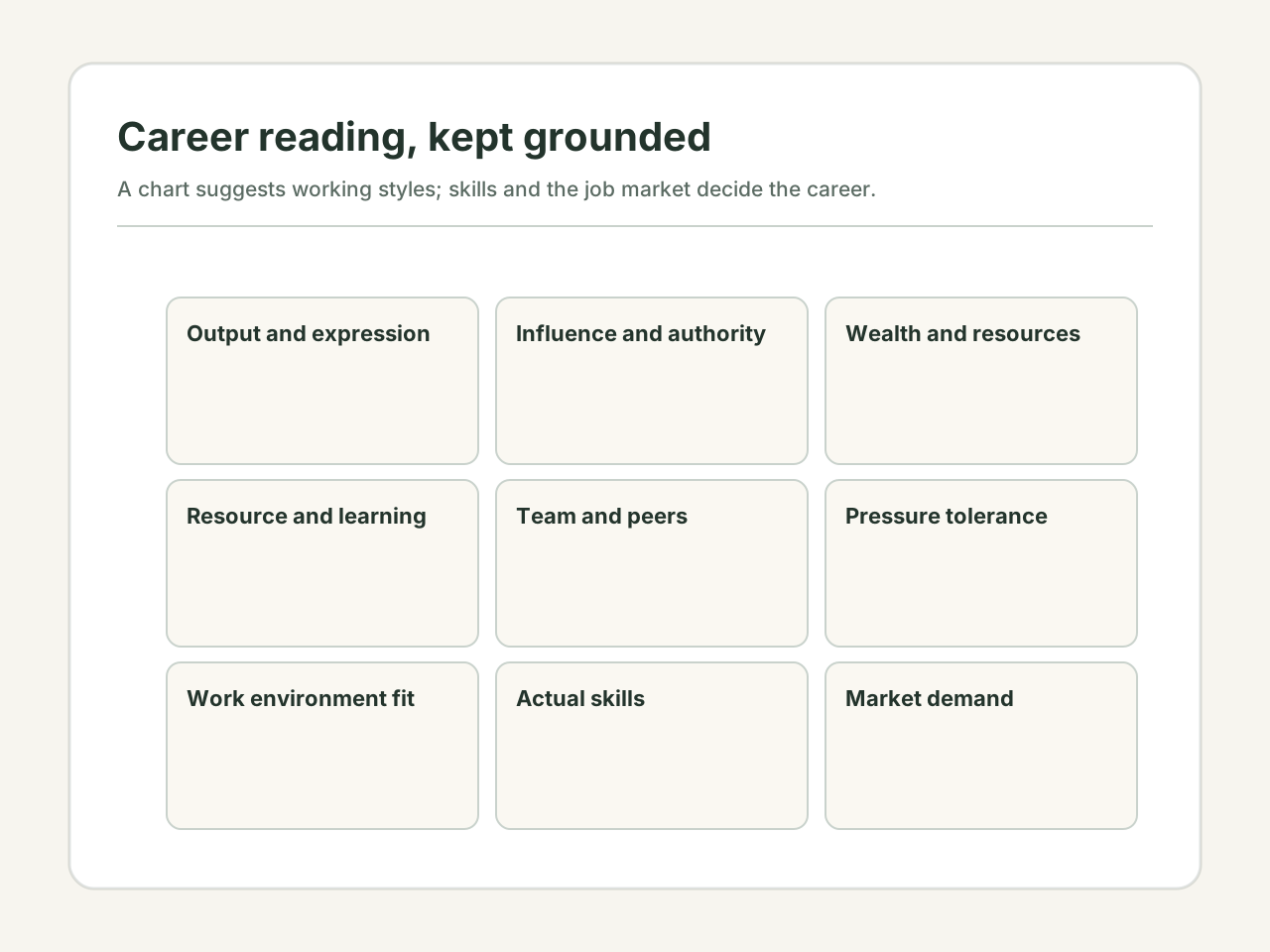
BaZi career analysis uses the Day Master's strength, the Ten Gods, and the Luck Pillars to identify professional inclinations, suitable industries, and timing for career moves. The Ten Gods most relevant to career are the Output stars (Eating God and Hurting Officer — creativity and expression), the Wealth stars (Direct and Indirect Wealth — business and management), and the Power stars (Direct Officer and Seven Killings — authority and leadership).
The honest view: BaZi career analysis is a vocabulary for describing work styles, not a job placement service. A chart with strong Hurting Officer energy suggests someone who thrives in creative, independent work. It does not mean they 'should' be an artist or 'should not' work in finance. The chart describes tendencies, not limitations. The best career for anyone is the one that matches their actual skills, interests, and opportunities — not the one that matches their BaZi chart.
What BaZi can actually tell you about career
Here is what the career-related Ten Gods suggest about work style, translated into practical terms:
| Dominant career god | Work style | Environments that suit this style |
|---|---|---|
| Direct Officer (正官) | Structured, responsible, rule-following. Prefers clear hierarchy and defined roles | Large organisations, government, law, compliance, administration. Any environment with clear processes and career ladders |
| Seven Killings (七杀) | Competitive, ambitious, thrives under pressure. Prefers challenge and autonomy | Entrepreneurship, sales, military, emergency services, competitive sports. Environments where results matter more than process |
| Eating God (食神) | Creative, expressive, enjoys the work itself. Prefers craft and quality over speed | Design, writing, cooking, teaching, arts. Any environment where the quality of the output is the primary measure of success |
| Hurting Officer (伤官) | Innovative, unconventional, challenges norms. Prefers freedom and intellectual stimulation | Technology, research, consulting, performance, startups. Environments that reward new ideas and tolerate rule-breaking |
| Direct Wealth (正财) | Practical, steady, risk-averse. Prefers stable income and clear deliverables | Accounting, operations, project management, retail management. Environments where consistency and reliability are valued |
| Indirect Wealth (偏财) | Opportunistic, entrepreneurial, comfortable with risk. Prefers variable rewards | Investing, sales, business development, entertainment. Environments where upside is uncapped and effort correlates with reward |
The element-industry connection, handled honestly
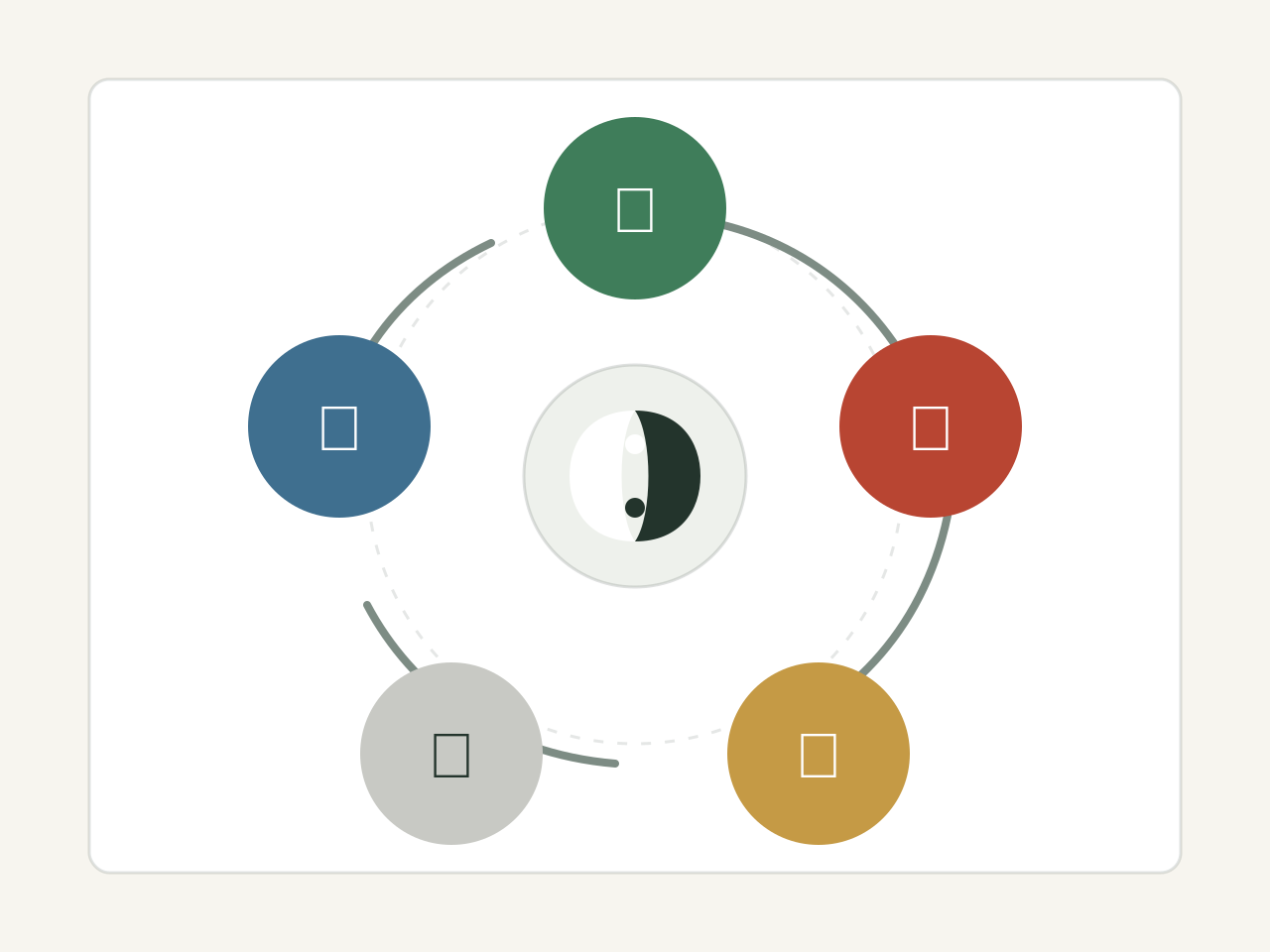
Traditional BaZi associates each element with certain industries. This is a suggestive framework, not a rigid rule. Here is how to use it sensibly:
- Water (水): communication, media, transport, consulting, tourism. These are industries that involve movement, flow, and information transfer. If your favourable element is Water, you may feel more energised in these fields — but the connection is loose, not deterministic.
- Wood (木): education, healthcare, publishing, environmental work, fashion. These are industries that involve growth, nurturing, and creativity. If your favourable element is Wood, you may naturally gravitate toward fields that help people or things develop.
- Fire (火): entertainment, technology, energy, hospitality, marketing. These are industries that involve visibility, energy, and social engagement. If your favourable element is Fire, you may thrive in roles that put you in front of people or require high energy output.
- Earth (土): real estate, construction, agriculture, administration, insurance. These are industries that involve stability, structure, and tangible assets. If your favourable element is Earth, you may prefer fields with clear processes and concrete results.
- Metal (金): finance, law, engineering, manufacturing, security. These are industries that involve precision, rules, and structure. If your favourable element is Metal, you may excel in fields that require discipline and attention to detail.
- The element-industry connection is a starting point for exploration, not a career mandate. If you are a Water person who loves working in finance (Metal), your chart is not 'wrong'. You are a person with a complex chart and a complex life, and the element-industry framework is a simplification.
A worked example: career timing in a Luck Pillar
A man has a Yang Water (壬) Day Master. He has been working in a mid-level corporate role for eight years and feels stuck. He consults a BaZi reader who tells him his next Luck Pillar, starting at age 38, is a Wealth pillar — Yang Fire (丙) over Yin Earth (辰). The reader tells him this is his 'money decade' and he should start a business immediately.
He quits his job and starts a consulting business. Six months later, he is struggling to find clients and running through his savings. He goes back to the reader and asks what went wrong.
A more careful reading: his Day Master is weak. He has no Metal (Resource) to support his Water, and he was born in summer (Fire season, which controls Water). A Wealth pillar for a weak Day Master is actually challenging — the Wealth element (Fire) further depletes the already-weak Water. The advice to start a business was wrong for his chart structure. He needs support (Resource) and collaboration (Peer), not the pressure of entrepreneurship.
The lesson: career timing is about the interaction between the Luck Pillar and the Day Master's strength, not just the label on the pillar. A Wealth pillar is favourable for a strong Day Master but depleting for a weak one. Always check the Day Master's strength before making career recommendations based on the Luck Pillar.
BaZi career analysis: what to expect, and what not to
BaZi career analysis is a useful tool for understanding your work style and identifying environments where you are likely to thrive. It is not a career aptitude test, and it does not replace self-knowledge, skill development, or market research. If your chart says you should be an artist but you are happy as an accountant, trust your life. If your chart says you should be in finance but you are burned out and miserable, trust your life. The chart is a reference, not a rulebook. Your actual experience of your career is the most reliable data you have.
Disclaimer: This content is for informational and cultural reference purposes only. It does not constitute professional medical, legal, financial, or psychological advice. Readers should exercise their own judgment and consult qualified professionals for specific concerns.
Sources and review basis
Traditional references explain historical vocabulary and context. Official practical sources support only the observable safety, comfort, or environmental points noted in the article; they do not validate metaphysical claims.
Traditional reference
Yuanhai Ziping (渊海子平)Wikisource digital text · Accessed 2026-07-14
A classical source for Four Pillars terminology, element relationships, and the Day Master framework.
Traditional reference
Sanming Tonghui (三命通会)Wikisource digital text · Accessed 2026-07-14
A historical compilation used to cross-check traditional BaZi concepts; it is not scientific validation.
Practical source
APA Dictionary of Psychology: Barnum effectAmerican Psychological Association · Accessed 2026-07-14
A psychology reference for why broad, favourable personality descriptions can feel personally accurate. It does not evaluate BaZi calculations themselves.