BaZi and feng shui work together, but one does not dictate the other
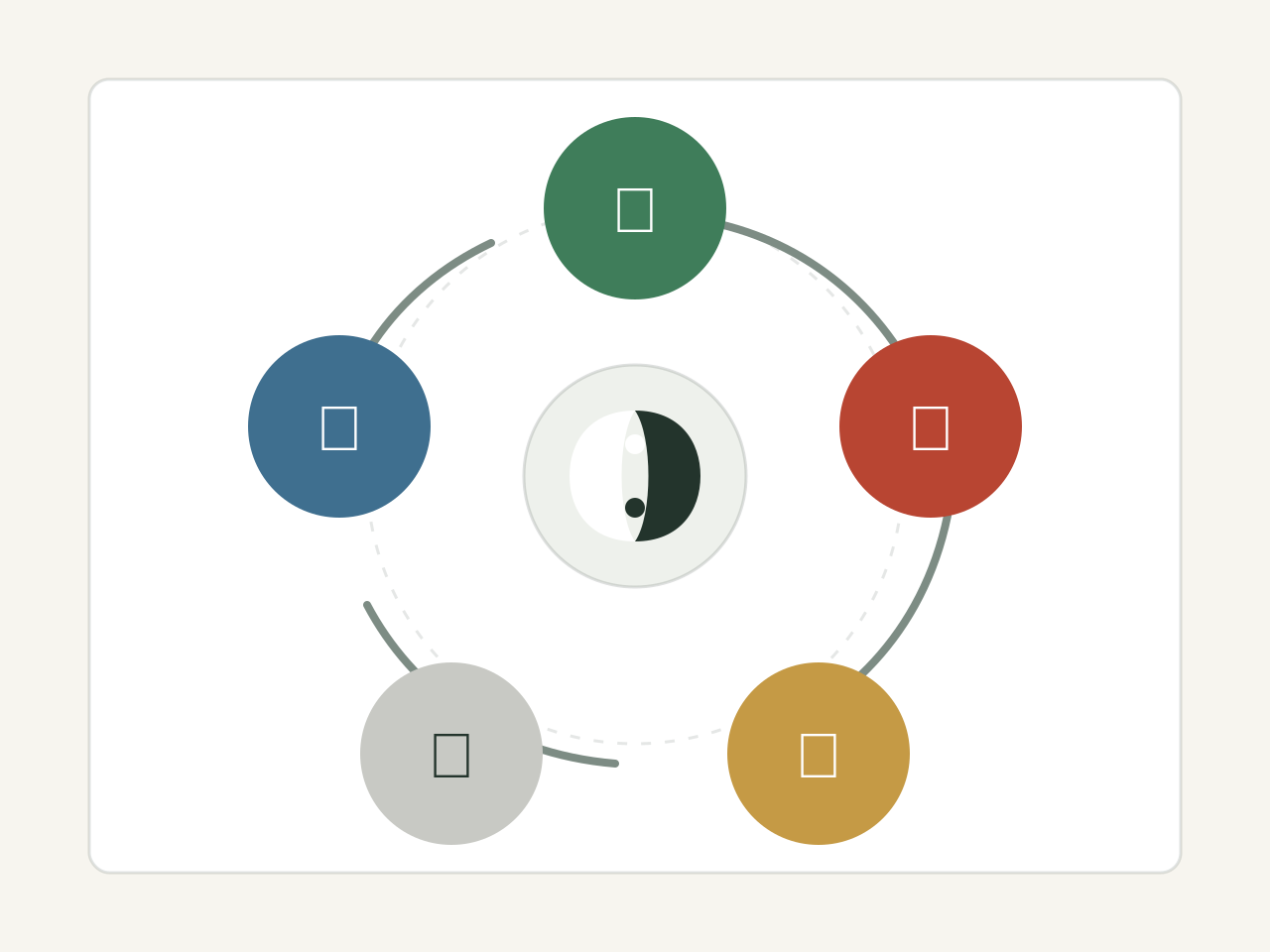
Some practitioners combine BaZi, which classifies a birth chart through traditional timing and element rules, with feng shui, which interprets a place. Within that tradition, the combined reading adds a personal symbolic layer to colour, material, direction, or timing choices.
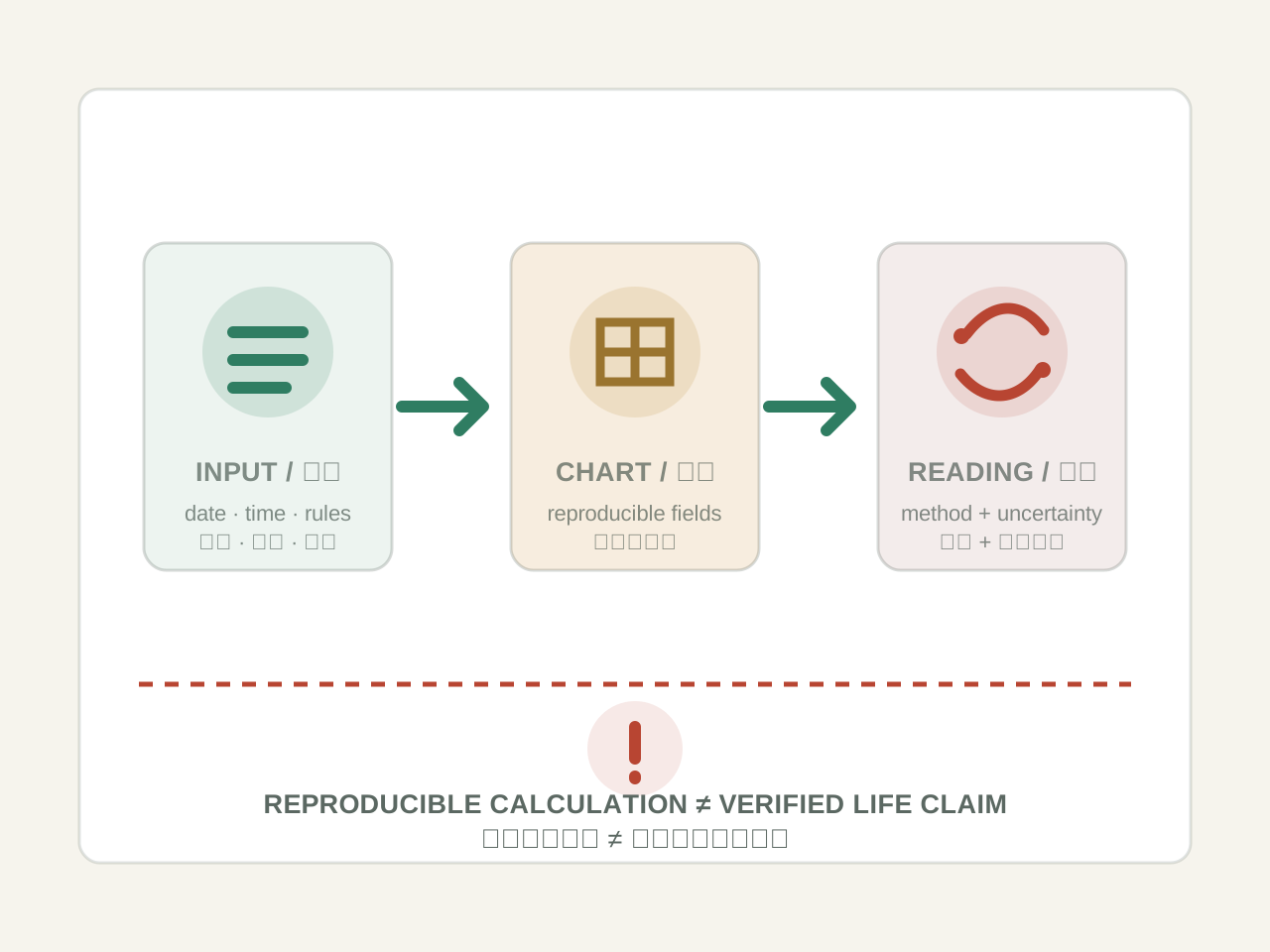
The honest view: there is no established evidence that a favourable element identifies which room, colour, direction, or material will improve a person's comfort or outcomes. Useful-god judgments also vary by method. Treat the connection as an optional cultural preference after safety, function, climate, accessibility, cost, maintenance, and every resident's needs are resolved.
Four associations, kept inside their evidence boundary
The middle column records what the tradition associates. The final column states what must decide the real-space choice:
| Decision | Traditional association | Reality check and boundary |
|---|---|---|
| Colour | Water-blue/black, Wood-green, Fire-red, Earth-yellow/brown, and Metal-white/grey are common correspondences | The chart does not measure colour preference or comfort. Test a removable sample under real light and obtain agreement from affected users |
| Room function | Some readers map social, rest, work, or storage activities to element themes | Assign rooms by dimensions, services, noise, daylight, ventilation, privacy, access, and household need; do not relocate a room from an element label |
| Direction | Water-north, Wood-east, Fire-south, Metal-west, and Earth-centre are standard correspondences | Orientation also changes sun, heat, glare, wind, views, and circulation. Measure those conditions; a birth chart does not show that one facing direction is beneficial |
| Moving time | Luck pillars or date selection may label some periods more supportive than others | Lease, finance, legal completion, utilities, weather, work, care, and mover availability decide feasibility. A chart cannot estimate the probability that a move will be smooth |
Three rules for keeping the symbolic layer proportionate
If the household wants to retain the tradition, use these controls:
- Reality first. Resolve hazards, damp, failed ventilation, blocked routes, overheating, cold, glare, noise, privacy, maintenance, and accessibility before discussing symbolic matching. A symbolic object cannot repair a physical defect.
- Method visible. Record whether the suggestion comes from Day Master, useful god, a direction school, or another rule, and note competing interpretations. Do not state that the selected element is what a person objectively needs.
- Reversible and consensual. Use a sample, textile, movable object, or short trial; define what will be observed, ask everyone affected, and remove the change if it does not suit the room. Do not alter heat, ventilation, structure, services, or shared access for an element association.
A worked example: when BaZi and practical feng shui conflict
In this fictional case, a reader labels Water as favourable for a resident whose ground-floor apartment has visible winter mould and persistent damp. A consultant suggests a decorative fountain and blue accents without inspecting the building.
The colour choice is not the safety issue; adding an open water feature can add moisture load. More importantly, mould and damp require investigation of leaks, condensation, ventilation, heating, drainage, and building fabric rather than an element interpretation.
The resident documents the location and timing, informs the landlord or building owner, and uses qualified building or health guidance. Remediation follows the diagnosed cause. Heating or dehumidification may or may not be appropriate, and decorative materials such as ceramic do not absorb enough moisture to replace repairs.
The lesson is not that the room literally has excessive Water or needs Fire and Earth. Traditional and physical categories are different. Humidity, temperature, surface moisture, ventilation, and the diagnosed source determine the building response.
The honest limit
BaZi and feng shui can be combined within tradition, but they are not a unified science and their connection has not been validated as a way to personalize environmental performance. A birth chart cannot diagnose a building or overrule inspection, code, climate, consent, access, maintenance, or qualified advice. Keep any element preference low-cost and reversible, and judge the room through observed conditions and the people who actually use it.
How to combine a chart with a real room
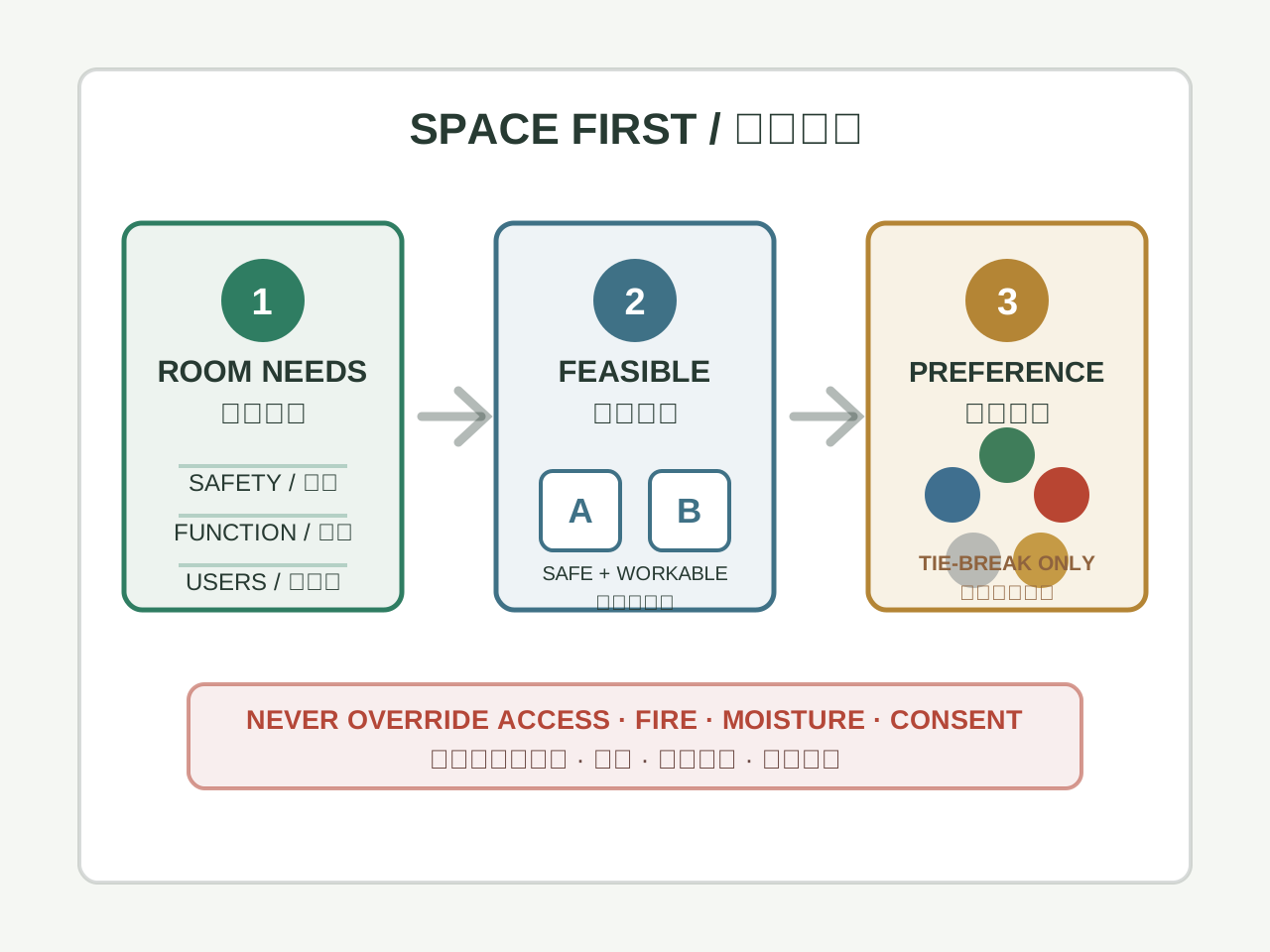
Start with the room, not the chart. Record its function, daylight, temperature, ventilation, noise, walking route, storage pressure, and the needs of everyone who uses it. Only after the practical constraints are clear should an element preference be used as a secondary filter between two arrangements that both work.
Keep the personalization reversible. Test colour through a cushion or screen before repainting, move a desk before commissioning cabinetry, and observe the room for at least two weeks. Record the change, the intended outcome, and a simple measure such as glare, interruptions, sleep routine, or ease of movement. If the change creates discomfort or conflict, remove it regardless of the chart interpretation.
A BaZi profile does not override accessibility, fire routes, rental rules, building safety, medical needs, or another resident’s preferences. When birth time or orientation is uncertain, describe a range of options instead of producing a precise personal direction.
Resolve a shared-room conflict before personalising it
Consider a shared study used by two adults. One chart-based preference suggests a dark blue accent and a north-facing desk; the other person needs brighter contrast, an accessible turning route, and the existing desk position for video-call privacy. The chart does not break this tie. Keep the accessible route and privacy requirements, compare two safe colour samples under the actual light, and record each user’s response before choosing.
The US EPA indoor-air reference below supports checking ventilation, pollutants, combustion sources, and moisture; it does not support a Five Elements colour or direction claim. If the room is stuffy or damp, investigate the real source and obtain building help where necessary. Do not describe the condition as an element imbalance or delay remediation while testing symbolic objects.
Write separate reasons in the decision log: practical requirement, traditional preference, affected person, evidence, consent, review date, and rollback condition. A personal preference can remain only when every long-term user agrees and the test does not reduce safety, access, privacy, maintenance, or comfort.
Personalization decision table
Treat BaZi symbolism as a final preference layer, never as the starting diagnosis. First confirm that each option supports the room’s function, every user, and the relevant safety or tenancy constraints.
Record a practical reason and an element-based reason separately. If the practical reason disappears or another user is disadvantaged, revise the choice regardless of the symbolic match.
| Decision | Practical condition first | Limited role of BaZi |
|---|---|---|
| Colour | Light level, room function, existing finishes, user comfort | Choose between already workable samples |
| Material | Durability, cleaning, allergy, fire and moisture needs | Add symbolic association only after specification |
| Desk or bed position | Access, glare, noise, ventilation, privacy | Use direction only as a tie-breaker |
| Timing | Budget, permission, contractor and household readiness | Use a date as a planning ritual, not a guarantee |
| Review | Observable comfort or workflow measure | Remove the change when the real outcome is worse |
What can and cannot be combined
BaZi and feng shui answer different kinds of questions in their traditional systems. A BaZi chart is a time-based symbolic model built from birth data; a house assessment discusses a physical setting, orientation, period, and use. Combining them without stating which question is being answered creates false precision. First describe the property and the household needs; only then decide whether a personal symbolic layer is relevant.
For example, a dark bedroom, unsafe stair, or noisy street remains a practical issue regardless of a chart. A personal preference for a quieter room may be discussed alongside a traditional element association, but the association does not replace inspection, budgeting, or communication among residents.
- Check the specific issue described in “What can and cannot be combined” before changing the arrangement or interpretation.
- Keep the action reversible and record what evidence would change the decision.
A transparent comparison method
Write two columns: observations that any visitor can verify, and interpretations that depend on a traditional school. In the first column record daylight, ventilation, circulation, noise, privacy, maintenance, and the user’s routine. In the second explain the chosen rule, the input required, and the uncertainty. If a conclusion changes when one school or time boundary changes, say so rather than presenting one answer as inevitable.
This method also prevents over-personalisation. A chart should not be used to justify taking a shared room away from another family member, ignoring a health need, or making a costly renovation. It can be a reflective prompt, but the final decision should remain understandable without accepting the metaphysical premise.
- Check the specific issue described in “A transparent comparison method” before changing the arrangement or interpretation.
- Keep the action reversible and record what evidence would change the decision.
A household decision example
A couple is choosing between two apartments. One has a more attractive symbolic orientation but poor sound insulation and a long commute; the other has better daylight, storage, and access to work. A responsible comparison lists those costs before any symbolic preference. The couple may still choose the first home, but they should know what they are accepting and which practical improvements are possible.
The review should end with a reversible next step: visit at different times, measure noise, check the contract, inspect moisture, and discuss each person’s routine. The value of the traditional framework is limited if it prevents those questions from being asked.
- Check the specific issue described in “A household decision example” before changing the arrangement or interpretation.
- Keep the action reversible and record what evidence would change the decision.
A concrete reader question
A useful way to read How BaZi Is Used in Feng Shui Planning is to begin with a concrete question rather than a general promise. The page describes learn how practitioners compare a bazi five-element profile with room function, color, materials, and direction without replacing practical design. A reader should write down what they want to understand, what information they already have, and what decision still belongs to them. If the question concerns a room, include the people who use it, the route through it, light, sound, maintenance, privacy, and safety. If it concerns a chart, date, symbol, name, dream, face, or palm, preserve the input, source, calendar or dictionary rule, and any uncertainty. This makes the topic specific enough to review instead of allowing a familiar term to stand in for an explanation.
Separate three layers in the notes: what the tradition means, what can be observed now, and what action is practical. A cultural association can be worth studying without being a verified prediction. The distinction is especially important when the topic sounds personal or consequential.
A worked comparison
Use one ordinary case related to How BaZi Is Used in Feng Shui Planning. Describe the situation in plain language before applying specialist vocabulary. Then compare two possible readings or actions in a table: input, method, expected implication, observable evidence, cost, risk, affected people, reversibility, and review date. If the topic involves a proposed arrangement, compare access, lighting, noise, comfort, cleaning, privacy, and shared agreement. If it involves a calculation or interpretation, compare the calendar, time boundary, source, school, dictionary, or weighting rule.
Do not hide a disagreement by averaging incompatible methods. State which conclusion changes under which assumption. Write one ordinary explanation beside the traditional one: workload, sleep, communication, budget, maintenance, camera angle, weather, or a simple input error may explain the same experience. A fair comparison makes room for curiosity and correction.
A low-risk next step
Choose one modest next step connected to How BaZi Is Used in Feng Shui Planning. Check a source, repeat a measurement, ask the person affected, observe the space at another time, compare two declared inputs, or keep a short record for a defined period. Change only one condition. Before acting, record the baseline and obtain consent if another person or shared space is involved. Avoid structural work, large purchases, or irreversible decisions until the practical issue is understood and the appropriate professional advice has been considered.
Review the result without treating sequence as proof of cause. Record what improved, what became harder, and what did not change. If a practical adjustment helps, acknowledge ordinary reasons that may have contributed. If it fails, undo or revise it rather than escalating automatically or blaming the reader. The value of a small test is that it can change the question.
Sources and limits
A reader should be able to see where the explanation comes from. Record the source, author or tradition, date accessed, terminology, and method used for How BaZi Is Used in Feng Shui Planning. Mark whether a statement is historical description, practitioner interpretation, direct observation, or practical advice. These categories should not be blended into a claim of scientific certainty. When two sources use the same word differently, preserve both definitions and explain which one this page follows.
The page is cultural and reflective material. It cannot diagnose illness, guarantee income, determine a person’s fixed character, prove relationship compatibility, replace legal or financial advice, or override safety and consent. Use proportionate language such as traditionally associated, one school interprets, or this input may suggest. Clear limits increase usefulness rather than weakening it.
A review record for future readers
Close a study of How BaZi Is Used in Feng Shui Planning with a record another reader could understand months later: original question, inputs, source, method, interpretation, ordinary explanation, action, cost, affected people, observed result, and next review date. Include evidence that did not fit the preferred explanation. If the original input was uncertain, do not rewrite it after the result is known. This preserves the difference between what was known at the beginning and what was learned later.
The reader remains free to disagree, seek another source, postpone action, or stop. If the issue involves health, safety, law, money, employment, structural work, or relationship coercion, use the relevant professional or shared process. The strongest conclusion is often a clearer question and a reversible next step, not a dramatic promise.
Disclaimer: This content is for informational and cultural reference purposes only. It does not constitute professional medical, legal, financial, or psychological advice. Readers should exercise their own judgment and consult qualified professionals for specific concerns.
Sources and review basis
Traditional references explain historical vocabulary and context. Official practical sources support only the observable safety, comfort, or environmental points noted in the article; they do not validate metaphysical claims.
Traditional reference
Yuanhai Ziping (渊海子平)Wikisource digital text · Accessed 2026-07-14
A classical source for Four Pillars terminology, element relationships, and the Day Master framework.
Traditional reference
Huangdi Zhaijing (黄帝宅经)Wikisource digital text · Accessed 2026-07-14
Historical context for traditional residential orientation and spatial vocabulary. Modern recommendations are reviewed separately.
Practical source
US EPA: Indoor Air QualityUnited States Environmental Protection Agency · Accessed 2026-07-14
Practical background for ventilation, pollutants, combustion sources, and indoor air concerns.