Wealth in BaZi is about capability, not guaranteed riches
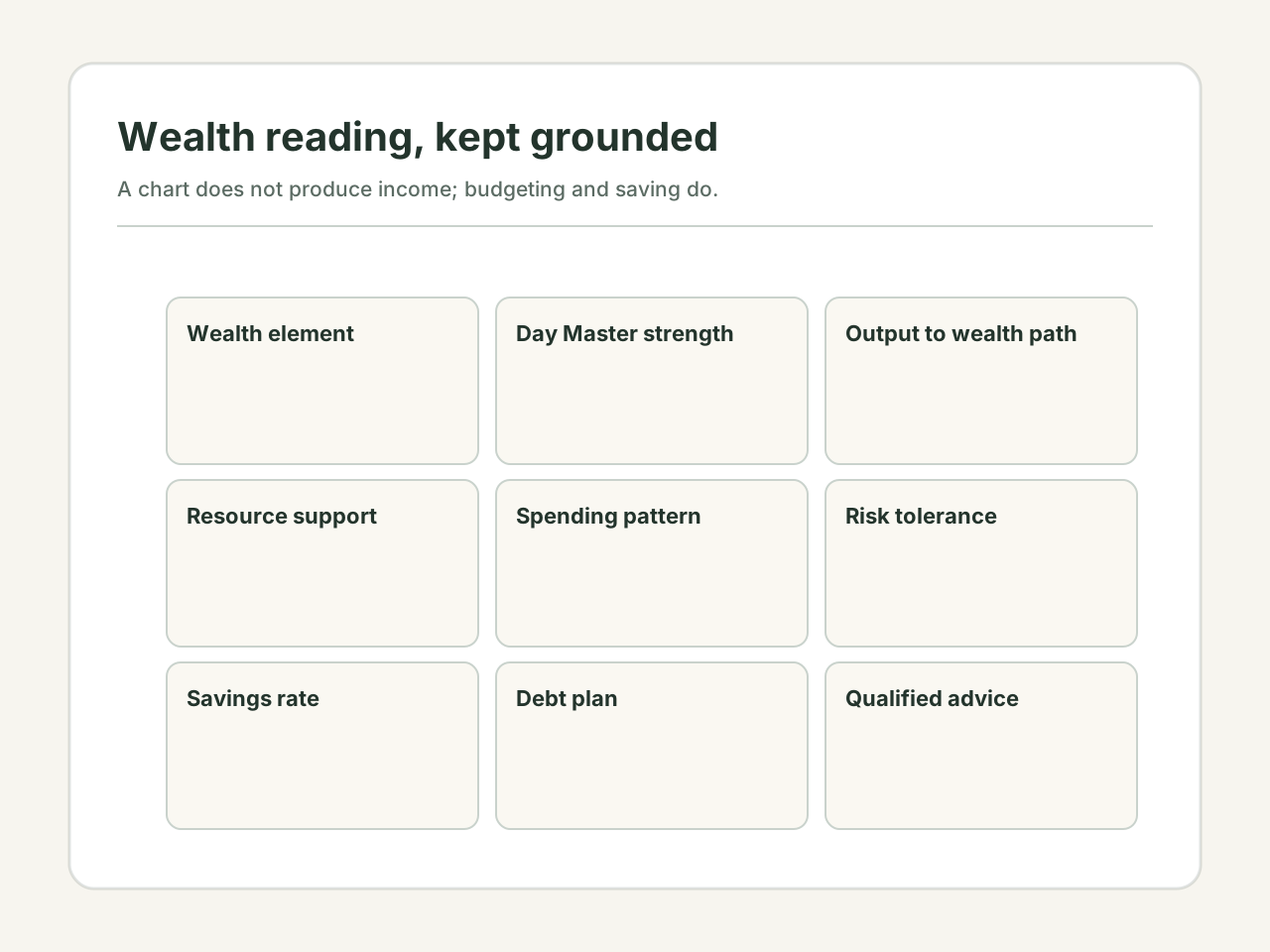
Wealth in BaZi is represented by the elements the Day Master controls. Direct Wealth (正财) describes earned income, stable assets, and practical financial management. Indirect Wealth (偏财) describes variable income, investments, entrepreneurship, and unexpected gains. The strength and placement of wealth stars in the chart suggest financial tendencies, not guaranteed outcomes.
The honest view: a BaZi chart with strong wealth stars does not mean you will be rich. It means the chart structure suggests you have a natural orientation toward financial activity — you notice opportunities, you think about money, you are comfortable managing resources. But wealth in real life requires action, skill, timing, and often luck. A chart with weak wealth stars does not mean you will be poor. It means financial accumulation may not be the central theme of your chart, and you may find fulfilment in other domains.
What the wealth stars actually mean
Here is how to interpret the wealth indicators in a BaZi chart:
| Indicator | What to check | What it means in practice |
|---|---|---|
| Wealth star strength | Is the wealth element strong in the chart? Does it have roots in the branches? | A strong wealth star with roots suggests a natural orientation toward financial activity. A weak or absent wealth star suggests money is not the primary life theme — and that is fine |
| Day Master strength vs wealth | Can the Day Master control the wealth? Is the Day Master strong enough to handle the wealth element? | A strong Day Master with strong wealth: the person can handle financial responsibility. A weak Day Master with strong wealth: the wealth may overwhelm — like a small person carrying a heavy load. The priority should be building strength (Resource/Peer) before pursuing wealth |
| Wealth star placement | Which pillar does the wealth star appear in? Year, month, day, or hour? | Wealth in the month pillar: early career or family financial background. Wealth in the day pillar: spouse brings financial capability or partnership in wealth. Wealth in the hour pillar: later-life financial accumulation or wealth through children/legacy |
| Wealth interaction with Luck Pillars | Does the Luck Pillar bring wealth elements? Does it strengthen or deplete the Day Master? | A Wealth Luck Pillar for a strong Day Master: opportunity. A Wealth Luck Pillar for a weak Day Master: caution — the wealth may deplete rather than enrich. The Luck Pillar interaction is more important than the natal wealth stars alone |
The three financial patterns BaZi actually describes
BaZi wealth analysis is not about how much money you will make. It is about your relationship with money. Here are the three most common patterns:
- The earner: strong Day Master + strong Wealth stars. This person is built to handle financial responsibility. They can earn, manage, and grow wealth. The risk is overwork — they keep earning because they can, not because they need to. The advice: build systems so the money works for you, not the other way around.
- The creator: strong Output stars + weak Wealth stars. This person's chart is oriented toward creativity and expression, not financial accumulation. They may earn well but not prioritise wealth. Money comes as a byproduct of their work, not as the primary goal. The advice: focus on doing work you love; the money will follow. But also learn basic financial literacy — a chart without strong wealth stars still needs a budget.
- The supported: weak Day Master + strong Resource stars. This person's chart is oriented toward learning, growth, and support. They may not be naturally oriented toward wealth accumulation, but they can build financial stability through knowledge, partnerships, and steady effort. The advice: do not compare yourself to the earners. Your path is different. Build financial security through consistency, not aggressive accumulation.
A worked example: when wealth stars are strong but the Day Master is weak
A woman has a Yin Wood (乙) Day Master. Her chart has strong Metal (Wealth) — two Yang Metal stems (庚) in her year and month pillars. A reader tells her she has 'excellent wealth stars' and will be 'financially prosperous'. She takes this as a guarantee and makes some risky investments based on the reading.
The problem: her Day Master is Yin Wood, born in autumn (Metal season, which controls Wood). She has no Water (Resource) to support her Wood and no other Wood stems. Her Day Master is weak. The strong Metal wealth stars are controlling her weak Wood — the wealth is depleting, not enriching. She is not built to handle aggressive financial risk.
She loses money on the investments. The chart was not wrong — the wealth stars were indeed strong. But the reading was incomplete. The Day Master must be strong enough to control the wealth for the wealth to be beneficial. For a weak Day Master, the priority is building support (Resource) and collaboration (Peer) before pursuing wealth. The correct advice would have been: focus on building skills and partnerships first; the wealth stars will activate when you are ready to handle them.
What BaZi wealth analysis does and does not change
BaZi wealth analysis is a tool for understanding your financial tendencies, not a prediction of your net worth. A strong wealth chart does not guarantee riches. A weak wealth chart does not doom you to poverty. Financial outcomes depend on education, opportunity, hard work, and luck — factors that no BaZi chart can fully capture. Use BaZi wealth analysis to understand your relationship with money: are you naturally oriented toward accumulation or toward other forms of value? Do you need to build strength before pursuing wealth? What kind of financial strategy suits your temperament? These are useful questions. 'How much money will I make?' is not one of them.
Disclaimer: This content is for informational and cultural reference purposes only. It does not constitute professional medical, legal, financial, or psychological advice. Readers should exercise their own judgment and consult qualified professionals for specific concerns.
Sources and review basis
Traditional references explain historical vocabulary and context. Official practical sources support only the observable safety, comfort, or environmental points noted in the article; they do not validate metaphysical claims.
Traditional reference
Yuanhai Ziping (渊海子平)Wikisource digital text · Accessed 2026-07-14
A classical source for Four Pillars terminology, element relationships, and the Day Master framework.
Traditional reference
Sanming Tonghui (三命通会)Wikisource digital text · Accessed 2026-07-14
A historical compilation used to cross-check traditional BaZi concepts; it is not scientific validation.
Practical source
APA Dictionary of Psychology: Barnum effectAmerican Psychological Association · Accessed 2026-07-14
A psychology reference for why broad, favourable personality descriptions can feel personally accurate. It does not evaluate BaZi calculations themselves.