Office layout is about people, not compass directions
The traditional approach to company office feng shui involves taking compass readings of the building, calculating the flying star chart, and positioning departments — finance, sales, leadership, reception — in specific sectors based on elemental associations. The CEO sits in the Northwest (Qian, 乾, the patriarch sector). Finance sits in the Southeast (Xun, 巽, the wealth sector). Reception faces the auspicious direction.
The honest view: an office layout succeeds or fails based on how well it supports the way people actually work. Can teams communicate easily? Do managers have visual contact with their teams? Is the reception area welcoming and clearly marked? Are meeting rooms near the people who use them? These are the questions that determine whether an office works. The compass can be a secondary consideration if it helps you make decisions about positioning, but it should never override the practical needs of the people in the building.
What the traditional system actually checks
The traditional feng shui approach to office layout maps departments to compass sectors. Here is what each mapping is actually getting at:
| Department | Traditional sector | Traditional reason | Practical meaning |
|---|---|---|---|
| CEO / leadership | Northwest (Qian 乾) | The patriarch sector, associated with authority and decision-making | The CEO should have a private office with a door that closes, away from high-traffic areas. The office should be calm and controlled — not because of the compass, but because the CEO needs to do focused strategic work and take confidential calls |
| Finance | Southeast (Xun 巽) | The wealth sector, associated with abundance and growth | Finance needs a secure, quiet area with lockable storage. The Southeast is often a corner office with good light — the real benefit is that a pleasant, quiet space helps people do careful numerical work without distraction |
| Reception | Facing the main door | The face of the company, the first impression | Reception should be immediately visible from the entrance, with clear sightlines and a welcoming layout. This is basic hospitality design — the traditional direction advice is secondary to the practical requirement that visitors can find it instantly |
| Sales / open-plan teams | South (Li 离) | The fame and recognition sector, associated with energy and visibility | Open-plan teams need good light, ventilation, and enough space between desks. The South tends to get the most daylight, which is genuinely beneficial for energy and mood. The compass is pointing at a real environmental factor |
The layout rules that matter
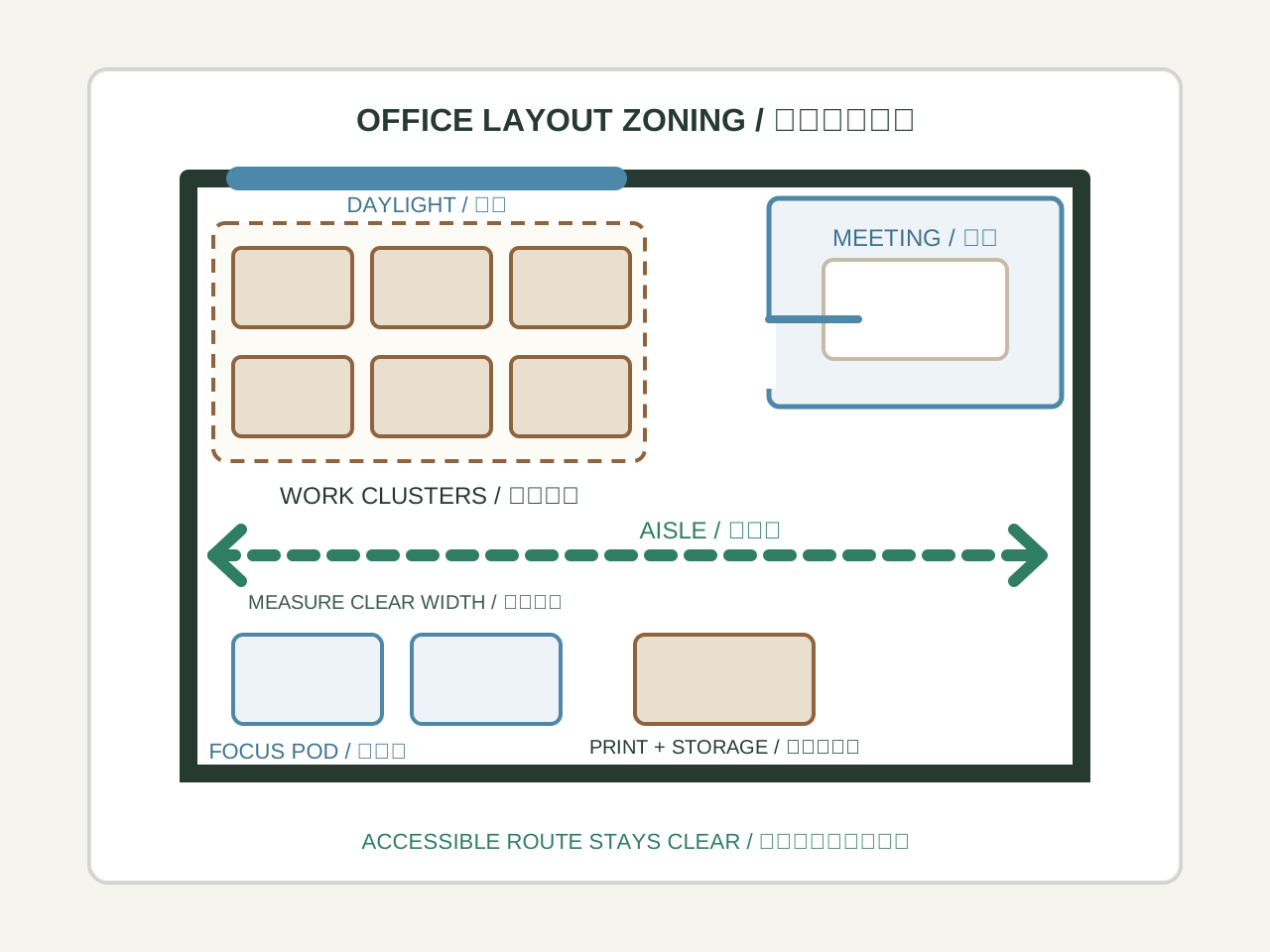
Here is what actually affects whether an office layout works, stripped of feng shui terminology:
- Walkways must be clear. The main corridors between desks, to meeting rooms, and to exits should be at least 90 cm wide and free of obstacles. This is not about 'qi flow' — it is about fire safety, accessibility, and the simple fact that people move faster and feel less frustrated when they are not squeezing past each other. If you have to turn sideways to get past a filing cabinet, the layout is wrong.
- Noise zones should be separated. People who make phone calls all day should not sit next to people who need to concentrate on detailed work. This is not a feng shui principle — it is an acoustic reality. Use physical separation (walls, distance) or acoustic treatment (panels, screens, carpets) to create quiet zones. The traditional advice to put 'yang' departments (sales, marketing) in active areas and 'yin' departments (finance, legal) in quiet areas is just describing this same principle in traditional language.
- Line of sight matters. Managers should be able to see their teams, and teams should be able to see each other. This is not about 'oversight' in a surveillance sense — it is about making it easy to ask a quick question, share a screen, or notice when a colleague needs help. The traditional principle of 'ming tang' (bright hall, 明堂) — an open, visible space — is describing the value of clear sightlines.
A worked example: rearranging a small office for a growing team
A 15-person startup is moving into a new office. The space is a single rectangular floor of about 200 square metres, with windows along one long wall. The team includes a CEO, a finance person, a sales team of four, a product team of six, and a receptionist. The CEO wants a feng shui layout and hires a consultant who produces a compass-based plan with the CEO in the Northwest corner, finance in the Southeast, and sales facing South.
The problem: the Northwest corner is the darkest part of the office, with no windows and poor ventilation. The Southeast corner is directly next to the noisy kitchen. The South-facing wall is where the sales team would have their backs to the entrance, unable to see visitors arrive. The compass plan is technically 'correct' by traditional standards, but the layout would make everyone miserable.
What they do instead: the CEO takes the corner office with windows — not because of the compass, but because she needs a private space for calls and the daylight helps her mood. Finance goes into a small internal room with a door that closes — the lack of windows is a tradeoff for the quiet and security they need. Sales takes the open area near the entrance with the best light — they are on the phone constantly and need the energy of the daylight. The product team takes the quieter end of the room, away from the entrance and the kitchen, where they can do focused work.
The result: the layout is not 'correct' by traditional feng shui standards. But it works. The CEO is happier. Sales has more energy. Finance is focused. The product team ships faster. The compass was the wrong tool for this job. The right tool was asking: who needs quiet, who needs light, and who needs to be near the door?
Company office layout feng shui plan: what to expect, and what not to
Feng shui can provide a useful vocabulary for thinking about office layout — the concepts of open space, protected positions, and clear pathways are real and valuable. But the compass directions and elemental associations are not a substitute for understanding how your specific team works. The best office layout is the one that supports the people in it. If a traditional feng shui recommendation contradicts what your team actually needs, trust your team. The qi will be fine.
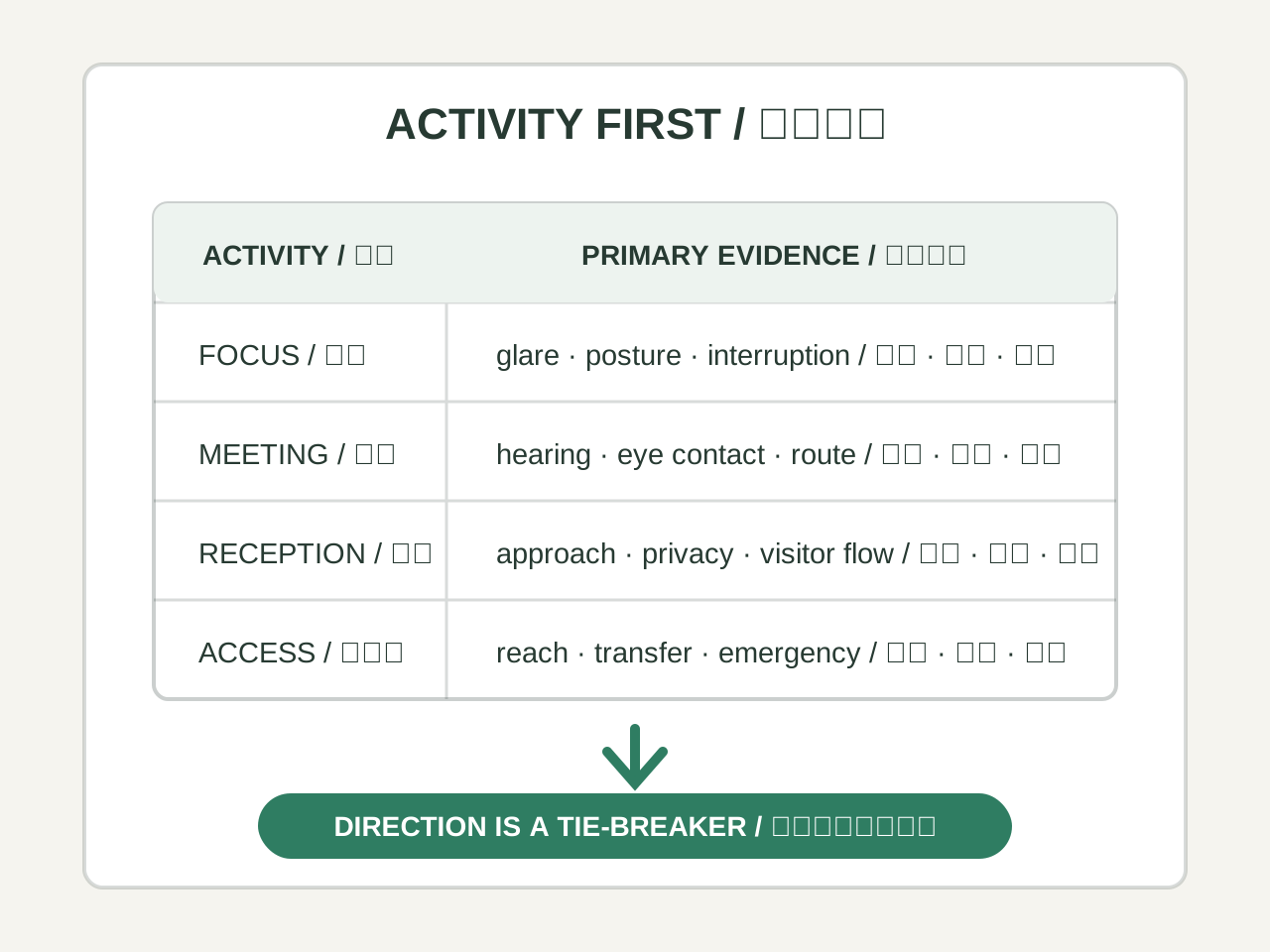
Plan the layout around work evidence
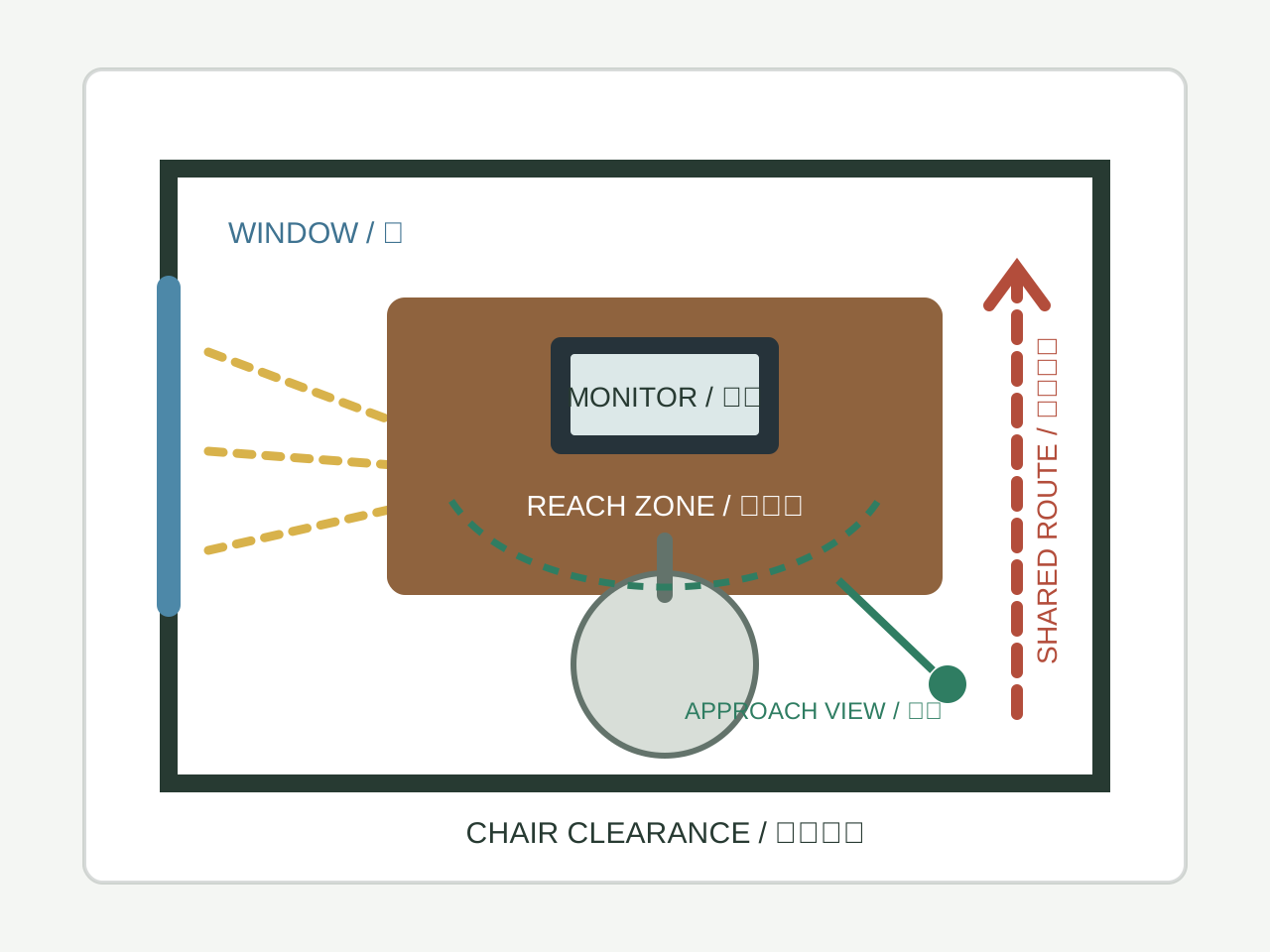
Write down what the space has to do before drawing any arrangement. List the work activities, how often each happens, who collaborates with whom, which conversations need privacy, which need visibility, how equipment and documents move, and where clients or visitors are received. Add the fixed constraints: structure, columns, glazing, services, power, fire routes, accessibility, and lease limits.
Collect a one-week baseline for the friction you want to reduce — interruption counts, glare periods, time lost retrieving equipment, room-booking conflicts, queue points, or team feedback. Then plan two candidate layouts and compare them against the same baseline rather than against a preferred diagram. A traditional command-position or sector language may help describe visual support and how a seat feels, but it cannot determine authority, productivity, promotion, or revenue.
Test one reversible change with a named owner, a review date, and a written stop condition. Keep it only when the work evidence and the experience of everyone using the space improve. Changing a shared office is a decision with affected parties; treat it as a change process, not a personal adjustment.
- Write the required work activities before drawing the plan.
- Establish a one-week baseline for the specific friction being addressed.
- Give every change an owner, a review date, and a stop condition.
Team impact, consent, and professional limits
A layout that suits one workstation can damage another. Before moving anything in shared space, identify who owns the decision and who maintains the area, then list who is affected: colleagues, visitors, remote participants, cleaners, contractors, and anyone using a wheelchair, crutches, or a guide dog. Check the effect on privacy, video calls, cables, storage, emergency egress, and cleaning access.
Where the problem is workload, management, staffing, or process rather than space, say so and route it to the people who can act on it. Moving furniture will not fix an operational cause, and a layout plan should not be presented as a substitute for a management decision.
Use regulated and measurable sources for the physical part of the plan. The CCOHS office-ergonomics reference supports checking seating, posture, lighting, and workstation setup; it does not support a claim that a desk direction determines authority. Persistent pain, air-quality complaints, electrical risk, unstable furniture, or a blocked fire route require the relevant workplace health, facilities, or building professional. Record the before-and-after state and review the layout again after any change in roles, headcount, technology, or accessibility needs.
Office layout decision record
Every row names a friction, the baseline that makes it visible, one reversible test, the people affected, and the date the result will be reviewed. Without a baseline, an improvement cannot be separated from a busy week or a quiet one.
| Work friction | Baseline (one week) | Reversible test | Affected parties | Review |
|---|---|---|---|---|
| Interruptions at focus desks | Interruptions per person per day | Add a quiet-zone sign and a booking rule | Focus workers, their managers | 14 days |
| Glare on shared screens | Times of day when glare is reported | Add a blind or reposition one monitor | Everyone at that bank of desks | 14 days |
| Retrieval time for shared equipment | Average time to fetch a shared item | Relocate one cabinet within its footprint | All users, cleaning staff | 30 days |
| Meeting room double-booking | Conflicts recorded per week | Publish a booking rule and a clear table layout | All teams, visitors | 30 days |
| Accessibility complaints | Routes that are difficult during busy periods | Clear one route of stored items | Wheelchair users, all staff, fire warden | 7 days |
Disclaimer: This content is for informational and cultural reference purposes only. It does not constitute professional medical, legal, financial, or psychological advice. Readers should exercise their own judgment and consult qualified professionals for specific concerns.