Shop prosperity comes from good retail design, not lucky objects
Shop feng shui is often presented as a set of tricks to attract wealth: place a three-legged toad near the entrance, hang a wind chime by the door, put a lucky bamboo on the counter, and position the cash register in the 'wealth corner'. The promise is that these objects will draw customers and money into the shop.
The honest view: a shop prospers because it sells something people want at a price they are willing to pay, in a location they can reach, with a shopping experience they enjoy. The feng shui objects are irrelevant to the transaction. What matters is the retail design: how easy is it to find the shop, enter it, browse the products, and pay? These are the questions that determine whether a shop makes money. Feng shui can be a useful framework for asking these questions, but it is the answers — not the objects — that matter.
The real factors that affect customer flow
Here is what the traditional feng shui advice for shops is actually pointing at:
| Feng shui term | What it means in retail | How to check it |
|---|---|---|
| Ming tang (bright hall, 明堂) | The space immediately outside and inside the entrance | Stand outside your shop. Can you see the entrance clearly? Is the approach unobstructed? Is the space inside the door open and inviting, or cramped and cluttered? A good ming tang means a customer can enter without hesitation |
| Qi flow (气流) | How customers move through the shop | Watch a customer walk through your shop. Do they follow a natural path, or do they stop, turn around, and leave? Are there dead ends? Is the main aisle wide enough? Good qi flow means the layout guides customers through the merchandise without confusion |
| Wealth position (财位) | The most visible, stable spot in the shop | In most shops, this is the area diagonally opposite the entrance — the spot people naturally look toward when they enter. This is where you put your best products, your promotions, or your most profitable items. It is not a mystical location; it is a sightline |
| Cash register placement (收银台) | Where the transaction happens | The register should be in a stable, protected position where the cashier is not exposed to the door and customers have room to queue and pay without blocking the entrance or aisles. This is logistics, not feng shui |
The three rules that improve any shop
Here is what actually improves a shop's performance, regardless of what you sell:
- Make the entrance impossible to ignore. The most common reason a shop underperforms is that people walk past without noticing it. Your entrance should be the brightest, cleanest, most visually distinct part of your storefront. The sign should be readable from across the street. The door should be open during business hours (weather permitting). The window display should change regularly so repeat passersby see something new. None of this is feng shui; it is basic retail.
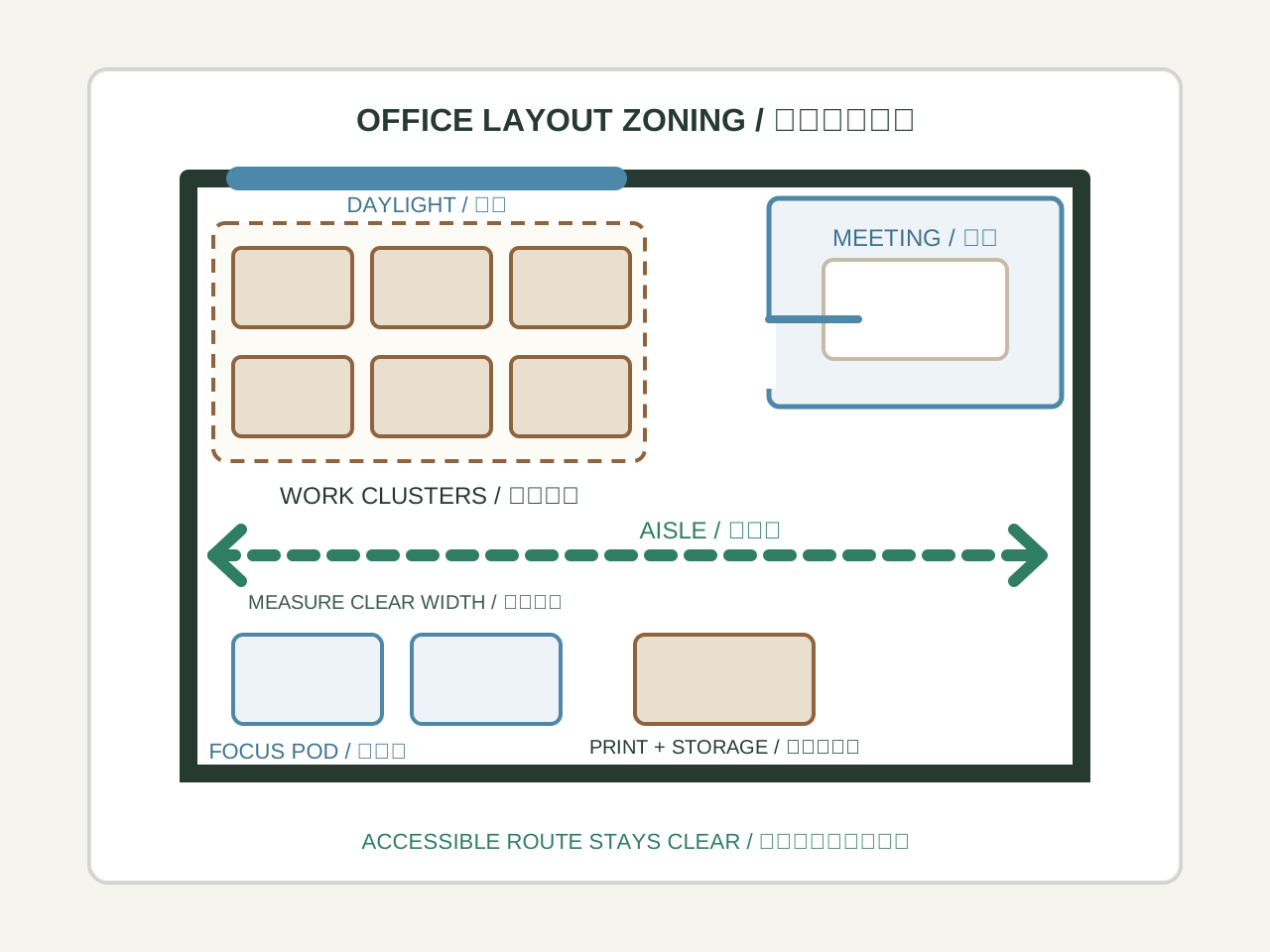
- Make the first three metres count. The first three metres inside the door is the 'decompression zone' — the space where customers adjust from the outside to the inside. They are not looking at products yet; they are orienting themselves. This zone should be open, uncluttered, and well-lit. Do not put your best products here. Do not put a salesperson here. Let customers breathe before you engage them.
- Make it easy to pay. The checkout area should be clearly visible, clean, and have enough space for a queue without blocking aisles. The cashier should be able to see the shop floor. The payment process — whether card, cash, or mobile — should be smooth and fast. A customer who has decided to buy should be able to complete the transaction in under a minute. Friction at the payment stage loses sales.
A worked example: a small boutique that rethought its layout
A clothing boutique in a neighbourhood shopping street has been open for two years. Sales are flat. The owner has tried everything: she put a lucky cat by the register, hung a crystal in the window, and rearranged the displays according to the annual flying stars. Nothing changes.
A friend who works in retail design visits and points out three problems. First, the entrance is dark — the window display is crowded with mannequins and the door is hard to see from the street. Second, the first three metres inside is a dense rack of sale items that blocks the view of the rest of the shop. Third, the checkout counter is at the back of the shop, behind a rack of accessories, and customers have to search for it.
The owner makes three changes. She removes two mannequins from the window, leaving one with a single outfit and a simple backdrop. She moves the sale rack to the back of the shop and replaces the entrance area with a single table displaying the season's new arrivals. She moves the checkout counter to the middle-left wall, visible from anywhere in the shop, with a small queue area marked by a rug.
Result: within two months, sales increase by 25%. The products did not change. The prices did not change. What changed was that customers could see the shop, enter without feeling crowded, and find the checkout without asking. The lucky cat and the crystal were irrelevant. The layout was the problem all along.
Where the tradition ends for shop and store feng shui for prosperity
Shop feng shui is a traditional vocabulary for retail design. It describes real principles — clear entrances, intuitive layouts, stable checkout areas — in poetic language. But the principles work because they are good retail design, not because they are feng shui. A shop with a bad location, bad products, or bad service will not be saved by a three-legged toad. If you want your shop to prosper, start with the basics: is your product good? Is your price right? Is your shop easy to find, enter, and buy from? These are the questions that determine whether a shop makes money. Feng shui objects are decoration, not strategy.
Separate footfall reality from prosperity symbolism
A shop question is almost always a customer-flow question. Before interpreting any symbol, record how people actually arrive and behave: passing footfall by hour, the direction most approach from, whether the window is read from the pavement or from a vehicle, where people stop, look, enter, queue, pay, and leave, and how long the decision takes. Photograph the street and the threshold at the same times on different days.
Then match each problem to a real cause. A weak threshold may be a step that is hard to see, a door that is heavy, or a window reflecting more than it reveals. Slow service points may be layout, staffing, or payment related. Damp, poor lighting, unpleasant odour, and noise all suppress the time people are willing to spend inside. Rank these before considering any arrangement preference.
Test one measurable change for a defined period: a clearer entrance, a re-arranged queue, improved lighting, a trial display, or extended opening hours. Compare the result with the baseline and note what else changed — weather, season, competitor openings, promotions, or roadworks. Keep only changes that survive that comparison, and keep the record so a later review can judge them again.
- Count and time footfall before interpreting any symbol.
- Match each complaint to a measurable retail cause.
- Log external factors alongside the result before deciding.
What the sources can and cannot support
The Huangdi Zhaijing (宅经) reference below is a historical text on dwelling and orientation language, usually applied to homes rather than retail performance. It can help a reader see whether a modern prosperity claim still resembles the tradition it cites. It cannot show that a shop direction, till position, ornament, or aquarium increases revenue.
Where the question concerns air, moisture, or safety in a public space, use measurable evidence and current regulations. Ventilation, fire egress, food-safety, accessibility, and building requirements are enforceable matters and take priority over any traditional arrangement. State which parts of a recommendation are traditional and which are practical.
If the shop is leased or in a shared building, describe the acceptable range and name the constraint. Do not use a symbolic explanation to excuse a staffing, pricing, stock, opening-hours, or location problem, and do not present a traditional preference as a forecast of profit or closure.
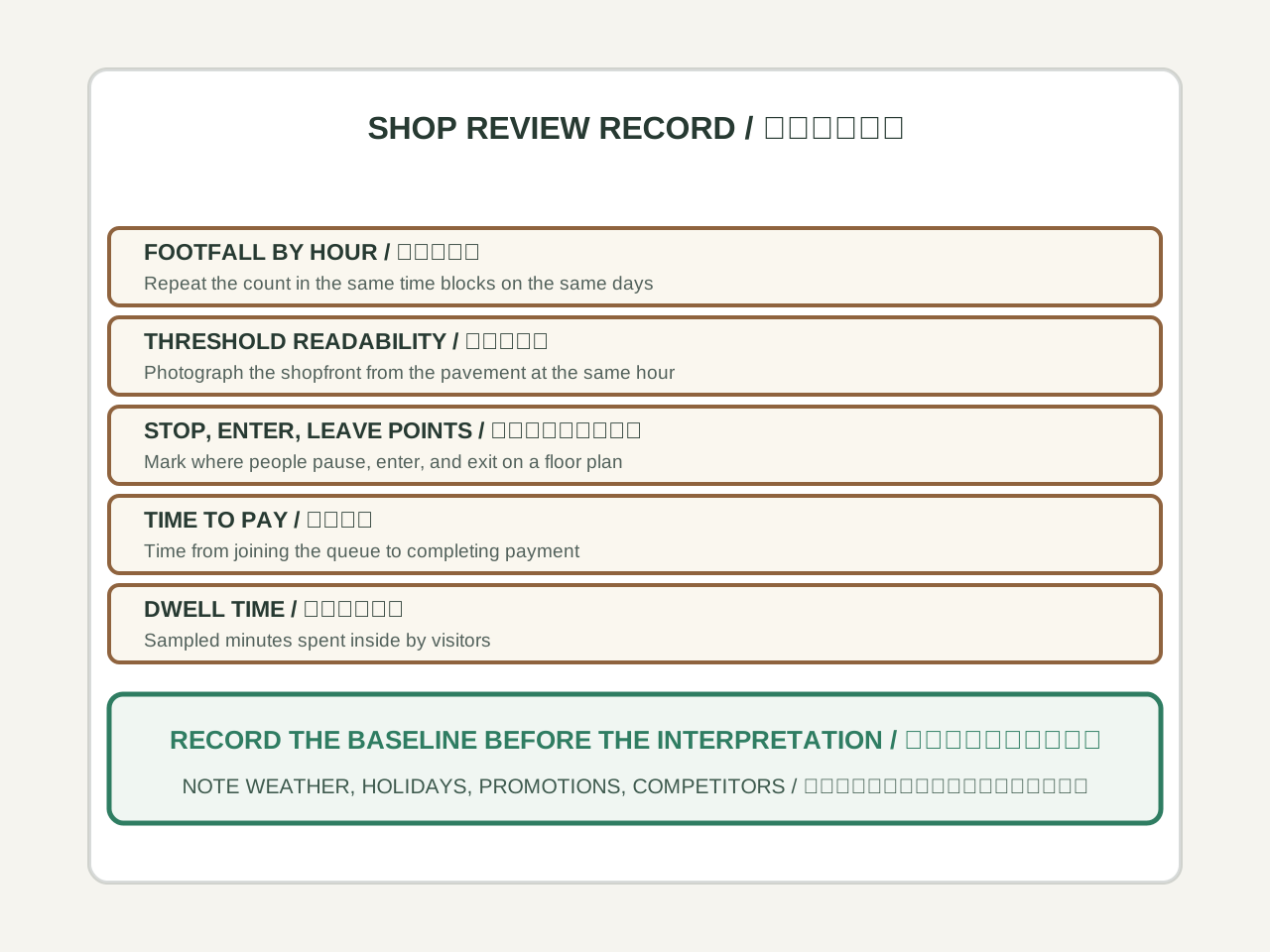
Shop review record
Record the observation before the interpretation, and note the external conditions alongside the result. Footfall, weather, holidays, promotions, competitor openings, and roadworks all change week to week, and a single good or bad week proves very little on its own.
| Observation | How to record it | Baseline | Test | External factors to note |
|---|---|---|---|---|
| Footfall by hour | Manual count in 15-minute blocks on three weekdays and one weekend day | Passers-by per block | Repeat the count after any change | Weather, holidays, local events |
| Threshold readability | Photograph the shopfront from the pavement at the same time daily | What is visible from outside | Change lighting or window display | Time of day, sun direction |
| Stop, enter, and leave points | Mark where people pause, enter, and exit on a floor plan | Pause and entry points | Rearrange the entrance area | Deliveries, staff breaks |
| Time to pay | Time from joining the queue to completing payment | Average and longest wait | Change staffing or payment position | Peak periods, staffing levels |
| Dwell time | Minutes spent inside by sampled visitors | Average dwell time | Improve lighting, temperature, or layout | Season, promotions, competitor activity |
Disclaimer: This content is for informational and cultural reference purposes only. It does not constitute professional medical, legal, financial, or psychological advice. Readers should exercise their own judgment and consult qualified professionals for specific concerns.