Plant placement is more important than plant species
The feng shui plant conversation is dominated by species: which plant attracts money, which plant purifies energy, which plant brings luck. But the species matters far less than the placement. A healthy plant in the right spot is good feng shui regardless of what it is called. A struggling plant in the wrong spot is bad feng shui, even if it is a money tree.
The principle is simple: match the plant to the light, match the plant to the room's function, and do not put a plant where it will be in the way or where it will die. Everything else is elaboration.
Room by room: where plants belong and where they do not
Here is a practical guide to plant placement by room, based on the room's function and the available light:
| Room | Good placement | Bad placement | Best plant types |
|---|---|---|---|
| Living room | Corners, near windows, next to the sofa | Blocking the entrance path, directly behind the sofa | Fiddle leaf fig, monstera, peace lily, snake plant |
| Bedroom | On a dresser away from the bed, in a corner with indirect light | Directly next to the bed, hanging over the bed | Snake plant (releases oxygen at night), peace lily, ZZ plant |
| Kitchen | On the counter away from the stove, on a windowsill | Directly next to the stove, above the fridge | Herbs (basil, mint, rosemary), spider plant, pothos |
| Bathroom | On a shelf with indirect light, on the windowsill if there is one | In a dark corner with no light, blocking the mirror | Ferns, pothos, peace lily (only if there is a window) |
| Home office | On the desk to the side, in a corner with indirect light | Blocking the view of the door, directly behind the monitor | ZZ plant, snake plant, small fiddle leaf fig |
A worked example: the plant that was in the way
A large monstera in a living room was placed directly behind the sofa, where people brushed against it every time they sat down. The leaves were damaged, the plant was struggling, and the room felt cramped. The feng shui concern is that a plant in a traffic path blocks the flow of energy. The practical concern is that a plant in a traffic path gets damaged and damages the experience of using the room.
The fix: move the monstera to the corner near the window, where it gets good light and is out of the way. The room immediately feels more open, the plant thrives, and the corner that was previously dead space now has a living focal point. This is a placement problem, not a plant problem.
Four plant placements that decide whether a plant thrives
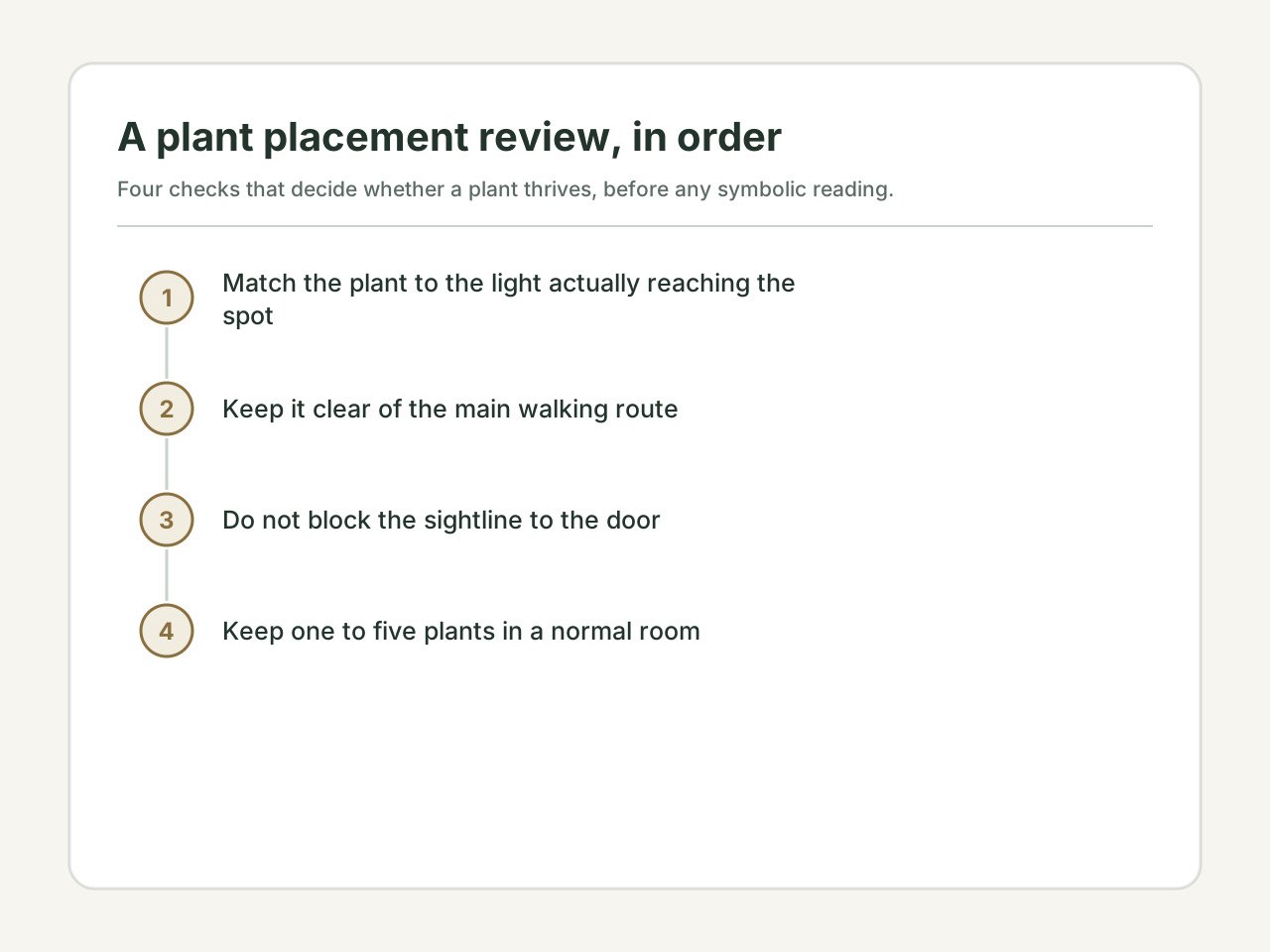
Forget the bagua map and the compass. These are the placement rules that make a difference:
- Light first. A plant placed where it cannot photosynthesise will die, and a dead plant is the worst feng shui object in any room. Match the plant to the light, not the tradition.
- Out of the traffic path. A plant that people brush against, knock over, or have to navigate around is a nuisance. Place plants where they can be seen and enjoyed without being in the way.
- Not blocking the view of the door. The command position applies to rooms, not just furniture. A plant that blocks the view of the door from the seating area makes the room feel less safe.
- One plant per room minimum, five maximum. A single plant in a room adds life. More than five in a medium-sized room starts to feel like a greenhouse. The goal is balance, not a jungle.
Keeping the plant alive is the real placement work
Most plant placement advice assumes the plant will thrive. In practice the plant is the variable: a species placed where it cannot photosynthesise will decline no matter how good the position looks on a bagua diagram. Watering, light rotation, and repotting do more for how a room feels than any symbolic arrangement, because a healthy plant is what people actually notice.
Watering is the step most often done wrong. The workable habit is to let the top of the soil dry and then water thoroughly until it drains, rather than adding a small amount every day. Leaves should be wiped now and then so they can photosynthesise, and the pot turned a quarter turn periodically so the plant does not lean permanently toward the window. A plant that has outgrown its pot should be repotted rather than left to stall.
Five plant placement mistakes that explain most failures
These are the errors that show up most often when a plant does not do well. None of them are about the compass:
- Buying more plants than you will care for. Plant count is limited by the time you will actually spend, not by the size of the room. A room with three healthy plants reads better than a room with ten struggling ones.
- Assuming every plant suits indoors. Roses, sunflowers, and most flowering annuals need direct sun and airflow that a living room cannot supply. Bringing them inside does not make them houseplants; it makes them short-lived.
- Treating an artificial plant as an equivalent. A good fake is a reasonable choice when care is genuinely impossible, but it does not change across the year the way a living plant does, and that change is much of the point.
- Placing by symbolism rather than by light. A plant set in a dark corner because a diagram marked the corner as favourable will decline, and a declining plant is the one thing the tradition itself treats as a bad sign.
- Keeping a dying plant. Yellowing leaves, mould on the soil surface, and a pot that never dries out are signals to act: move the plant, change the watering, or replace it rather than waiting for it to recover.
Matching plants to the room's style
Plant choice is also a design decision, and a plant that fits the room's style is easier to keep looking intentional. In a pared-back modern room, a single architectural plant such as a fiddle-leaf fig or a rubber plant in a plain white or grey pot does more than a cluster of small pots. In a Nordic-influenced room, trailing plants like pothos and ivy in light ceramic or hanging pots suit the lighter palette. In a room built around Chinese furniture, bamboo, orchids, and small pines sit naturally in a ceramic or unglazed clay pot. In a tropical scheme, larger specimens such as areca palm and bird of paradise are the obvious choice. The principle is the same in every case: the plant should look as though it belongs in the room rather than being placed on top of the decoration.
Checklist before you buy or move a plant
Work through this list before choosing a plant or moving one to a new spot. It takes a few minutes and prevents most of the losses that get blamed on the position:
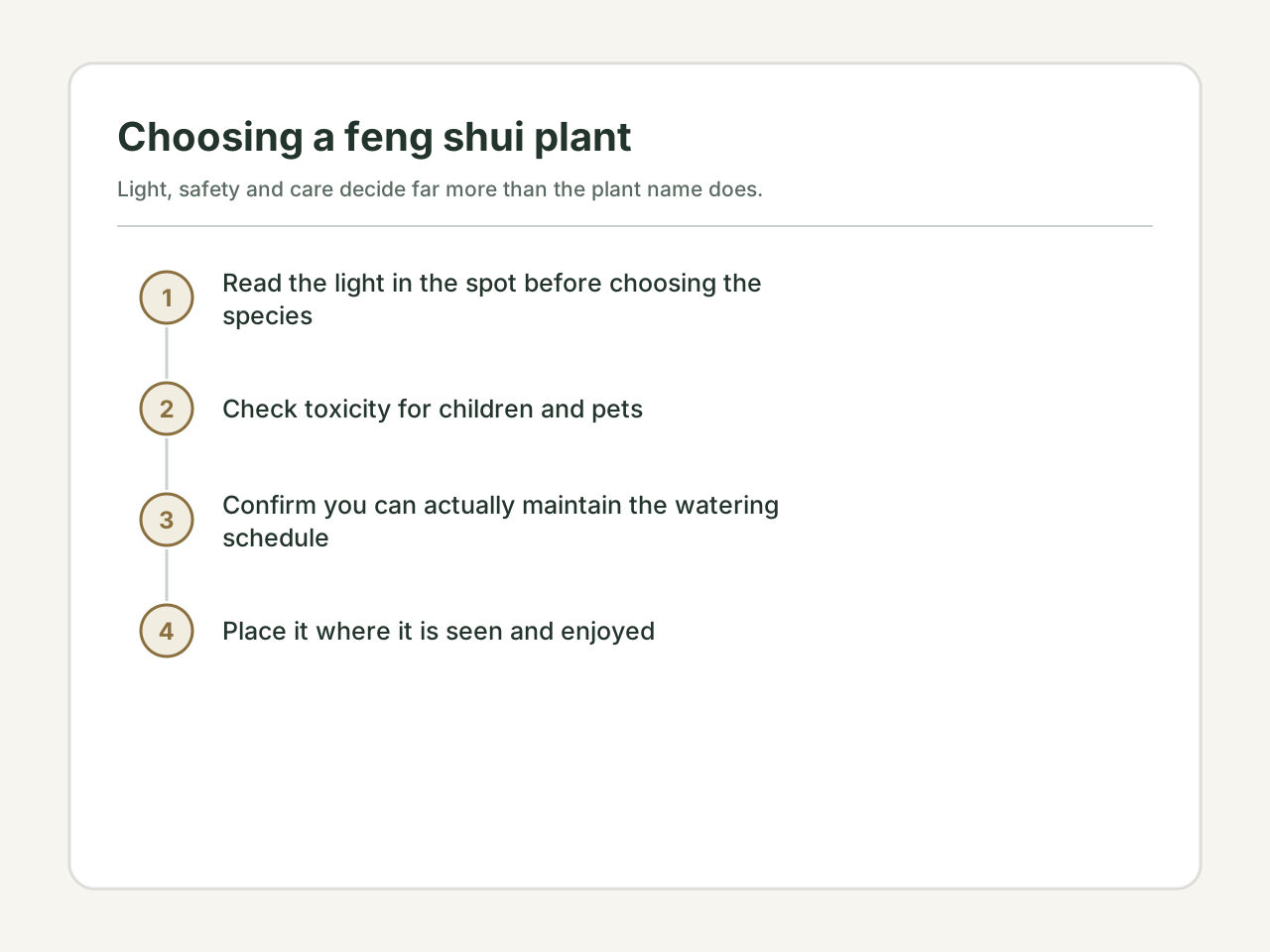
- Measure the light. Note how many hours of direct sun, bright indirect light, or deep shade the spot actually receives across a normal day, and check it in winter as well as summer.
- Check toxicity for pets and children. Look the species up before buying, and keep any plant that is toxic out of reach rather than relying on the animal to leave it alone.
- Confirm drainage. The pot needs a hole and the saucer must not hold standing water; a plant sitting in water will rot however well it is placed.
- Keep paths and vents clear. A plant should not block a doorway, a walkway, a radiator, or an air vent; that is the placement problem most often described as bad flow.
- Observe for two weeks. If the leaves lose colour, the soil stays wet, or growth stalls, move the plant or change the watering rather than adding a symbolic fix.
Indoor plant placement feng shui: what to expect, and what not to
A well-placed, healthy plant improves a room. It softens the space, adds a living element, and gives you something to care for. It does not attract wealth, predict luck, or ward off misfortune. The best feng shui plant is the one that thrives where you put it. Focus on light, space, and the room's function, and let the plant do the rest.
Disclaimer: This content is for informational and cultural reference purposes only. It does not constitute professional medical, legal, financial, or psychological advice. Readers should exercise their own judgment and consult qualified professionals for specific concerns.
Sources and review basis
Traditional references explain historical vocabulary and context. Official practical sources support only the observable safety, comfort, or environmental points noted in the article; they do not validate metaphysical claims.
Traditional reference
Huangdi Zhaijing (黄帝宅经)Wikisource digital text · Accessed 2026-07-14
Historical context for traditional residential orientation and spatial vocabulary. Modern recommendations are reviewed separately.
Practical source
ASPCA: Toxic and Non-Toxic PlantsAmerican Society for the Prevention of Cruelty to Animals · Accessed 2026-07-14
A plant-safety reference for homes with cats, dogs, or other pets.
Practical source
US EPA: Indoor Air QualityUnited States Environmental Protection Agency · Accessed 2026-07-14
Practical background for ventilation, pollutants, combustion sources, and indoor air concerns.