The bagua mirror is the most misunderstood object in feng shui
The bagua mirror (八卦镜) is a small, octagonal mirror framed with the eight trigrams of the I Ching. In the popular imagination, it is a protective amulet that deflects bad energy. In practice, it is the most misused object in feng shui, and most of the mirrors you see hanging above doors are doing nothing useful while annoying the neighbours.
The bagua mirror belongs to a specific branch of feng shui called external forms (外局). It was designed to address a specific problem: a sharp, hostile external feature pointed directly at your door or window, such as a road rushing straight at the house, a sharp roof corner, or a large electrical transformer. For the vast majority of people living in modern apartments, these conditions do not apply.
The three types of bagua mirror, and which one you almost certainly do not need
There are three versions, and they are not interchangeable:
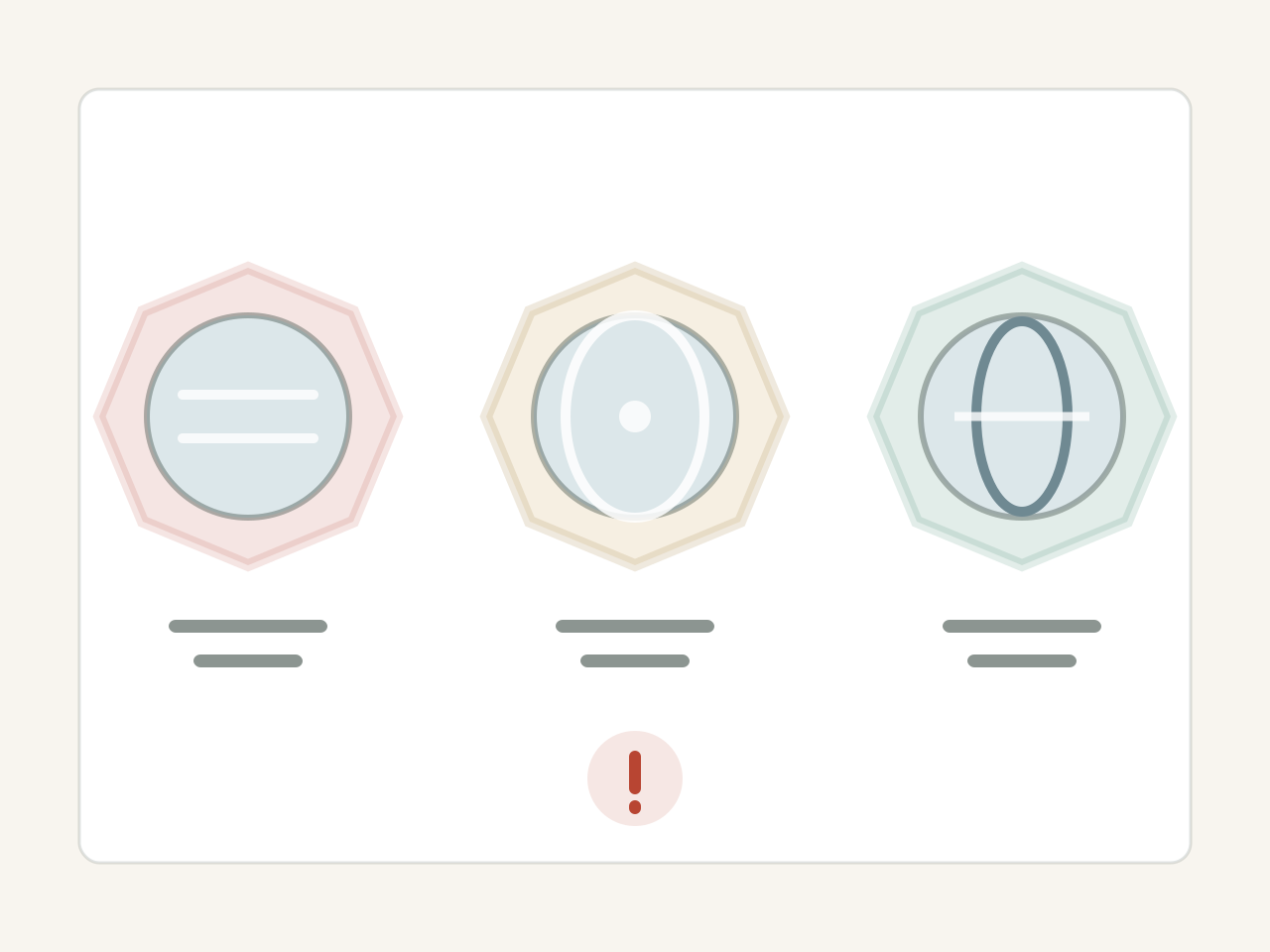
| Type | Appearance | Intended use | When you might actually need it |
|---|---|---|---|
| Flat mirror (平面镜) | Flat reflective surface | Reflects hostile external forms back to their source | Almost never; this is the one that causes neighbour disputes |
| Concave mirror (凹面镜) | Curved inward, like a bowl | Absorbs and neutralises negative external energy | Rarely; a genuine external threat like a transmission tower directly facing a window |
| Convex mirror (凸面镜) | Curved outward, like a dome | Disperses and widens the reflection; the gentlest version | If you must use one, this is the least aggressive option. It disperses rather than reflects directly |
A worked example: the mirror that started a neighbour dispute
A house in a row of terraced homes has a bagua mirror hanging above the front door, facing directly across the street at the neighbour's front door. The owner hung it because a feng shui consultant said the neighbour's roof corner was a poison arrow. The neighbour, understandably, found it aggressive and complained.
The correct approach, if the roof corner were genuinely a concern, would be to deal with it from your own side: a plant, a curtain, or a screen that blocks the view from inside your home. The bagua mirror was unnecessary, and the dispute it created was far more damaging to the household's peace than any roof corner could be. This is the most common bagua mirror story: the cure is worse than the perceived problem.
When a bagua mirror might actually be appropriate
The conditions are narrow. You need an external feature that is: (1) sharply pointed at your door or main window, (2) beyond your control to change, and (3) genuinely oppressive rather than mildly annoying. Examples include a high-voltage power line or transformer directly facing a bedroom window, or a road that ends in a T-junction aimed at your front door. Even then, the convex mirror is the gentlest option, and it should be placed discreetly, not as a statement piece above the door. For 95% of homes, a bagua mirror is not the right tool.
The honest truth about bagua mirrors
A bagua mirror does not protect you from bad luck, ward off spirits, or attract wealth. It is a traditional tool with a narrow, specific application rooted in the Form School's concern with external landforms. For most people, the best feng shui for the front door is a clean, well-lit entrance, not a mirror that makes the neighbours uncomfortable. If you are considering one, ask yourself whether the problem is real or whether you have been told to worry about something that was never an issue.
Disclaimer: This content is for informational and cultural reference purposes only. It does not constitute professional medical, legal, financial, or psychological advice. Readers should exercise their own judgment and consult qualified professionals for specific concerns.
Sources and review basis
Traditional references explain historical vocabulary and context. Official practical sources support only the observable safety, comfort, or environmental points noted in the article; they do not validate metaphysical claims.
Traditional reference
Huangdi Zhaijing (黄帝宅经)Wikisource digital text · Accessed 2026-07-14
Historical context for traditional residential orientation and spatial vocabulary. Modern recommendations are reviewed separately.
Practical source
APA Dictionary of Psychology: Barnum effectAmerican Psychological Association · Accessed 2026-07-14
A psychology reference for why broad, favourable personality descriptions can feel personally accurate. It does not evaluate BaZi calculations themselves.