Plants in feng shui: the honest version
Feng shui plants are one of the most searchable topics in the whole tradition, and also one of the most oversold. In traditional accounts, certain species are associated with prosperity or vitality; those meanings are symbolic, not evidence that a plant changes money, relationships, or career outcomes. The practical decision is narrower: does this plant suit the room's light, size, care routine, and household?
A plant affects a room as a visible object and a living thing that needs care. That is distinct from measurable indoor-air remediation, which depends on ventilation and pollutant sources. Species matters because each has different light, space, watering, and maintenance needs; a plant that cannot survive in its location is not a useful choice, whatever symbolic meaning is assigned to it.
The plants people actually ask about, and what they really do
Here are the most commonly recommended feng shui plants, stripped of the marketing:
| Plant | Traditional claim | What it actually does |
|---|---|---|
| Money tree (Pachira aquatica) | Attracts wealth and prosperity | A hardy, attractive indoor tree that tolerates low light; the braided trunk is a conversation piece |
| Lucky bamboo (Dracaena sanderiana) | Brings luck and harmony | Easy to grow in water; low maintenance; the number of stalks carries cultural symbolism, not magical properties |
| Jade plant (Crassula ovata) | Attracts money; the coin-shaped leaves | A succulent that needs bright light; its round leaves are visually pleasant and it is easy to propagate |
| Peace lily (Spathiphyllum) | Purifies energy and air | One of the few plants proven to remove certain indoor air pollutants; also signals when it needs water by drooping |
| Snake plant (Sansevieria) | Protective energy; absorbs negative chi | Thrives on neglect; releases oxygen at night, making it one of the few plants suitable for a bedroom |
| Orchid (Phalaenopsis) | Enhances relationships and fertility | A beautiful flowering plant that requires specific care; its presence is decorative, not predictive |
A worked example: the plant that keeps dying in the same spot
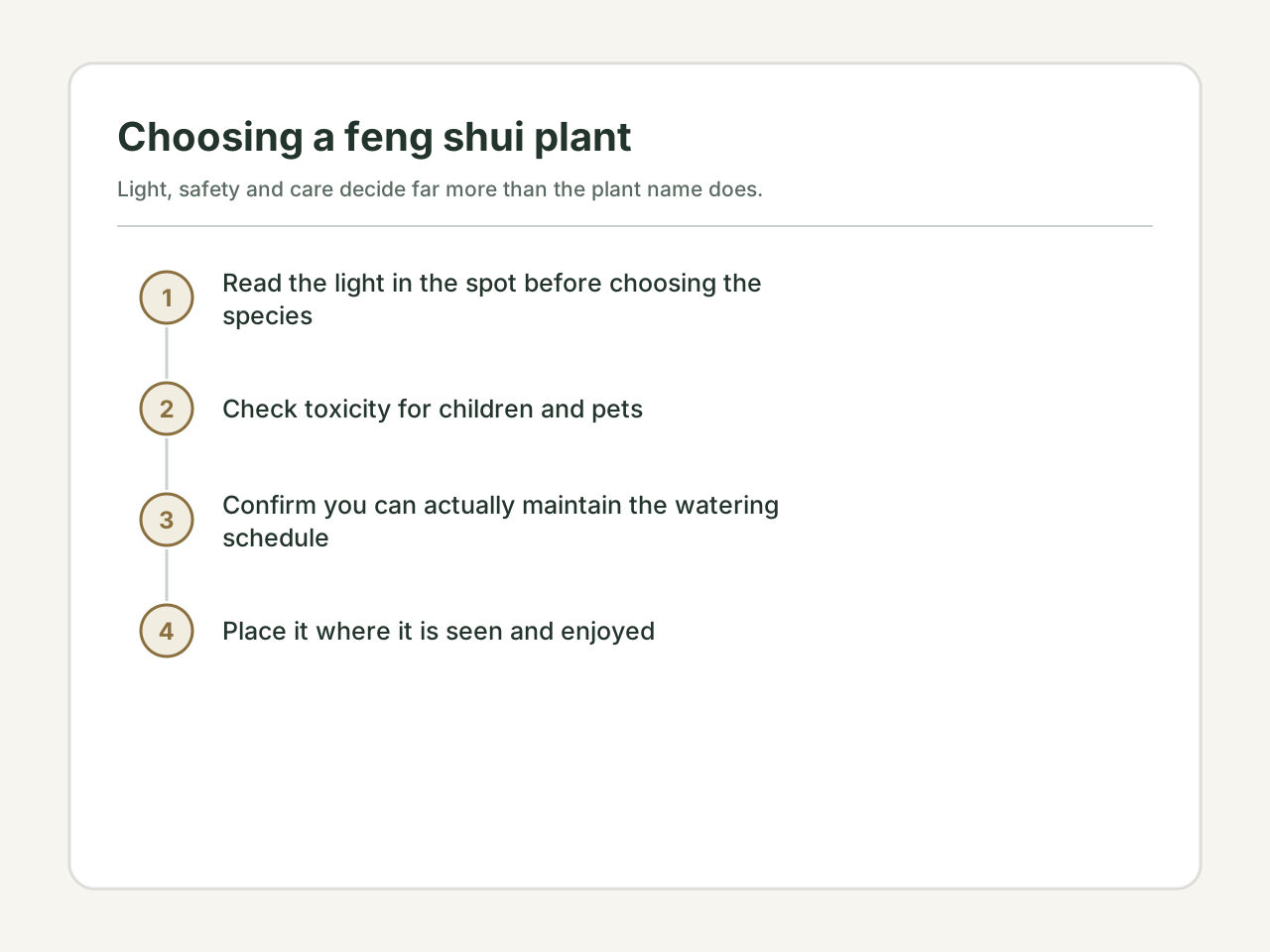
A common scenario: someone buys a feng shui plant for the wealth corner, places it in a dark hallway, and it is dead within a month. The internet says a dying plant in the wealth corner is a bad omen. The practical read: the plant died because it had no light.
The fix is to match the plant to the light, not the tradition. Move the plant to a spot with the right light level for its species. If the wealth corner is genuinely dark, use a high-quality silk plant or a plant that tolerates very low light, like a ZZ plant or a snake plant. The omen is not about your finances; it is about your plant care.
Where to put plants, and where not to
Placement is more important than species. A plant in the wrong spot is a maintenance problem, not a feng shui problem:
- Good: living room corners, near windows, on a desk with indirect light, in an entryway with natural light. These are places where plants soften the room and thrive.
- Bad: bedrooms with no natural light, dark bathrooms, directly behind a sofa where people brush against it, or in a walkway where it gets knocked over.
- Avoid: sharp-leaved or spiky plants (cacti, yucca, holly) near seating areas or beds. The concern is not poison arrows; it is that you will brush against them and it will hurt.
- Avoid: too many plants in one room. A room that feels like a greenhouse is visually overwhelming. Three to five healthy plants in a medium-sized living room is plenty.
Dead or dying plants: the one thing every school agrees on
If there is a single rule that crosses every feng shui school, it is this: a dead or dying plant is worse than no plant. A plant with brown leaves, drooping stems, or dry soil reads as neglect, and the visual signal it sends is the opposite of what you want. If a plant is struggling, either move it to better light, adjust the watering, or compost it. Do not keep a half-dead plant in the hope that it will recover in the same spot where it is currently dying.
The real value of a plant in a room
A healthy plant improves a room. It softens the space, adds a living element, and gives you a small daily ritual of care. That is a real benefit, and it is worth the effort. It does not attract wealth, predict good fortune, or ward off bad luck, and any plant seller who claims otherwise is marketing, not tradition. Buy plants you like, match them to the light you have, and keep them alive. That is the whole of practical feng shui plant advice.
Disclaimer: This content is for informational and cultural reference purposes only. It does not constitute professional medical, legal, financial, or psychological advice. Readers should exercise their own judgment and consult qualified professionals for specific concerns.
Sources and review basis
Traditional references explain historical vocabulary and context. Official practical sources support only the observable safety, comfort, or environmental points noted in the article; they do not validate metaphysical claims.
Traditional reference
Huangdi Zhaijing (黄帝宅经)Wikisource digital text · Accessed 2026-07-14
Historical context for traditional residential orientation and spatial vocabulary. Modern recommendations are reviewed separately.
Practical source
ASPCA: Toxic and Non-Toxic PlantsAmerican Society for the Prevention of Cruelty to Animals · Accessed 2026-07-14
A plant-safety reference for homes with cats, dogs, or other pets.
Practical source
US EPA: Indoor Air QualityUnited States Environmental Protection Agency · Accessed 2026-07-14
Practical background for ventilation, pollutants, combustion sources, and indoor air concerns.