A villa is a house with land — and that changes the feng shui completely
Feng shui for a villa or detached house is fundamentally different from feng shui for an apartment. In an apartment, you control only the interior. In a villa, you control the land around the house, the orientation of the building on the land, the position of the entrance, and the relationship between the house and the garden. This is closer to classical feng shui, which was designed for houses on land, not flats in towers.
The extra control comes with extra responsibility. In an apartment, you can blame the building's orientation for a feng shui problem. In a villa, the orientation is your choice — or at least it was someone's choice, and you live with the consequences.
The four things that matter most for a villa layout
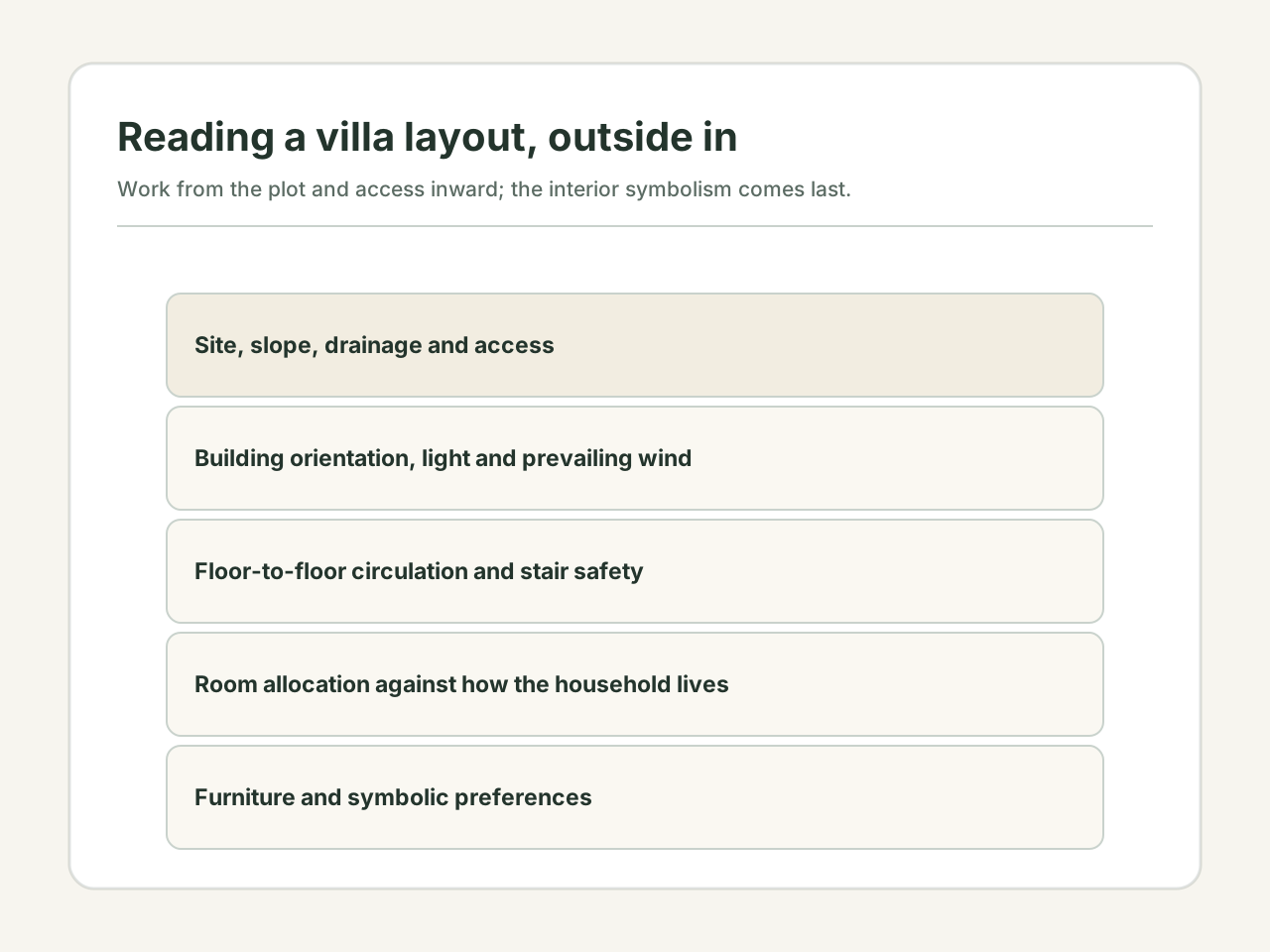
Classical feng shui evaluates a house on a plot of land using four criteria. Each has a practical equivalent that does not require a compass:
| Criterion | Feng shui term | Practical meaning |
|---|---|---|
| Site shape | The plot should be regular — square or rectangular, not L-shaped, triangular, or irregular | A regular plot is easier to build on, easier to landscape, and leaves no awkward dead zones. Irregular plots create unusable corners and force the house into a compromised position. |
| Building position on the land | The house should sit centrally or slightly toward the back of the plot, with open space in front | A house too close to the front boundary feels exposed and has no privacy. A house too close to the back leaves a large, unusable front yard. The ideal is a modest front garden and a larger, more private back garden. |
| Entrance orientation | The main door should face an open area (明堂) — a clear, unobstructed space — not a wall, a tree, or another building | The entrance is the first thing you see when you arrive. A clear, welcoming approach sets the tone for the whole house. A blocked or cramped entrance does the opposite. |
| Backing (靠山) | The house should have something solid behind it — a hill, a taller building, a row of trees — not a cliff, a road, or open water | A solid backing provides wind protection, privacy, and a sense of being sheltered. A house with nothing behind it feels exposed, especially at night. This is the most practical of all feng shui principles — it is why people have always preferred to build against a hill rather than on a ridge. |
Garden feng shui: the outdoor room
The garden is part of the villa's feng shui, not just decoration. It is the transition zone between the house and the outside world, and its design affects how the house feels:
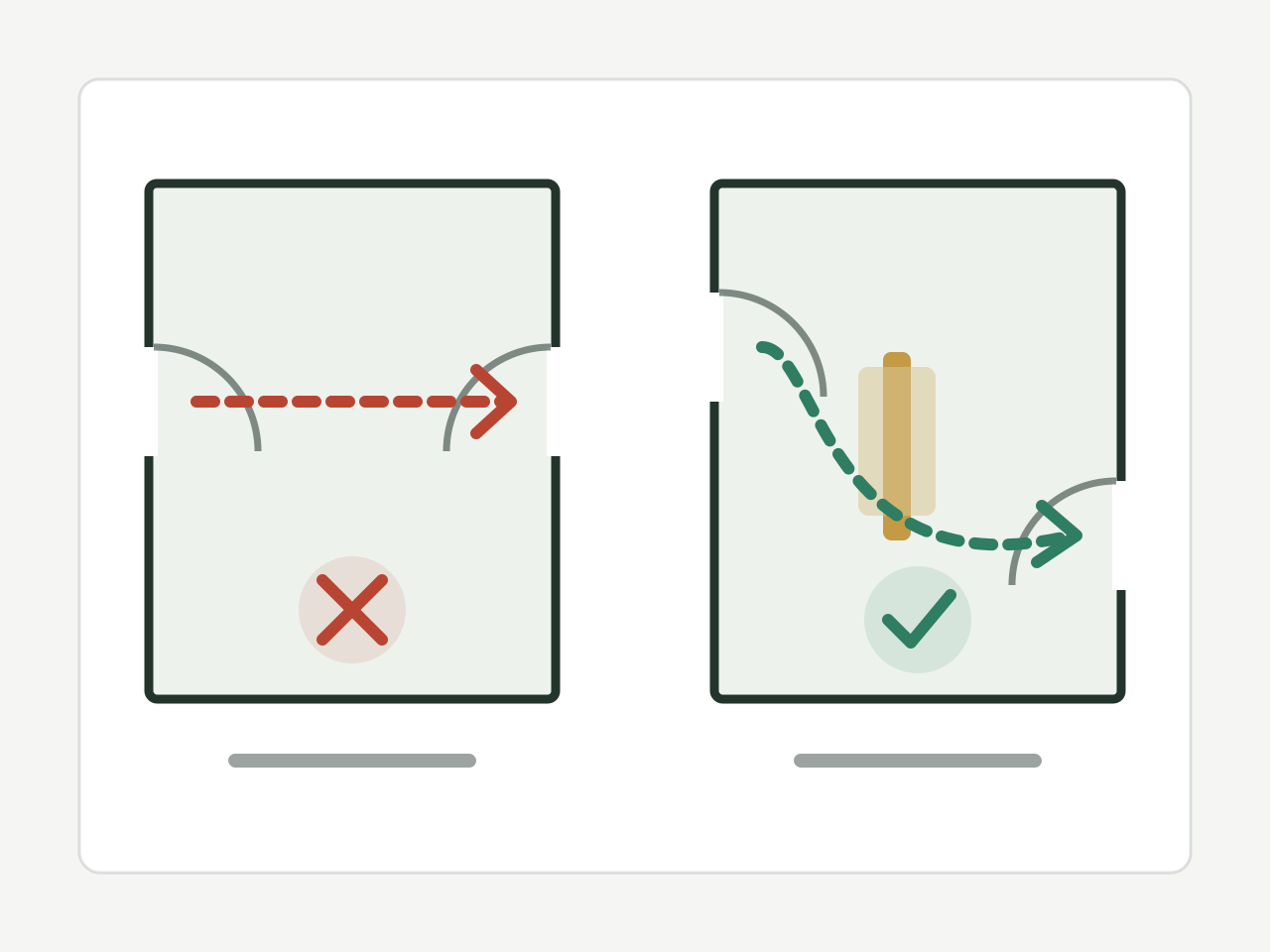
- The path to the front door should be clear, well-lit, and slightly curved. A straight path from the gate to the door is a feng shui 'poison arrow' — it channels energy too directly. A curved path is gentler and more inviting. This is also why curved garden paths look better than straight ones.
- The back garden should feel enclosed and private. Hedges, fences, or trellises create a sense of containment. An open back garden that blends into the neighbours' gardens feels like public space, not private space.
- Water features (ponds, fountains) should be in front of the house or to the side, not directly behind it. Water behind the house is traditionally considered unstable — a lack of backing. The practical version: water behind the house means damp near the foundation.
- Large trees should not be directly in front of the main door or windows. They block light, drop leaves, and their roots can damage foundations. A tree 5-10 metres from the house is fine. A tree 1 metre from the front door is a problem.
- The garden should have a mix of open space and planted areas. A garden that is all lawn feels empty and exposed. A garden that is all overgrown shrubs feels oppressive. The balance matters.
A worked example: the villa with the wrong entrance
A family bought a villa where the front door faced a blank wall — the side of the neighbour's garage, 3 metres away. The door opened onto a narrow side path between the house and the wall. The 'real' entrance that everyone used was the back door from the driveway, which opened directly into the kitchen.
The feng shui problem: the front door was essentially unusable, so the house had no proper entrance. The back door was the de facto entrance, but it opened into the kitchen — a workspace, not a welcoming threshold. Visitors walked past the bins and through the cooking area to enter the house.
The fix: they could not move the front door, but they could change the entrance experience. They improved the lighting on the side path, added a small porch awning over the front door, and placed a bench and potted plants to make the path feel intentional rather than forgotten. For the back door, they added a small mudroom with a bench, coat hooks, and a shoe rack, creating a proper entry zone before the kitchen.
The result: the front door became usable for guests, and the back door became a proper family entrance. The house now had two functioning entrances, each serving a different purpose. The total cost was modest — lighting, an awning, and some IKEA storage.
The real limit of villa and detached house feng shui layout guide
Villa feng shui is ultimately about site selection and orientation — decisions that are mostly made before you buy the house. If you are building from scratch, the feng shui principles in this article are genuinely useful for positioning the house on the land. If you already own the villa, most of the big decisions have been made, and you are working with what you have. The garden, the entrance path, and the landscaping are within your control, and they make a real difference to how the house feels. But the orientation of the house on the land is not a destiny. A well-loved villa with a 'wrong' orientation is a better home than a perfectly oriented villa that nobody cares about.
Disclaimer: This content is for informational and cultural reference purposes only. It does not constitute professional medical, legal, financial, or psychological advice. Readers should exercise their own judgment and consult qualified professionals for specific concerns.