The career palace describes professional tendencies, not specific jobs
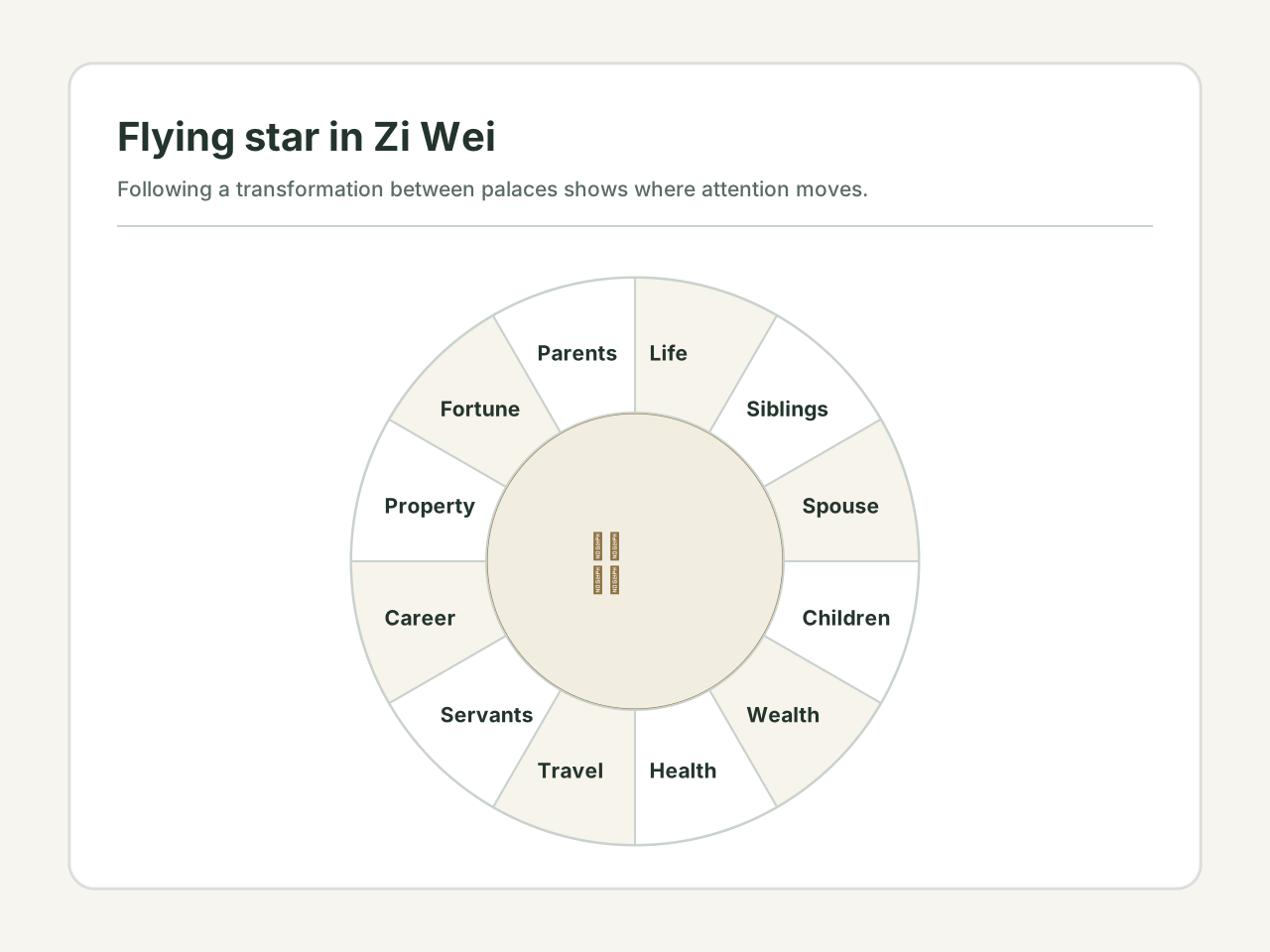
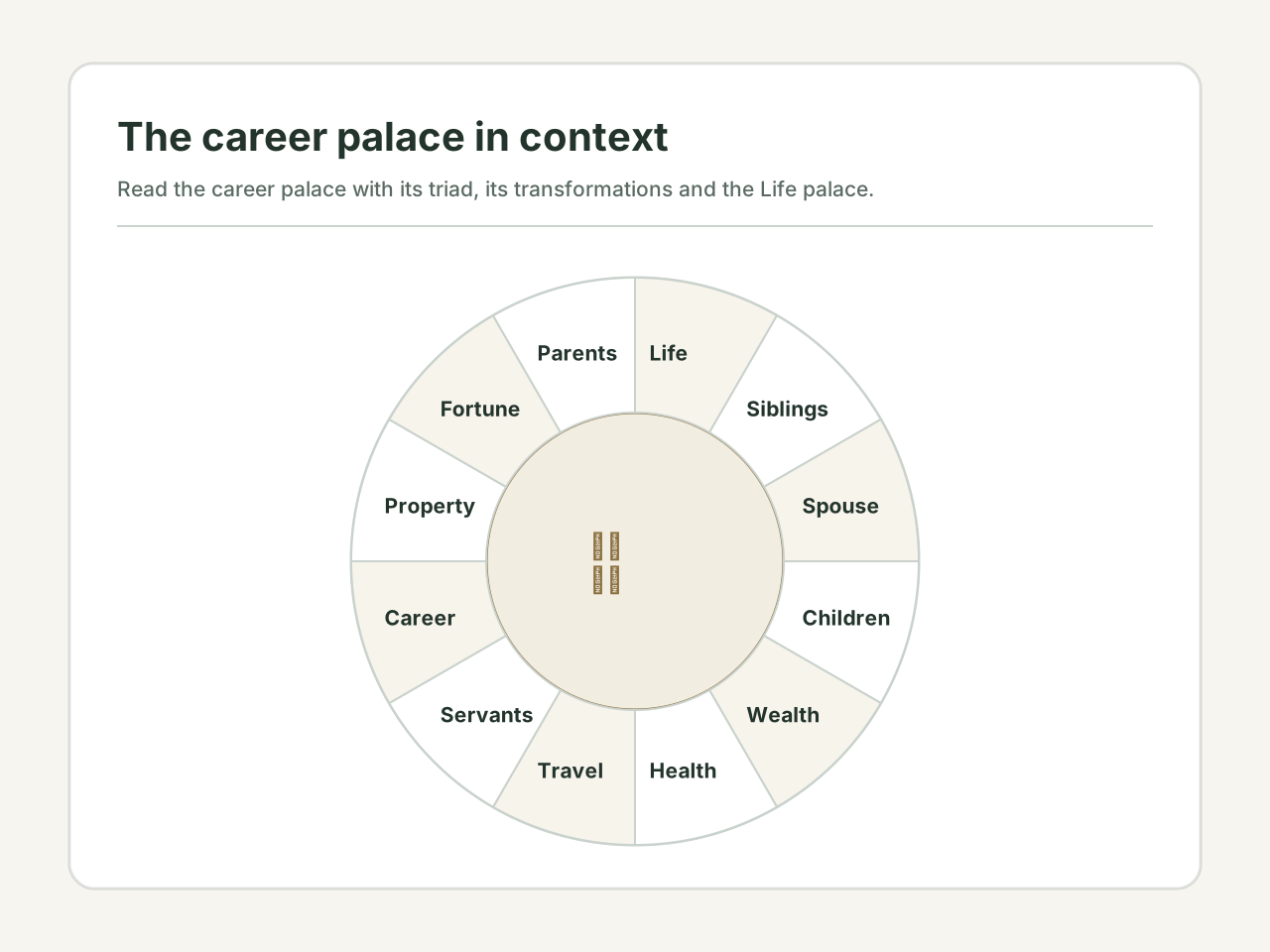
The career palace (官禄宫) in Zi Wei Dou Shu is one of the twelve palaces, and it is the primary location for reading professional tendencies. It sits opposite the self palace (命宫), which means your career is the public face of your identity — what you do in the world is a reflection of who you are. The stars in the career palace describe the kind of work environment, the type of professional role, and the career patterns you are likely to experience.
The honest view: the career palace describes tendencies, not a specific job title. A Zi Wei star in the career palace does not mean you will be an emperor. It means you are suited for roles that involve authority and visibility. The career palace cannot tell you whether to be a lawyer, a doctor, or a teacher. It can tell you whether you are suited for leadership, independent work, creative work, or structured environments. The specific job is your choice; the career palace describes the kind of work that fits your natural tendencies.
What the stars in the career palace suggest
Here is what the main stars in the career palace indicate about work tendencies:
| Star in career palace | Work tendency | Suitable environments | Watch out for |
|---|---|---|---|
| Zi Wei (紫微) | Leadership, authority, visibility | Management, executive roles, public-facing positions, government | You may be perceived as aloof or unapproachable. Learn to delegate and listen to subordinates |
| Tian Ji (天机) | Intellectual work, problem-solving, adaptability | Research, consulting, technology, strategy, education | You may overthink decisions or change direction too frequently. Learn to commit to a path long enough to see results |
| Tai Yang (太阳) | Public work, visibility, service to others | Public service, media, teaching, healthcare, any role with high visibility | You may burn out from over-commitment to others. Learn to protect your energy and set boundaries |
| Wu Qu (武曲) | Financial work, discipline, structure | Finance, accounting, engineering, military, any role requiring precision and discipline | You may be too rigid or resistant to change. Learn to adapt when the situation requires flexibility |
| Tian Tong (天同) | Cooperative work, harmony, service | Customer service, hospitality, counselling, creative fields, any role in a supportive team | You may avoid conflict to the point of passivity. Learn to assert yourself when necessary |
| Po Jun (破军) | Innovation, disruption, entrepreneurship | Startups, creative industries, restructuring, any role that involves breaking old patterns | You may burn bridges or leave projects unfinished. Learn to consolidate gains before moving on |
Career timing: when to move and when to stay
The career palace in the natal chart is fixed, but the decade and annual charts show when career themes are active. Here is how to time career decisions:
- When the decade palace is in or opposite the career palace. The decade when the career palace is the decade palace, or when the decade palace is opposite the career palace (the self palace), is a career-focused decade. This is the natural time to make career moves, change jobs, or start a business. The energy supports career action.
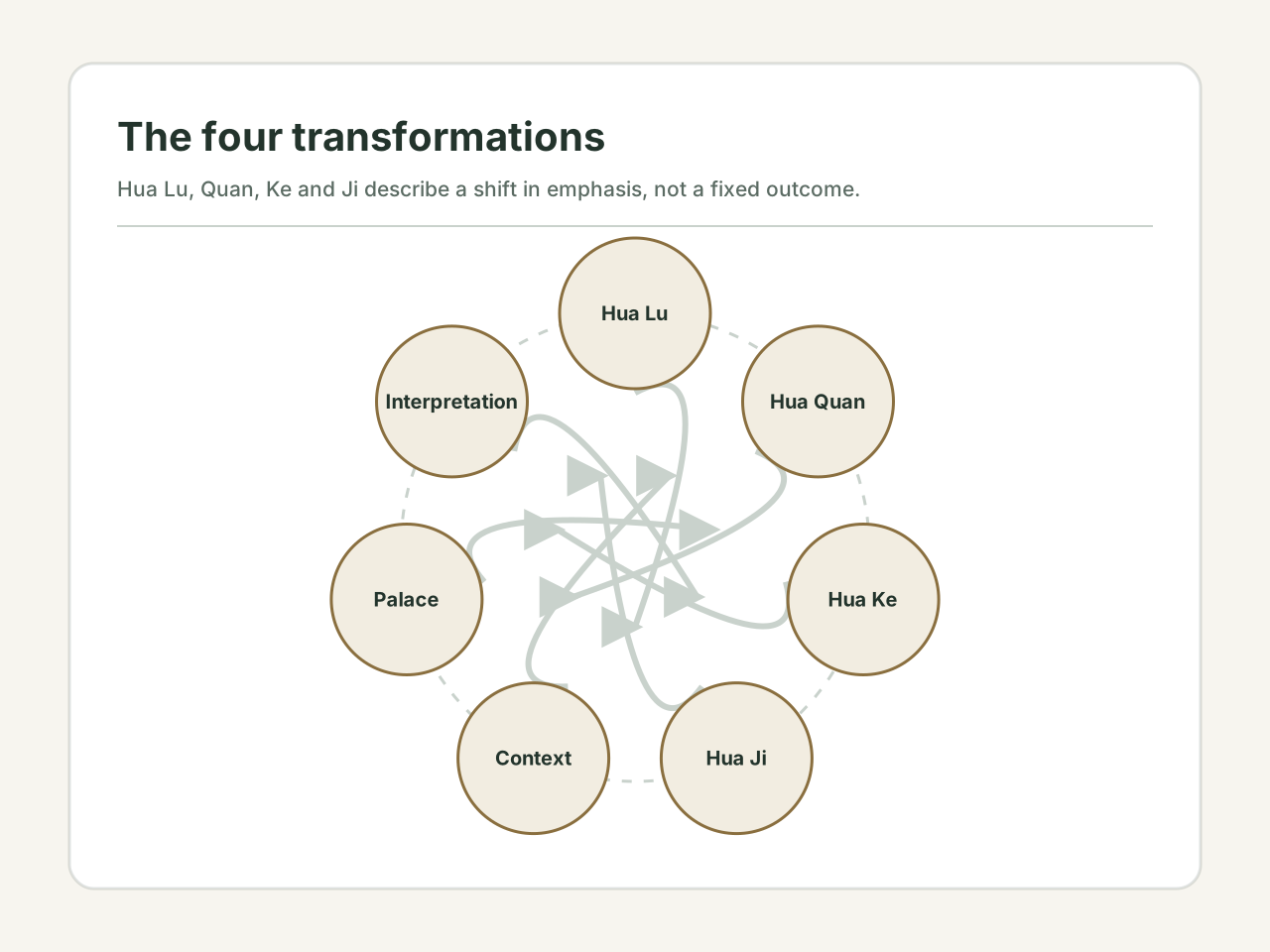
- When Hua Lu or Hua Quan enters the career palace. A decade or annual Hua Lu in the career palace is a period of career opportunity. A decade Hua Quan in the career palace is a period when you have more influence at work. Both are favourable for career advancement. But Hua Lu is about receiving; Hua Quan is about taking charge. Know which energy you are working with.
- When Hua Ji enters the career palace. A decade or annual Hua Ji in the career palace is a period of career challenge. This is not a time to force career advancement. It is a time to be patient, do your job well, and prepare for the next opportunity. Pushing hard during a Hua Ji period often creates more problems than it solves.
A worked example: when the career palace says 'leader' but you do not want to lead
A woman's career palace has Zi Wei (紫微), the emperor star. Traditional readings tell her she is 'destined for leadership' and should pursue management roles. But she is a software engineer who loves coding. She has no interest in managing people. She feels like she is failing her chart by not wanting to lead.
The problem: the traditional reading equated Zi Wei with 'boss', but Zi Wei in the career palace means something more specific: she is suited for work where she has authority and visibility. Authority does not mean managing people. A senior engineer who makes technical decisions, mentors junior developers, and is respected for her expertise has authority. Visibility does not mean being on stage. It means her work is visible and valued by others.
She stays in an individual contributor role but pursues the path of technical leadership. She becomes a principal engineer, the person everyone consults for difficult technical decisions. She mentors junior engineers and speaks at conferences. She is not a manager, but she has authority and visibility. The Zi Wei star is expressed, just not in the way the traditional reading assumed.
The lesson: the career palace describes the quality of work, not the job title. Zi Wei means authority, not management. Wu Qu means discipline, not accounting. Tian Ji means intelligence, not consulting. Match the quality to a career that fits your actual interests and skills, not to a list of traditional professions.
What career palace analysis in Zi Wei Dou Shu does and does not change
The career palace in Zi Wei Dou Shu describes professional tendencies, not specific careers. It can tell you what kind of work environment suits you, what kind of role you naturally fill, and when career themes are more or less active. But it cannot tell you what job to take. That decision depends on your skills, your interests, your education, your network, and the opportunities available to you. The career palace is a compass, not a map. It points in a direction; you still have to choose the path.
Disclaimer: This content is for informational and cultural reference purposes only. It does not constitute professional medical, legal, financial, or psychological advice. Readers should exercise their own judgment and consult qualified professionals for specific concerns.
Sources and review basis
Traditional references explain historical vocabulary and context. Official practical sources support only the observable safety, comfort, or environmental points noted in the article; they do not validate metaphysical claims.
Traditional reference
Zi Wei Dou Shu Quanshu (紫微斗數全書)Wikisource digital text · Accessed 2026-10-14
A classical source for the twelve palaces, the main stars, and the four transformations that Zi Wei Dou Shu terminology is built on.
Practical source
APA Dictionary of Psychology: Barnum effectAmerican Psychological Association · Accessed 2026-07-14
A psychology reference for why broad, favourable personality descriptions can feel personally accurate. It does not evaluate BaZi calculations themselves.