Stars in Zi Wei Dou Shu work together, not in isolation
Zi Wei Dou Shu has over 100 stars, but the core system revolves around about 14 major stars and a set of assistant stars. A single star in a palace tells you a theme. A combination of stars in a palace tells you a story. The interaction between stars — how they support, conflict with, or transform each other — is what makes Zi Wei Dou Shu interpretation complex and nuanced.
The honest view: star combinations are where Zi Wei Dou Shu becomes genuinely useful for pattern recognition. A single star is too vague to be meaningful. Two stars together create a dynamic that is specific enough to describe real tendencies. But combinations are still tendencies, not certainties. No star combination guarantees a specific life outcome. The combination describes the weather, not the destination.
Common star combination patterns
Here are some of the most important star combinations and what they suggest:
| Combination | Stars involved | What it suggests | Practical implication |
|---|---|---|---|
| Zi Wei + Tian Fu (紫微+天府) | Zi Wei (Emperor) + Tian Fu (Treasury) | A powerful combination suggesting leadership ability and a natural sense of authority. Both stars are major stars associated with power and stability | You are likely suited for positions of responsibility. The risk: you may be perceived as proud or unapproachable. Balance authority with approachability |
| Tian Ji + Tian Liang (天机+天梁) | Tian Ji (Sky Mechanism) + Tian Liang (Sky Beam) | A combination of intelligence and ethics. Tian Ji represents analytical thinking; Tian Liang represents moral clarity | You are likely good at solving complex problems that require both intelligence and judgment. The risk: overthinking or moral rigidity. Trust your instincts as well as your analysis |
| Tai Yang + Tai Yin (太阳+太阴) | Tai Yang (Sun) + Tai Yin (Moon) | A balance of outward energy and inner reflection. The Sun represents visibility and action; the Moon represents intuition and privacy | You are likely comfortable in both public and private roles. The risk: oscillation between extremes — too outward one day, too withdrawn the next. Aim for balance |
| Wu Qu + Po Jun (武曲+破军) | Wu Qu (Military Song) + Po Jun (Army Breaker) | A combination of discipline and disruption. Wu Qu represents structure and hard work; Po Jun represents breaking old patterns and starting new things | You are likely someone who builds something, then tears it down to build something better. The risk: a pattern of boom-and-bust that can be exhausting. Learn to consolidate gains before moving on |
| Lian Zhen + Tan Lang (廉贞+贪狼) | Lian Zhen (Upright and Pure) + Tan Lang (Greedy Wolf) | A combination of principle and desire. Lian Zhen represents moral integrity; Tan Lang represents ambition and appetite | This combination often describes someone with strong drives who also has a strong conscience. The tension between wanting things and wanting to be good is a lifelong theme. The integration of these two forces is the life task |
How to read star combinations
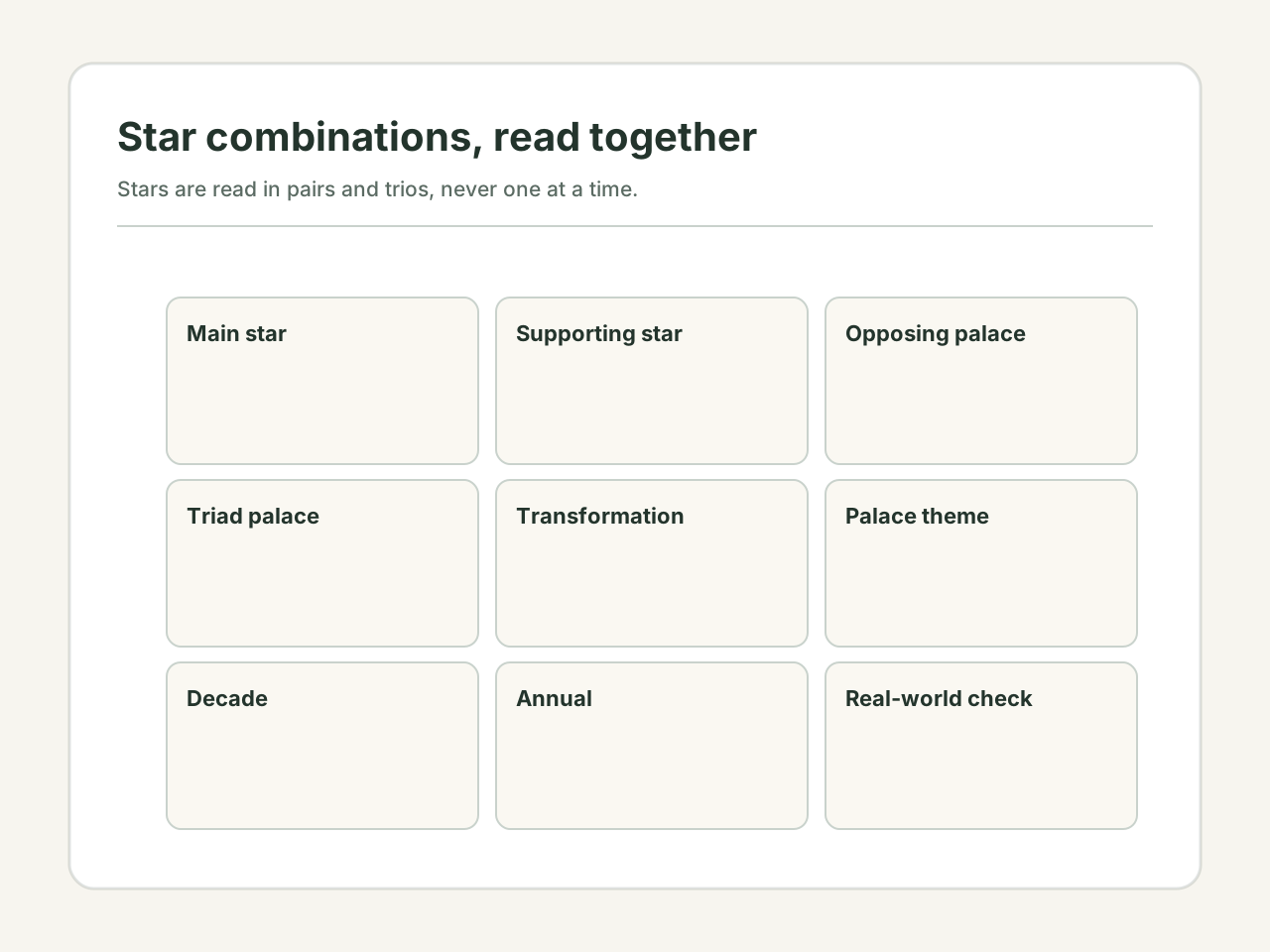
Here is a practical approach to interpreting star combinations in any palace:
- Identify the main star first. The main star (the star that rules the palace or is the most prominent) sets the theme. Every combination is built around this core. A Zi Wei + Tian Fu combination in the career palace is primarily about leadership in career. The same combination in the wealth palace is primarily about the ability to manage resources.
- Check the assistant stars. Assistant stars modify the main stars. A favourable assistant star like Zuo Fu (左辅) or You Bi (右弼) adds support — the main star's qualities are amplified and stabilised. An unfavourable assistant star like Qing Yang (擎羊) or Tuo Luo (陀罗) adds challenge — the main star's qualities are tested or complicated.
- Consider the brightness (庙旺利陷). Every star has a brightness level in each of the twelve earthly branches. A bright (庙) star expresses its positive qualities. A dim (陷) star expresses its challenging qualities. The same star in a different palace can mean very different things depending on its brightness.
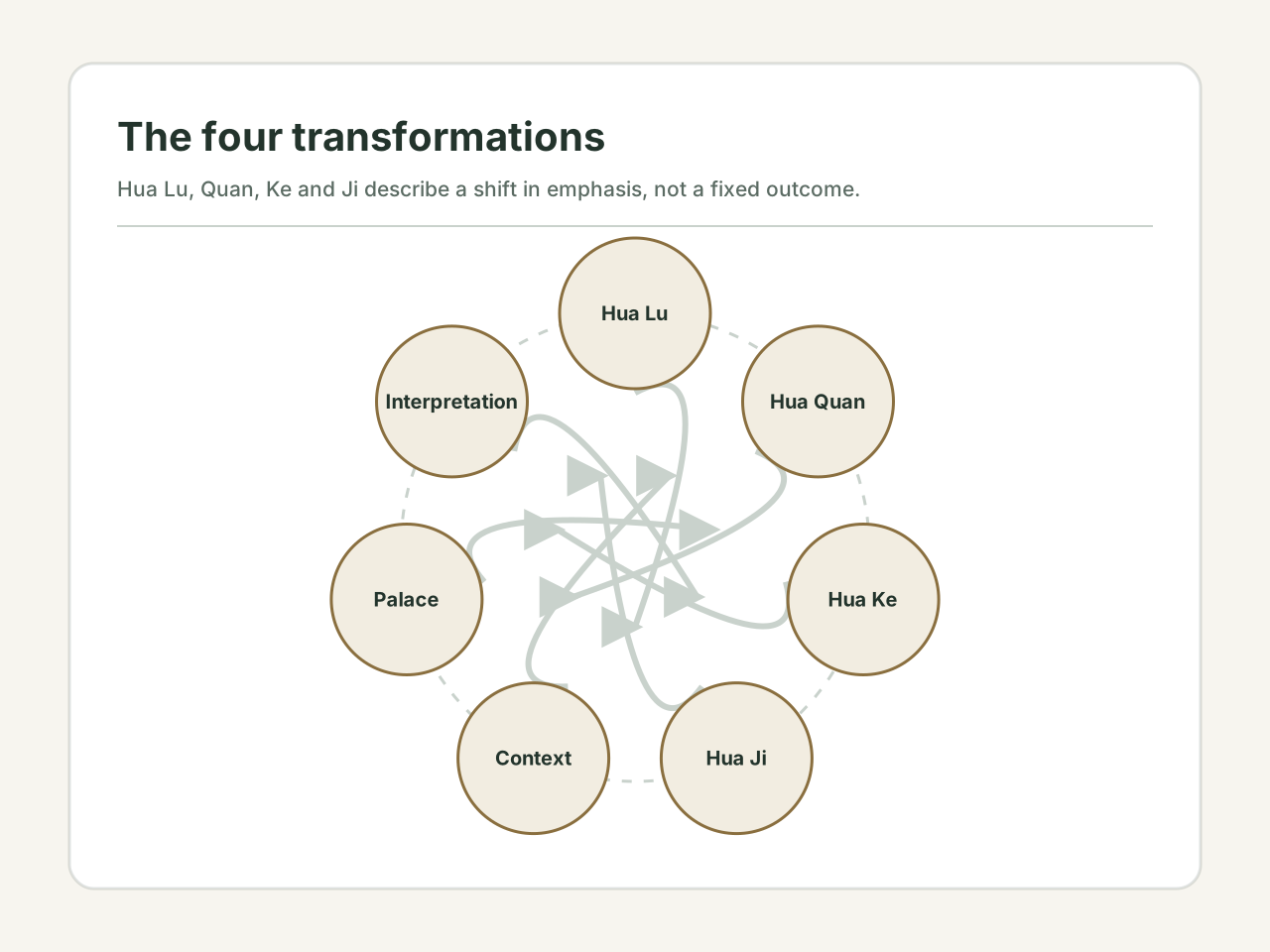
- Always check the Four Transformations. If a star in the combination has a Hua Lu, Hua Quan, Hua Ke, or Hua Ji, the transformation overrides the star's basic meaning. A dim star with Hua Lu is more favourable than it first appears. A bright star with Hua Ji has challenges that are not immediately visible.
A worked example: the same star combination in different palaces
Two people have the same star combination — Wu Qu + Po Jun — but in different palaces. Person A has it in the career palace. Person B has it in the spouse palace.
Person A's career: Wu Qu + Po Jun in the career palace suggests someone who builds a career, then pivots dramatically. They may start in one industry, become successful, then leave to start something completely different. This pattern can look unstable on a resume, but it reflects a genuine need for periodic reinvention. The advice: do not fight the pattern. Plan for pivots. Build a financial cushion so you can afford to change direction when the time comes.
Person B's relationships: Wu Qu + Po Jun in the spouse palace suggests a relationship pattern of intense commitment followed by rupture. They may be drawn to partners who are intense and transformative, but the relationships tend to burn out. This pattern is not a curse, but it requires awareness. The advice: do not rush into relationships. Take time to assess compatibility before committing. When a relationship feels intense, pause and ask whether the intensity is genuine connection or the Wu Qu + Po Jun pattern playing out.
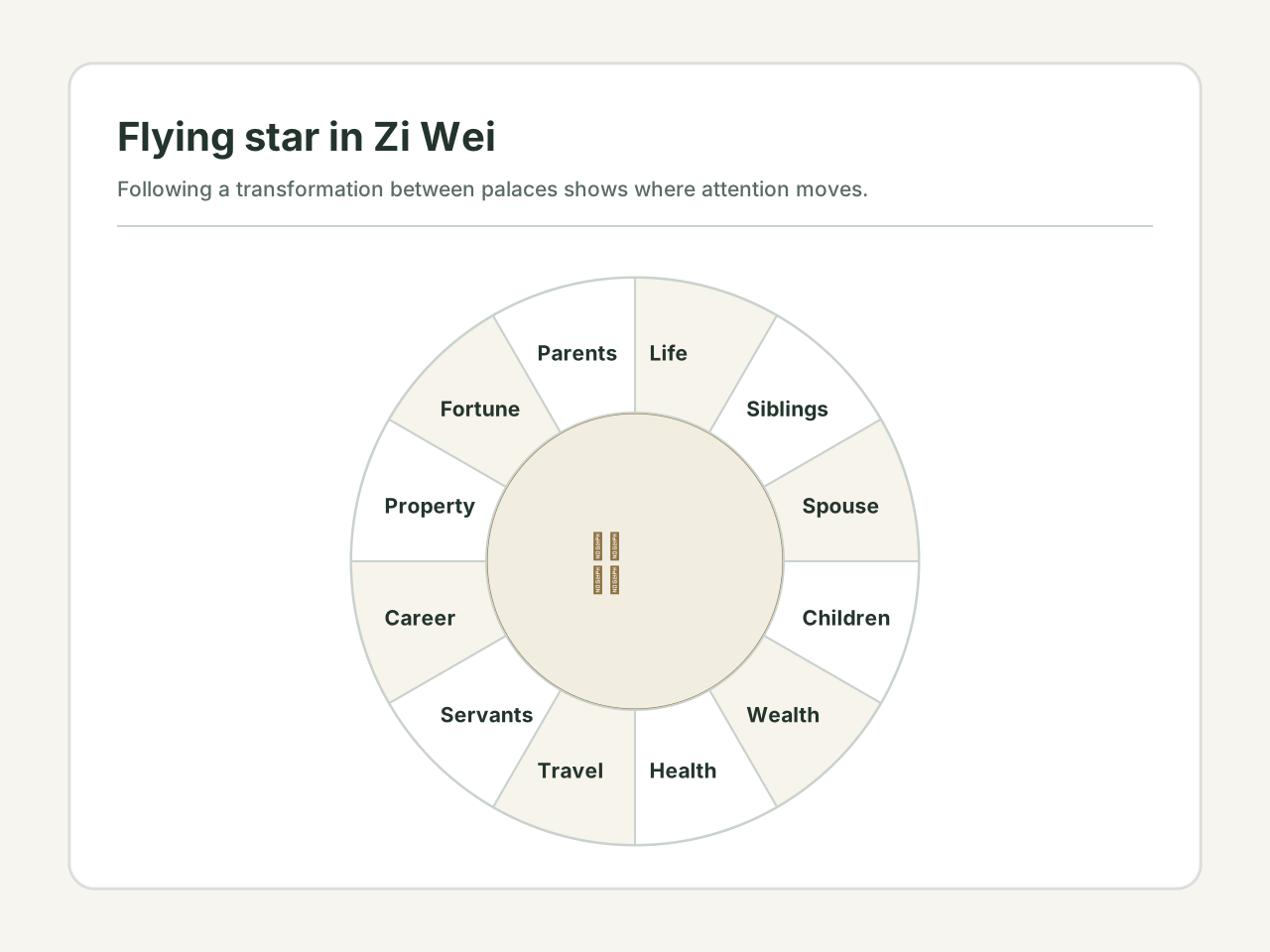
Same stars, completely different implications. The lesson: star combinations are not 'good' or 'bad' in isolation. They mean different things in different contexts. Always read the palace before the stars.
A realistic view of Zi Wei Dou Shu star combinations and meanings
Star combinations in Zi Wei Dou Shu are a sophisticated vocabulary for describing human tendencies. They can provide useful insights into patterns of behaviour, strengths, and challenges. But they are not destiny. The same combination in different people's charts manifests differently depending on their life choices, environment, and effort. Use star combinations for self-understanding, not for self-limiting beliefs. The combination describes what is in the chart; your choices determine what you do with it.
Disclaimer: This content is for informational and cultural reference purposes only. It does not constitute professional medical, legal, financial, or psychological advice. Readers should exercise their own judgment and consult qualified professionals for specific concerns.
Sources and review basis
Traditional references explain historical vocabulary and context. Official practical sources support only the observable safety, comfort, or environmental points noted in the article; they do not validate metaphysical claims.
Traditional reference
Zi Wei Dou Shu Quanshu (紫微斗數全書)Wikisource digital text · Accessed 2026-10-14
A classical source for the twelve palaces, the main stars, and the four transformations that Zi Wei Dou Shu terminology is built on.
Practical source
APA Dictionary of Psychology: Barnum effectAmerican Psychological Association · Accessed 2026-07-14
A psychology reference for why broad, favourable personality descriptions can feel personally accurate. It does not evaluate BaZi calculations themselves.