The Four Transformations are the engine of Zi Wei Dou Shu
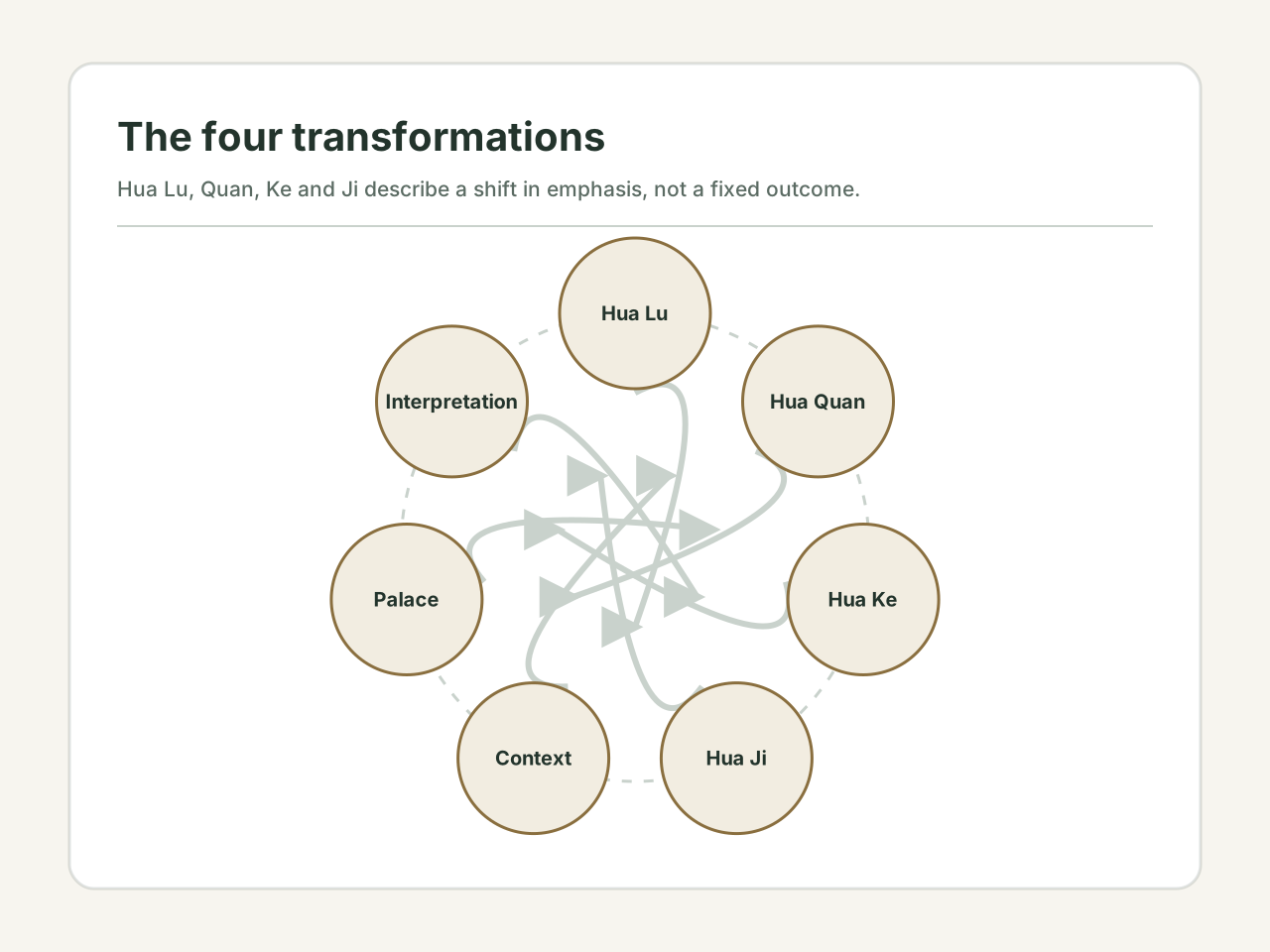
The Four Transformations — Hua Lu (化禄, Transformation to Prosperity), Hua Quan (化权, Transformation to Authority), Hua Ke (化科, Transformation to Reputation), and Hua Ji (化忌, Transformation to Obstruction) — are what make Zi Wei Dou Shu dynamic. While the stars in the natal chart are fixed, the Four Transformations show where energy is flowing and changing. They are assigned to specific stars based on the birth year, and they move through the palaces over time.
The honest view: the Four Transformations are the most useful part of Zi Wei Dou Shu because they describe change — where things are growing, where you are gaining control, where you are being recognised, and where you face challenges. Hua Ji is often feared as the 'bad' transformation, but this is a misunderstanding. Hua Ji does not mean disaster; it means a place where effort is required and where growth happens through difficulty.
What each transformation actually means
Here is what each transformation represents in plain terms:
| Transformation | Traditional name | What it means in practical terms | Palace example |
|---|---|---|---|
| Hua Lu (化禄) | Prosperity | This is where energy flows easily. It is a palace where things come to you — opportunities, resources, help. If Hua Lu is in your wealth palace, money tends to come through multiple channels. If in your relationship palace, you tend to attract supportive partners. The caution: Hua Lu can create complacency because things come easily | Hua Lu in the Career Palace: you find work opportunities naturally. People offer you jobs, projects, and collaborations. The risk: you may not work as hard because opportunities come without effort |
| Hua Quan (化权) | Authority | This is where you gain control and influence. It is a palace where you need to take charge. If Hua Quan is in your career palace, you are suited for leadership roles. If in your self palace, you are naturally authoritative and independent. The caution: Hua Quan can create conflict if you push too hard for control | Hua Quan in the Wealth Palace: you are good at managing money and making financial decisions. You should take charge of your finances rather than delegating. The risk: you may be too controlling about money, causing relationship tension |
| Hua Ke (化科) | Reputation | This is where you are recognised and respected. It is a palace where your abilities are visible to others. If Hua Ke is in your career palace, your professional reputation grows steadily. If in your self palace, you are naturally well-regarded. The caution: Hua Ke can create a focus on appearances over substance | Hua Ke in the Travel Palace: you are well-regarded when you travel or work with people from different places. Your reputation benefits from international exposure. The risk: you may become too concerned with how you are perceived abroad |
| Hua Ji (化忌) | Obstruction | This is where energy is blocked or requires effort. It is a palace where you face challenges. If Hua Ji is in your wealth palace, money may be a persistent source of stress — but this also means you learn to manage money well. If in your relationship palace, relationships require conscious effort. The key: Hua Ji is not a curse. It is the place where you grow through difficulty | Hua Ji in the Health Palace: you may have a tendency toward health issues that require attention. This is a signal to take care of your body — not a prediction of disease. People with Hua Ji in the Health Palace who exercise, eat well, and manage stress often live long, healthy lives |
How transformations change over time
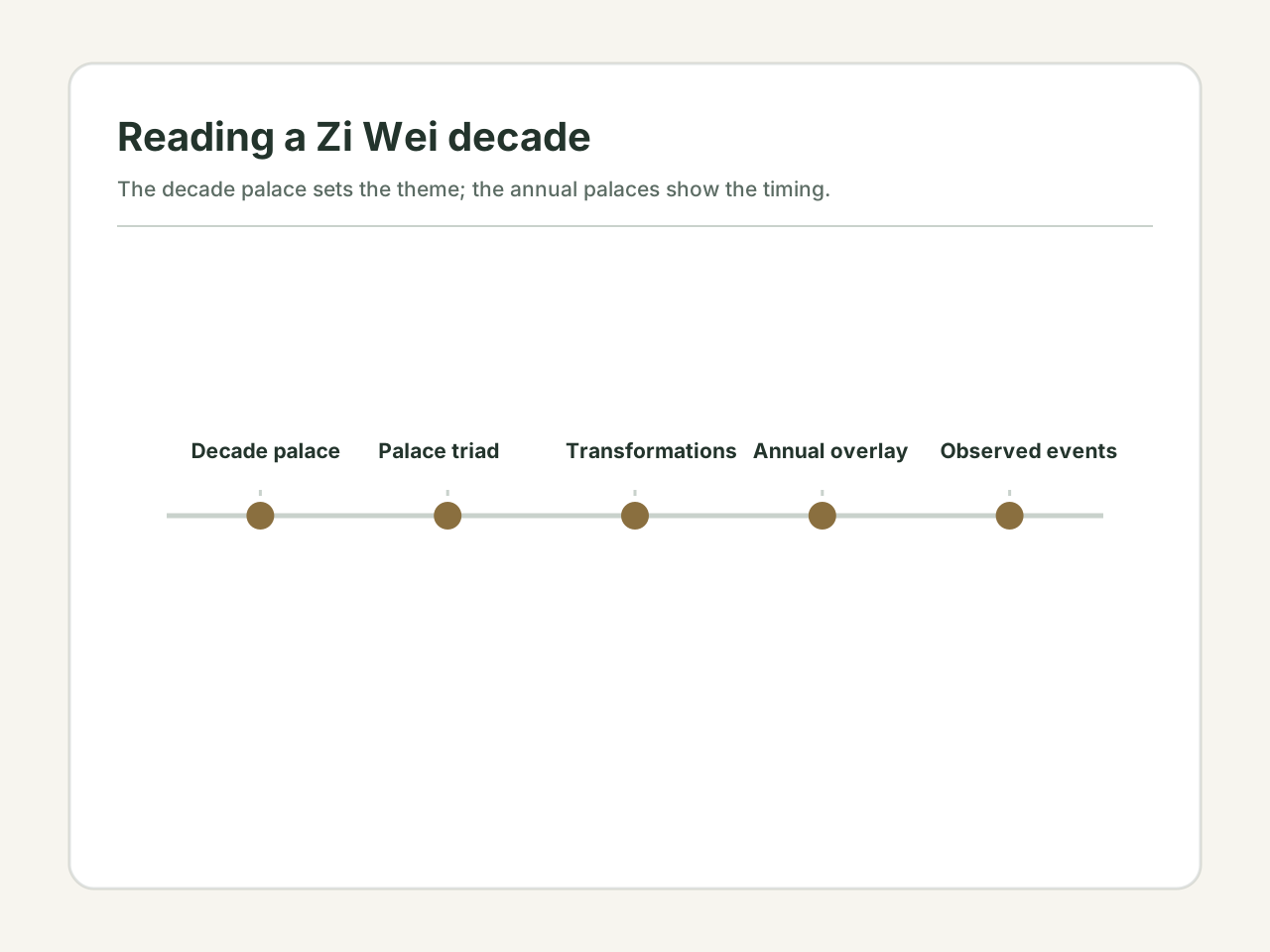
The Four Transformations in the natal chart are fixed — they are determined by your birth year and do not change. But the decade chart and the annual chart bring their own transformations that overlay the natal chart. This creates a layered picture:
- Natal transformations are your baseline. They describe the ongoing energy patterns of your life. A natal Hua Ji in the wealth palace is a lifelong tendency toward financial caution and effort — not a permanent financial struggle.
- Decade transformations describe the current ten-year period. A decade Hua Lu in the career palace suggests a period when career opportunities are abundant. A decade Hua Ji in the spouse palace suggests a period when relationship dynamics require attention.
- Annual transformations describe the current year. An annual Hua Lu in the travel palace suggests a year when travel is favourable. An annual Hua Ji in the self palace suggests a year of introspection and personal challenge.
A worked example: Hua Ji is not a life sentence
A man has natal Hua Ji in his wealth palace. He reads online that 'Hua Ji in the wealth palace means lifelong poverty' and becomes deeply anxious. He is 30 years old, has a stable job, and is saving for a house. He starts to believe that no matter what he does, he will never be financially secure.
A more honest reading: Hua Ji in the wealth palace means money is a theme that requires effort and attention. It does not mean he will be poor. It means he needs to be more conscious about money than someone with Hua Lu in the wealth palace. He needs to budget, save systematically, and avoid impulsive financial decisions. These are skills he can learn.
He takes this advice seriously. He creates a budget, automates his savings, and starts tracking his spending. Five years later, he has saved enough for a down payment on a house. His financial situation is stable — not because the chart was wrong, but because he treated the Hua Ji signal as a call to action, not a prediction of failure.
The lesson: Hua Ji describes the area of life where you need to work harder. It is a signal, not a sentence. People who respond to Hua Ji with effort and attention often end up more competent in that area than people who have Hua Lu and take it for granted.
Keeping four transformations in Zi Wei Dou Shu in proportion
The Four Transformations are a useful framework for understanding where energy flows and where it is blocked. They describe tendencies and timing, not fixed outcomes. Hua Lu is pleasant but not guaranteed. Hua Ji is challenging but not fatal. The most important transformation is not in the chart — it is the transformation you create through your own choices and effort. Use the chart as a map, not as a master.
Disclaimer: This content is for informational and cultural reference purposes only. It does not constitute professional medical, legal, financial, or psychological advice. Readers should exercise their own judgment and consult qualified professionals for specific concerns.
Sources and review basis
Traditional references explain historical vocabulary and context. Official practical sources support only the observable safety, comfort, or environmental points noted in the article; they do not validate metaphysical claims.
Traditional reference
Zi Wei Dou Shu Quanshu (紫微斗數全書)Wikisource digital text · Accessed 2026-10-14
A classical source for the twelve palaces, the main stars, and the four transformations that Zi Wei Dou Shu terminology is built on.
Practical source
APA Dictionary of Psychology: Barnum effectAmerican Psychological Association · Accessed 2026-07-14
A psychology reference for why broad, favourable personality descriptions can feel personally accurate. It does not evaluate BaZi calculations themselves.