Flying star techniques show how energy moves over time
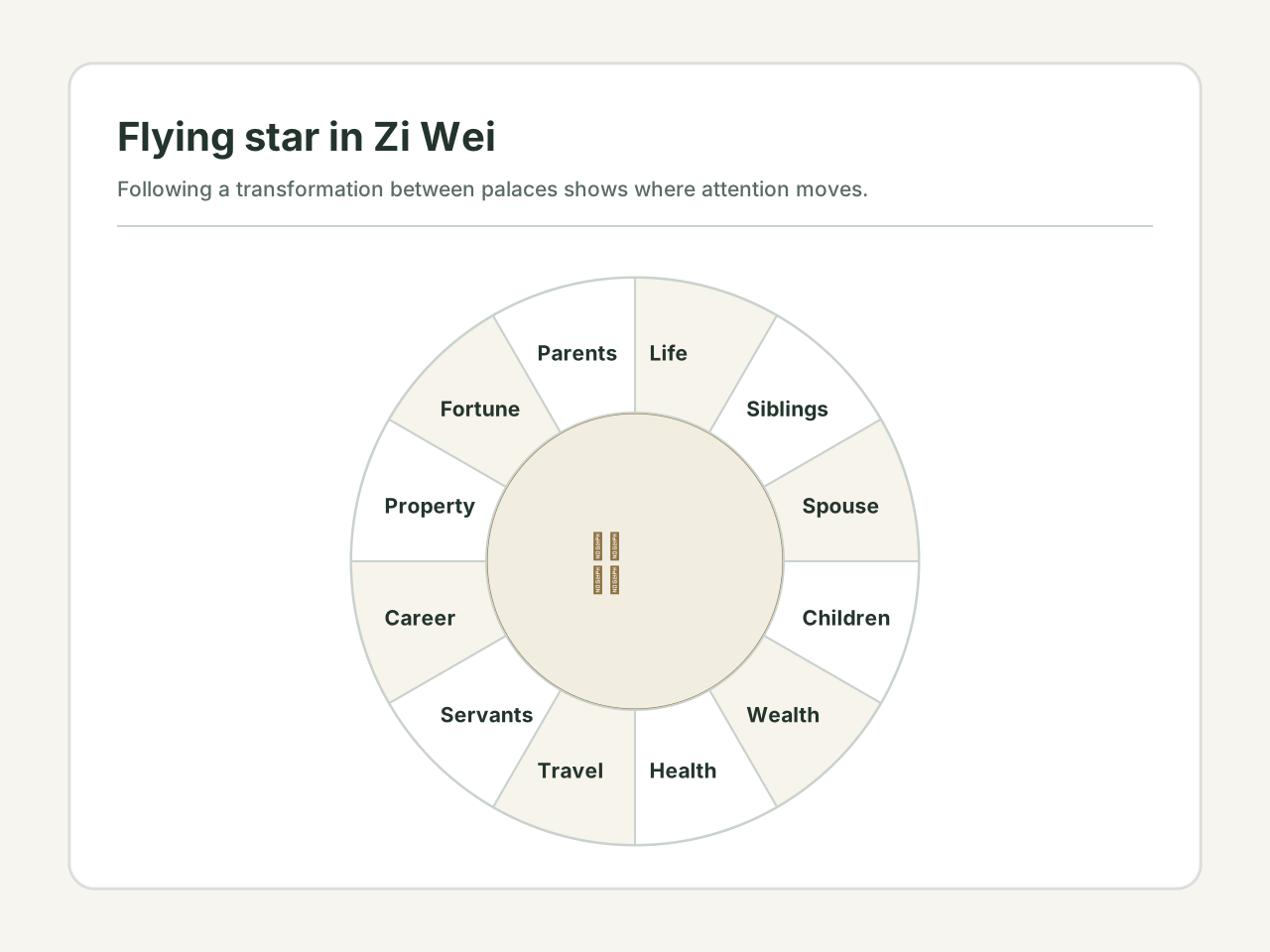
In Zi Wei Dou Shu, 'flying star' techniques (飞星) refer to methods that track how the stars from one palace influence another palace. The idea is that stars are not static — they 'fly' from their home palace to other palaces, creating connections and revealing dynamic patterns. The most common flying star method is to take the star from a specific palace and see where it lands in the decade or annual chart.
The honest view: flying star techniques add detail to Zi Wei Dou Shu readings, but they are also the easiest to over-interpret. A flying star can create a connection, but not every connection is significant. The skill in flying star interpretation is knowing which connections matter and which are noise. In practice, most useful readings depend on the natal chart's fixed stars, the Four Transformations, and the decade chart. Flying stars add nuance, not a complete additional layer of meaning.
The key flying star techniques
Here are the main flying star approaches and what they are used for:
| Technique | How it works | What it reveals | Caveat |
|---|---|---|---|
| Self palace flying | The star from the self palace (命宫) is placed into other palaces to see how the self influences different life domains | This shows where you are having the most impact. If the self palace star flies to the career palace, your identity is strongly tied to your career. If it flies to the spouse palace, your identity is strongly tied to your relationships | Every person's self palace star flies somewhere. This is a descriptive tool, not a predictive one. A self palace star flying to the wealth palace does not mean you will be rich; it means money is central to your self-concept |
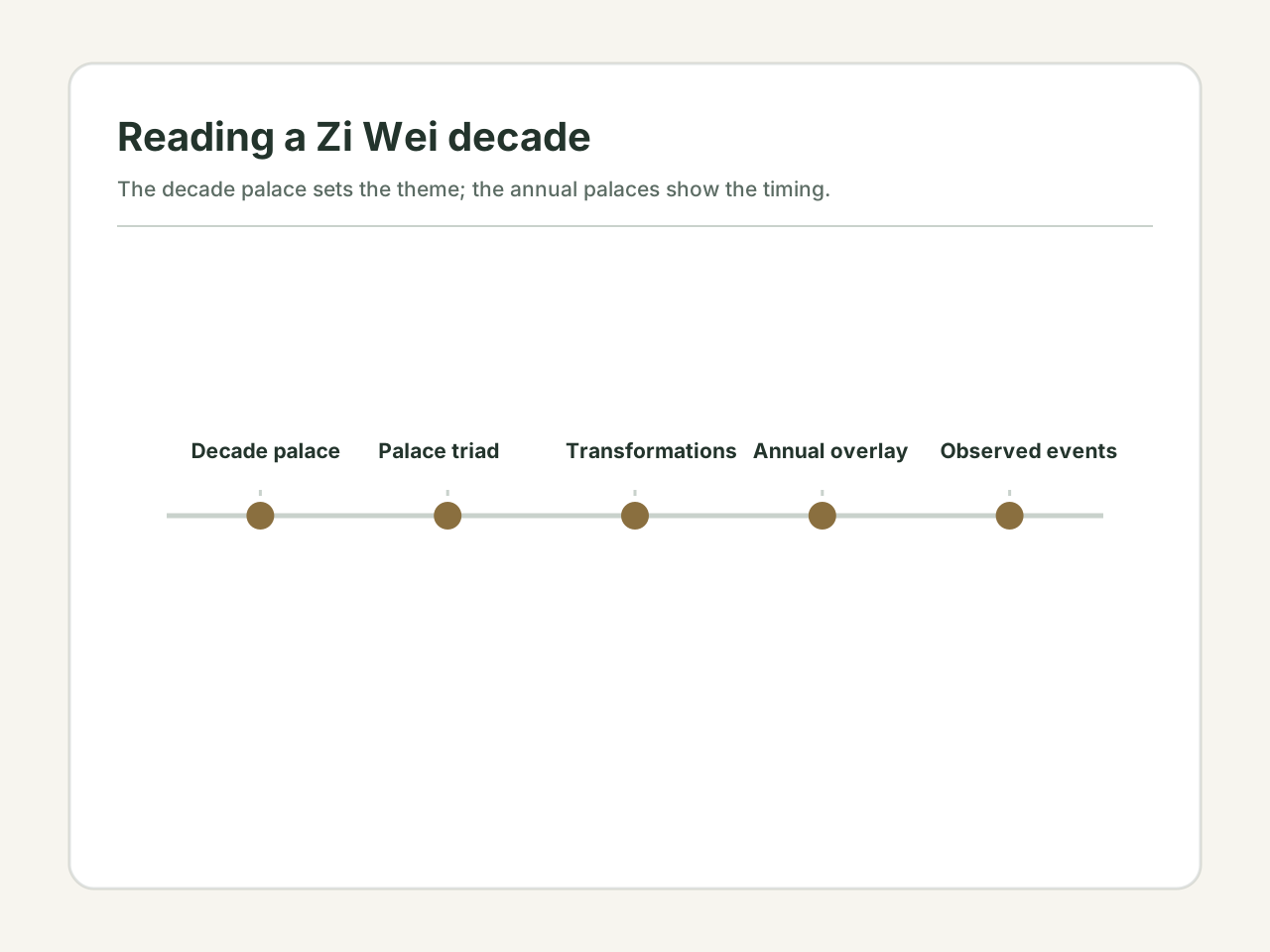
| Decade flying | The stars from the decade palace are placed into other palaces to see where the current decade's energy is concentrated | This shows which life domains are most active during this decade. If the decade palace star flies to the travel palace, this is likely a decade of movement and change | The decade chart already shows the decade's themes. Flying stars add specificity but should not contradict the broader decade chart pattern |
| Annual flying | The stars from the annual palace are placed into other palaces to see where the current year's energy is concentrated | This shows which life domains are most active during this year. If the annual palace star flies to the career palace, this is likely a year of career activity | Annual flying stars are the most volatile and the least reliable. They describe months, not years. Use them for short-term awareness, not long-term planning |
| Palace lord flying | The star that rules a specific palace is placed into other palaces to see how that life domain influences others | This shows connections between life domains. If the career palace lord flies to the spouse palace, your career has a direct impact on your relationships | Not every connection is equally important. A palace lord flying to multiple palaces creates many connections. Focus on the connections that are supported by the Four Transformations |
When flying stars are useful and when they are not
Here is a practical guideline for when to use flying star techniques:
- Use flying stars when the natal chart is unclear. If the natal chart shows ambiguous patterns in a specific life domain, the flying star from the self palace to that domain can clarify the picture. A career palace with mixed stars becomes clearer if the self palace star flies there — it tells you that career is genuinely important to you, regardless of the mixed signals.
- Use flying stars to confirm, not contradict. If the natal chart and the decade chart both suggest a career-focused period, and the flying stars also point to the career palace, the signal is consistent. If the flying stars contradict the natal and decade charts, trust the natal and decade charts. Flying stars are supplementary, not primary.
- Do not use flying stars to predict specific events. Flying stars can show where energy is flowing, but they cannot tell you that you will get a specific job, meet a specific person, or experience a specific event. The energy is real; the specific outcome is not.
A worked example: when flying stars add clarity
A woman's natal chart shows a mixed career palace — the stars suggest both creative and administrative tendencies. She is unsure whether to pursue a creative career or a more structured professional path. She is 28 and feels stuck between two very different directions.
Her self palace star is Tian Ji (天机, intelligence and adaptability). When she checks the flying star technique, her self palace star flies to the creative palace (子女宫, which in flying star interpretation also represents creative output). This suggests that her core identity is more aligned with creative work than with administrative work, even though her career palace shows both possibilities.
She uses this insight to make a decision: she will pursue the creative path but keep her administrative skills active as a backup. She starts a graphic design business while maintaining a part-time administrative job. The flying star added clarity, but the decision was still hers. The chart pointed in a direction; she chose to walk it.
The lesson: flying stars can add nuance to an unclear natal chart, but they are not a substitute for judgment. The woman's self-knowledge — she knew she was more creative than administrative — was more important than the flying star. The flying star simply confirmed what she already felt.
The practical boundary of flying star techniques in Zi Wei Dou Shu
Flying star techniques in Zi Wei Dou Shu are a useful refinement of the basic chart reading. They add detail and specificity to the natal chart, decade chart, and annual chart. But they are the most fragile part of the system — they are easy to over-interpret, and they change frequently. Use flying stars as a supplementary tool, not as the primary lens. The natal chart's fixed stars, the Four Transformations, and the decade chart are the foundation. Flying stars are the decoration on top.
Disclaimer: This content is for informational and cultural reference purposes only. It does not constitute professional medical, legal, financial, or psychological advice. Readers should exercise their own judgment and consult qualified professionals for specific concerns.
Sources and review basis
Traditional references explain historical vocabulary and context. Official practical sources support only the observable safety, comfort, or environmental points noted in the article; they do not validate metaphysical claims.
Traditional reference
Zi Wei Dou Shu Quanshu (紫微斗數全書)Wikisource digital text · Accessed 2026-10-14
A classical source for the twelve palaces, the main stars, and the four transformations that Zi Wei Dou Shu terminology is built on.
Practical source
APA Dictionary of Psychology: Barnum effectAmerican Psychological Association · Accessed 2026-07-14
A psychology reference for why broad, favourable personality descriptions can feel personally accurate. It does not evaluate BaZi calculations themselves.