Decade analysis describes ten-year themes, not ten-year predictions
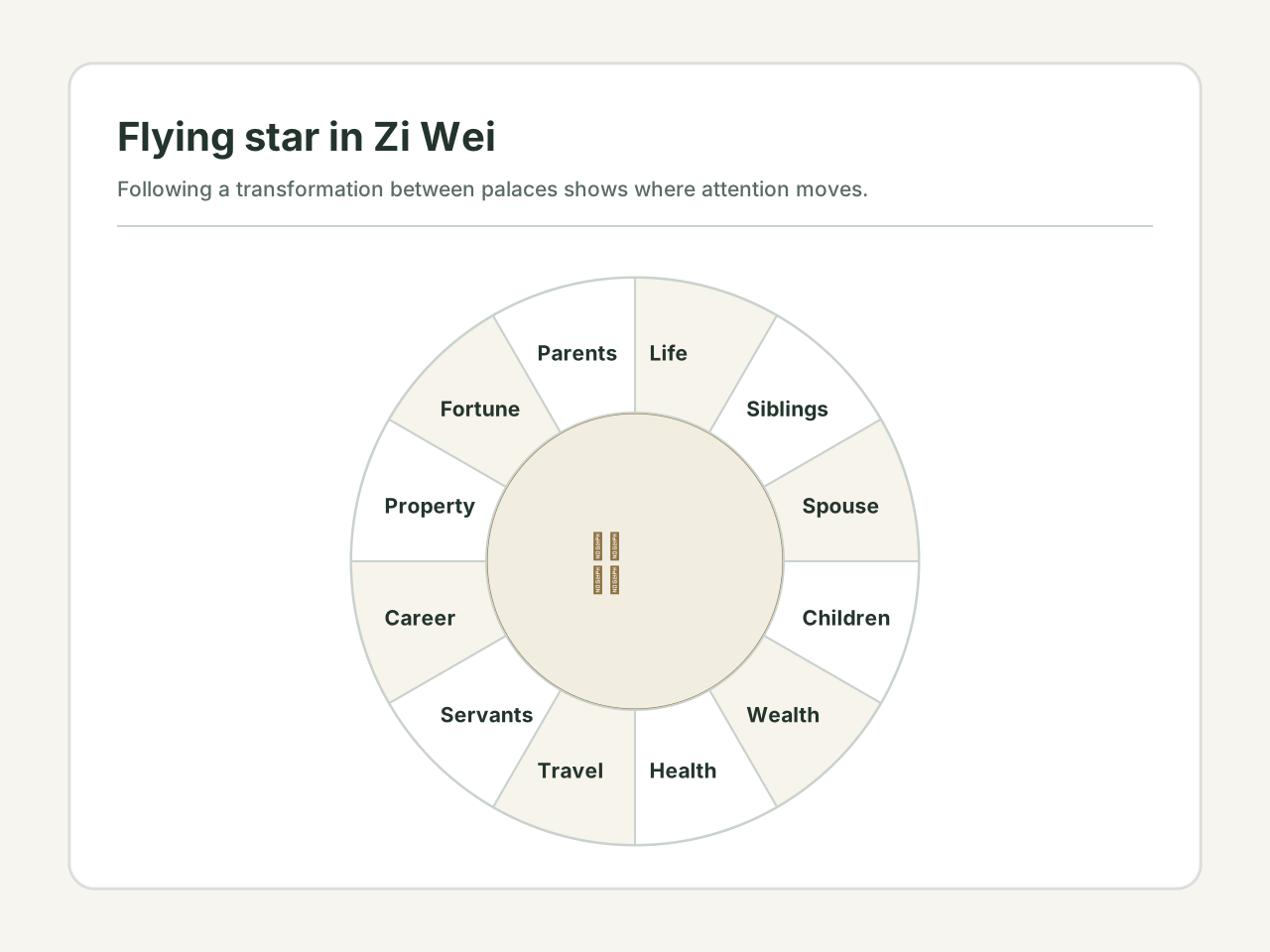
In Zi Wei Dou Shu, the decade chart (大限) divides a person's life into ten-year periods. Each decade period has a different palace as its starting point, and a different set of stars and transformations that describe the themes of that decade. The decade chart is overlaid on the natal chart, creating a dynamic picture of how the fixed natal patterns interact with the changing energy of the decade.
The honest view: decade analysis is one of the most practically useful parts of Zi Wei Dou Shu. It tells you when certain life themes — career, relationships, wealth, personal growth — are more prominent. This is useful for timing decisions. But a decade's theme is not a prediction. A decade of career focus does not mean you will get a promotion. It means career is the natural focus of this period, and your efforts in that area are more likely to yield results.
How to read a decade chart
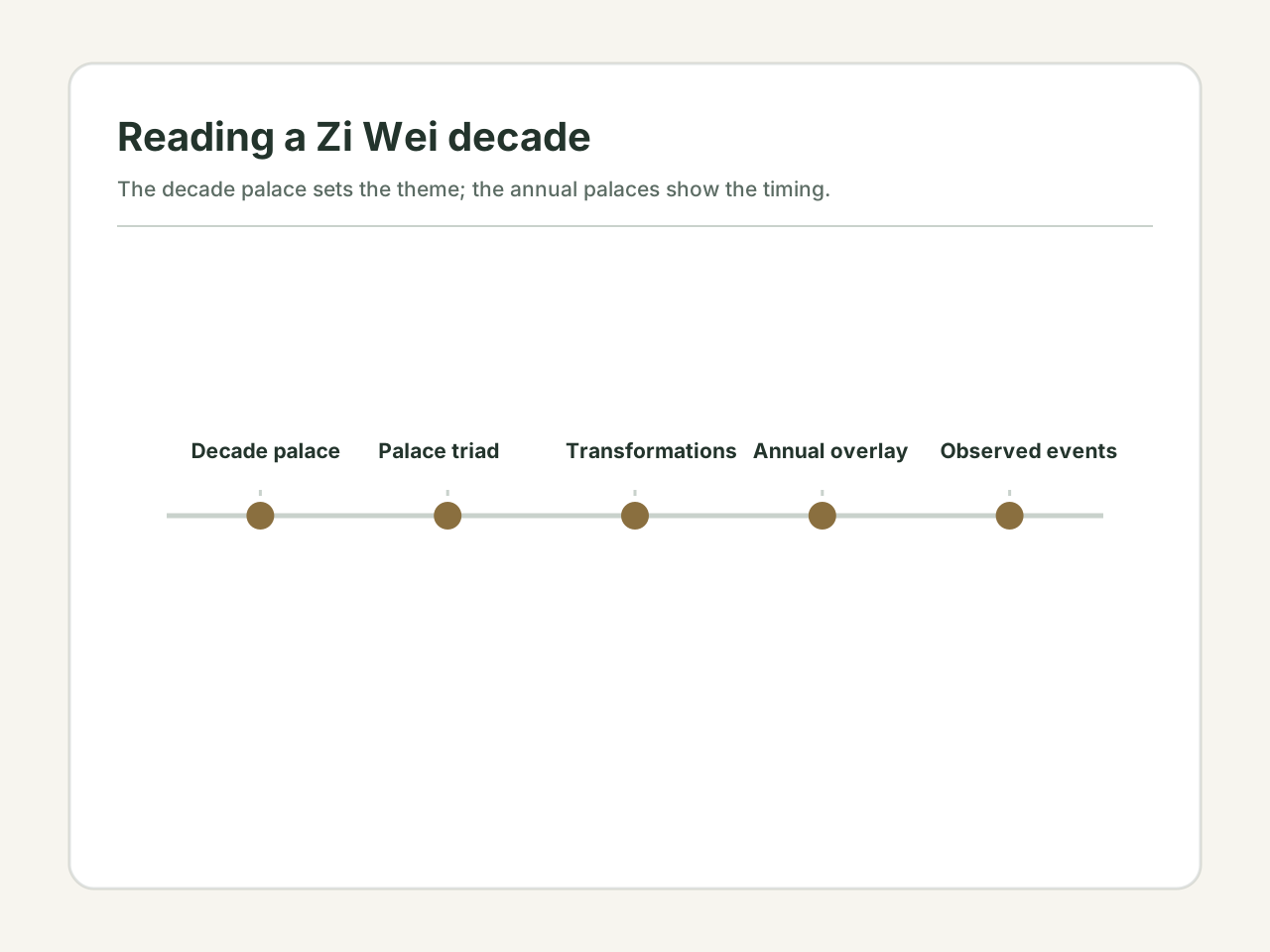
Here is the step-by-step approach to interpreting a decade chart:
| Step | What to check | What it tells you |
|---|---|---|
| 1. Identify the decade palace | Which palace is the starting point for this decade? The decade moves through the twelve palaces in sequence | The decade palace sets the overall theme. If the decade starts in the career palace, career is the dominant theme. If it starts in the spouse palace, relationships are the dominant theme. The theme is the filter through which all other chart elements are read |
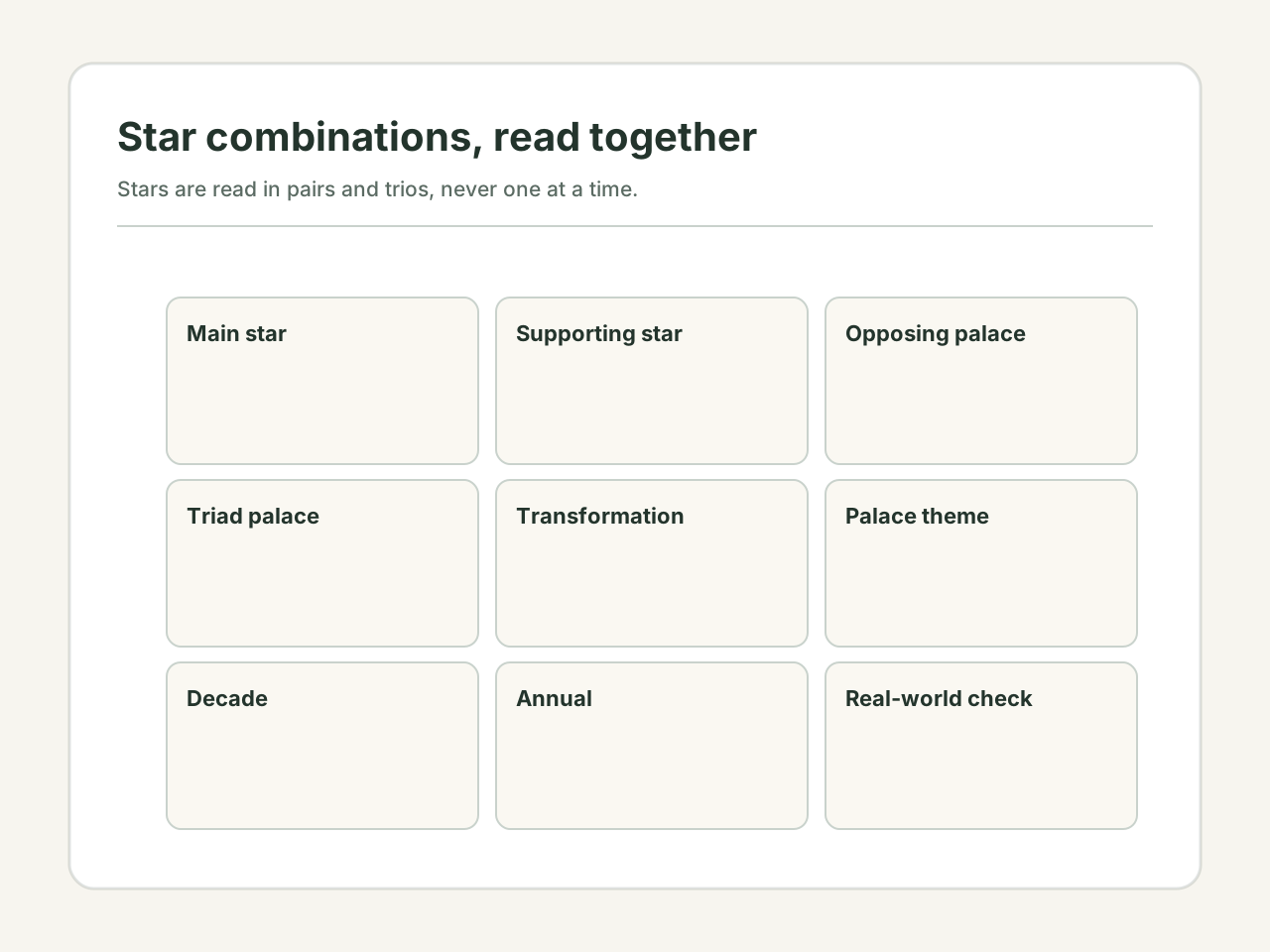
| 2. Read the stars in the decade palace | What main stars and assistant stars are in the decade palace? | The stars in the decade palace describe the energy of the decade. Beneficial stars suggest a smoother period. Challenging stars suggest a period that requires more effort. But 'challenging' stars are not bad — they often produce the most growth |
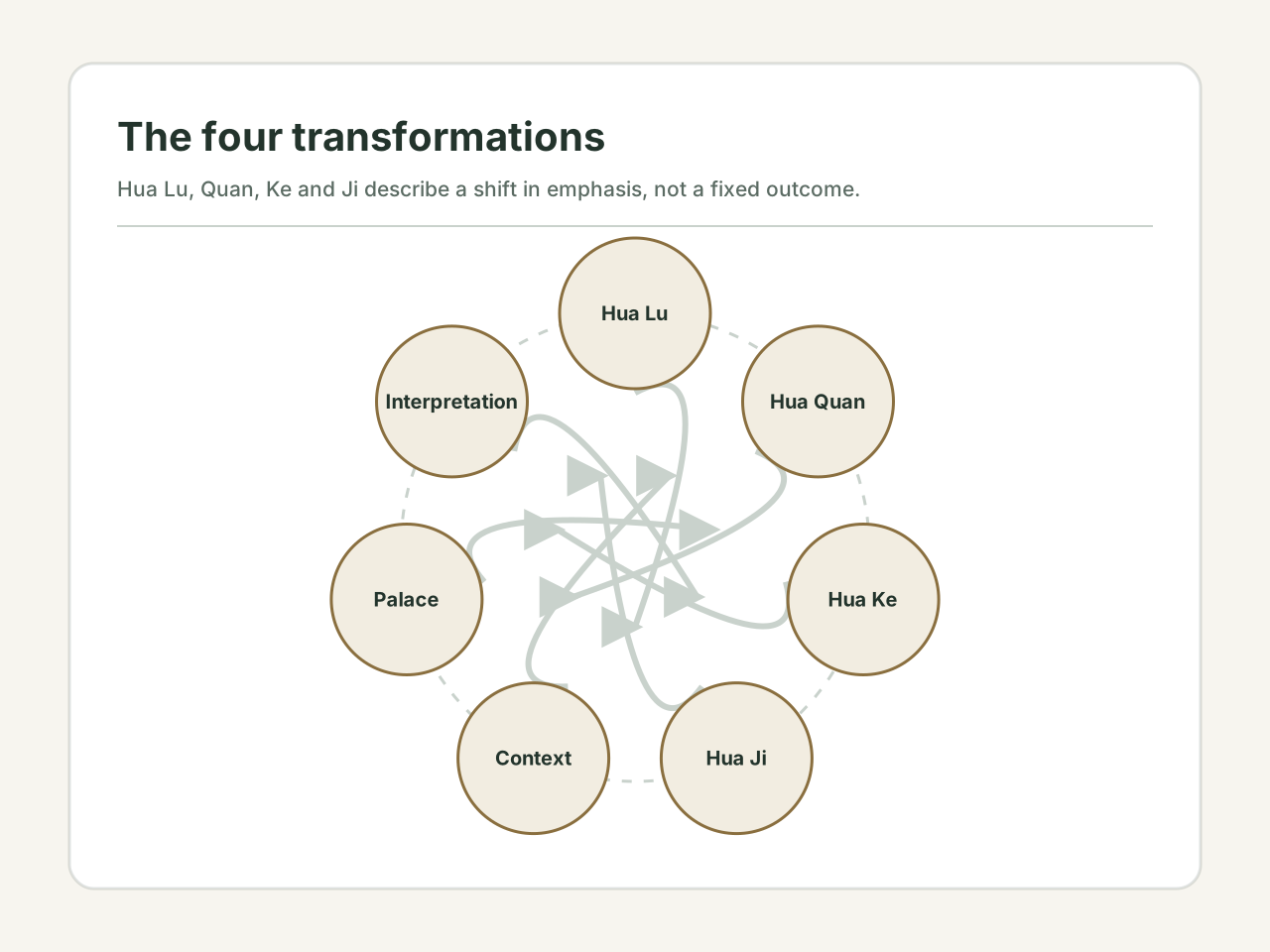
| 3. Check the Four Transformations | What are the decade's Hua Lu, Hua Quan, Hua Ke, and Hua Ji? Where are they? | The decade's transformations show where energy is flowing. A decade Hua Lu in the wealth palace suggests financial opportunity. A decade Hua Ji in the career palace suggests career challenges that require navigation |
| 4. Compare with the natal chart | How do the decade stars interact with the natal stars in the same palaces? | The overlay of decade stars on natal stars creates the dynamic reading. A decade star that supports the natal star amplifies the natal pattern. A decade star that conflicts with the natal star creates tension that needs to be managed |
The three types of decade periods
Here are the three broad patterns a decade can take:
- The growth decade. The decade palace contains favourable stars, the Four Transformations include Hua Lu or Hua Quan in key palaces, and the overlay with the natal chart is harmonious. This is a decade where things tend to go well. The risk: complacency. When things are easy, people coast. A growth decade is the best time to build — start a business, develop a skill, invest in relationships. The energy supports effort. Do not waste it.
- The challenge decade. The decade palace contains challenging stars, Hua Ji appears in important palaces, and the overlay with the natal chart creates tension. This is a decade where things require more effort. The opportunity: challenge decades are when people build resilience and competence. The risk: giving up. A challenge decade is not a wasted decade. It is a decade when your effort matters more than usual.
- The transition decade. The decade palace shifts from one theme to another — from career to relationships, from public to private, from accumulation to distribution. These decades feel unstable because the ground is shifting. The advice: transition decades are for experimenting, not for committing. Try things, gather information, and prepare for the next decade's theme. Do not force a commitment during a transition decade.
A worked example: reading a challenge decade
A man enters his forties with a decade chart that shows Hua Ji in the career palace. The decade palace itself contains mixed stars — some beneficial, some challenging. The overlay with his natal chart shows that the decade stars are clashing with his natal career stars.
He reads that the next ten years will be 'difficult for career' and becomes discouraged. He is 40, at a natural career peak, and the idea of a decade of career struggle makes him anxious about his future.
A more honest reading: the decade has career challenges, but 'challenge' does not mean 'failure'. The Hua Ji in the career palace means he will need to work harder for career progress than he did in his thirties. The clashing between decade and natal career stars means he may need to change direction — his current career path may not be sustainable. But the beneficial stars in the decade palace suggest he has the resources to navigate the change.
He takes this advice. Instead of fighting to stay on his current path, he spends the first two years of the decade developing new skills. At 43, he transitions to a different role in the same industry. The transition is difficult, but by 45, he is established in the new role. The decade was challenging, but it was not a failure. He used the challenge as a signal to pivot rather than a reason to give up.
Decade fortune analysis in Zi Wei Dou Shu: what to expect, and what not to
Decade analysis in Zi Wei Dou Shu is a useful tool for understanding the themes of ten-year periods. It can help you time decisions, anticipate challenges, and recognise opportunities. But it is not a prediction of what will happen. The decade describes the conditions; your choices determine the outcomes. A 'good' decade can be wasted through inaction. A 'difficult' decade can be the most productive period of your life if you respond to the challenges with effort and adaptation. The chart is a weather report, not a schedule.
Disclaimer: This content is for informational and cultural reference purposes only. It does not constitute professional medical, legal, financial, or psychological advice. Readers should exercise their own judgment and consult qualified professionals for specific concerns.
Sources and review basis
Traditional references explain historical vocabulary and context. Official practical sources support only the observable safety, comfort, or environmental points noted in the article; they do not validate metaphysical claims.
Traditional reference
Zi Wei Dou Shu Quanshu (紫微斗數全書)Wikisource digital text · Accessed 2026-10-14
A classical source for the twelve palaces, the main stars, and the four transformations that Zi Wei Dou Shu terminology is built on.
Practical source
APA Dictionary of Psychology: Barnum effectAmerican Psychological Association · Accessed 2026-07-14
A psychology reference for why broad, favourable personality descriptions can feel personally accurate. It does not evaluate BaZi calculations themselves.