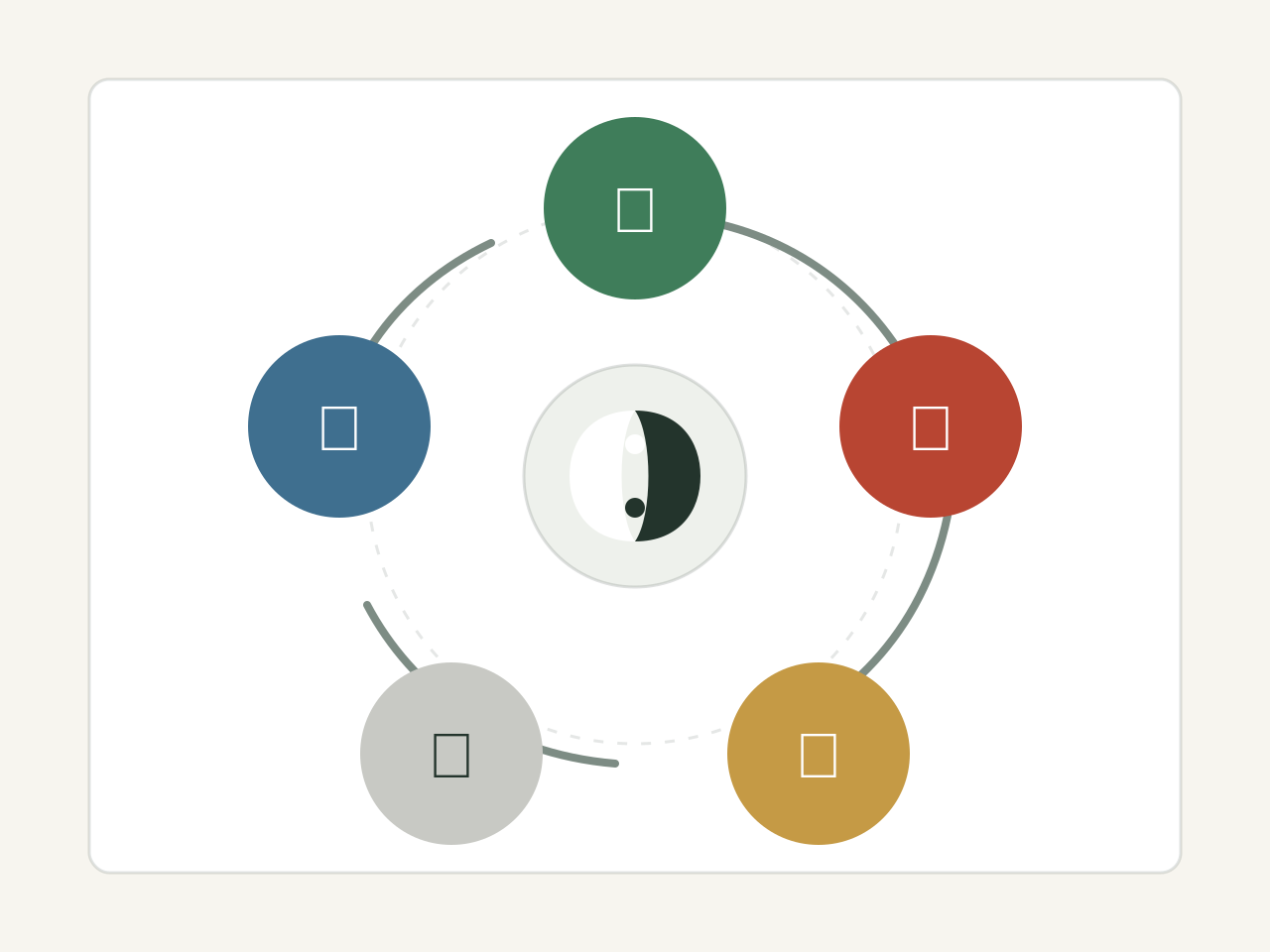
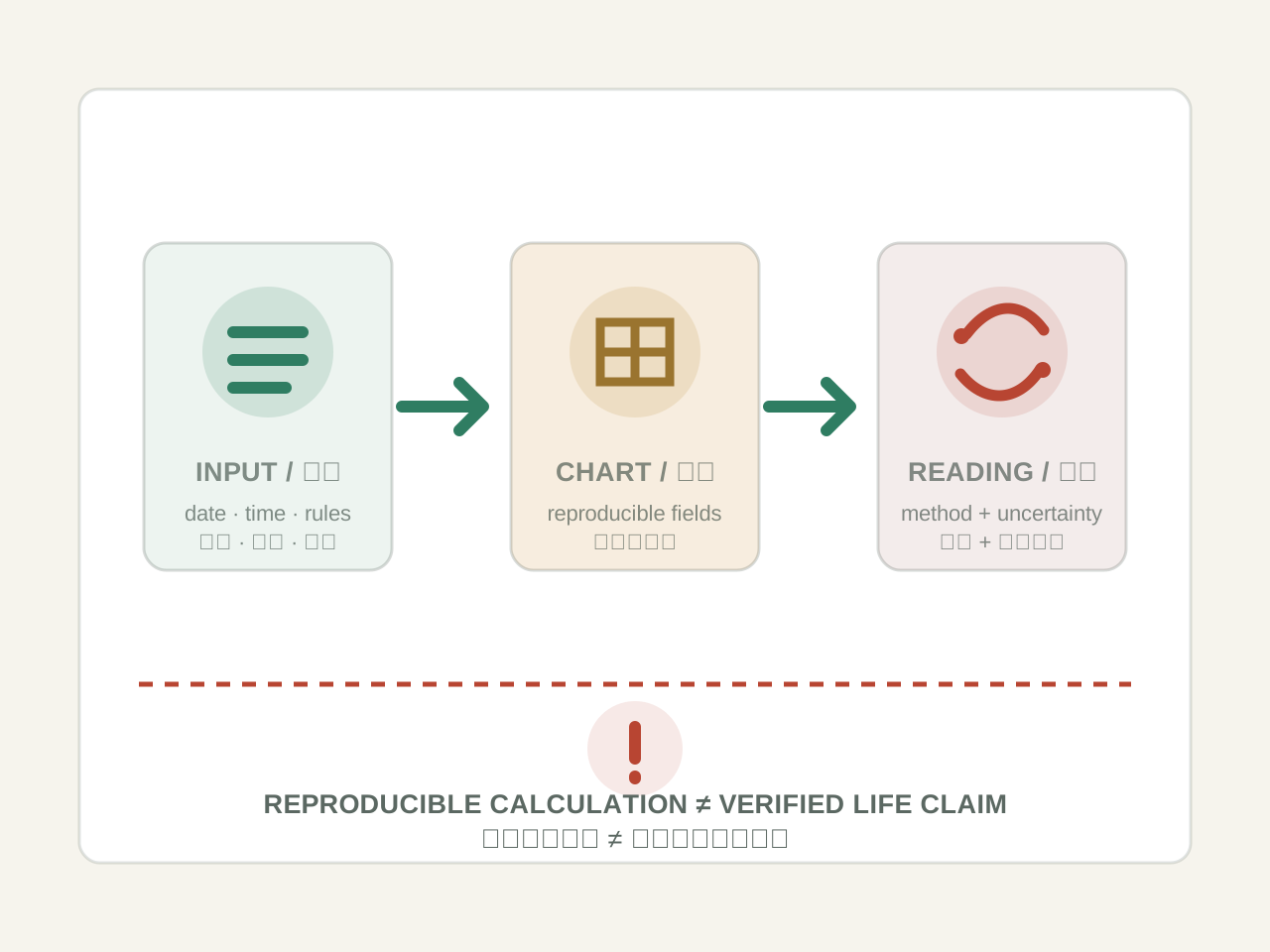
Annual influences are seasonal weather, not permanent climate
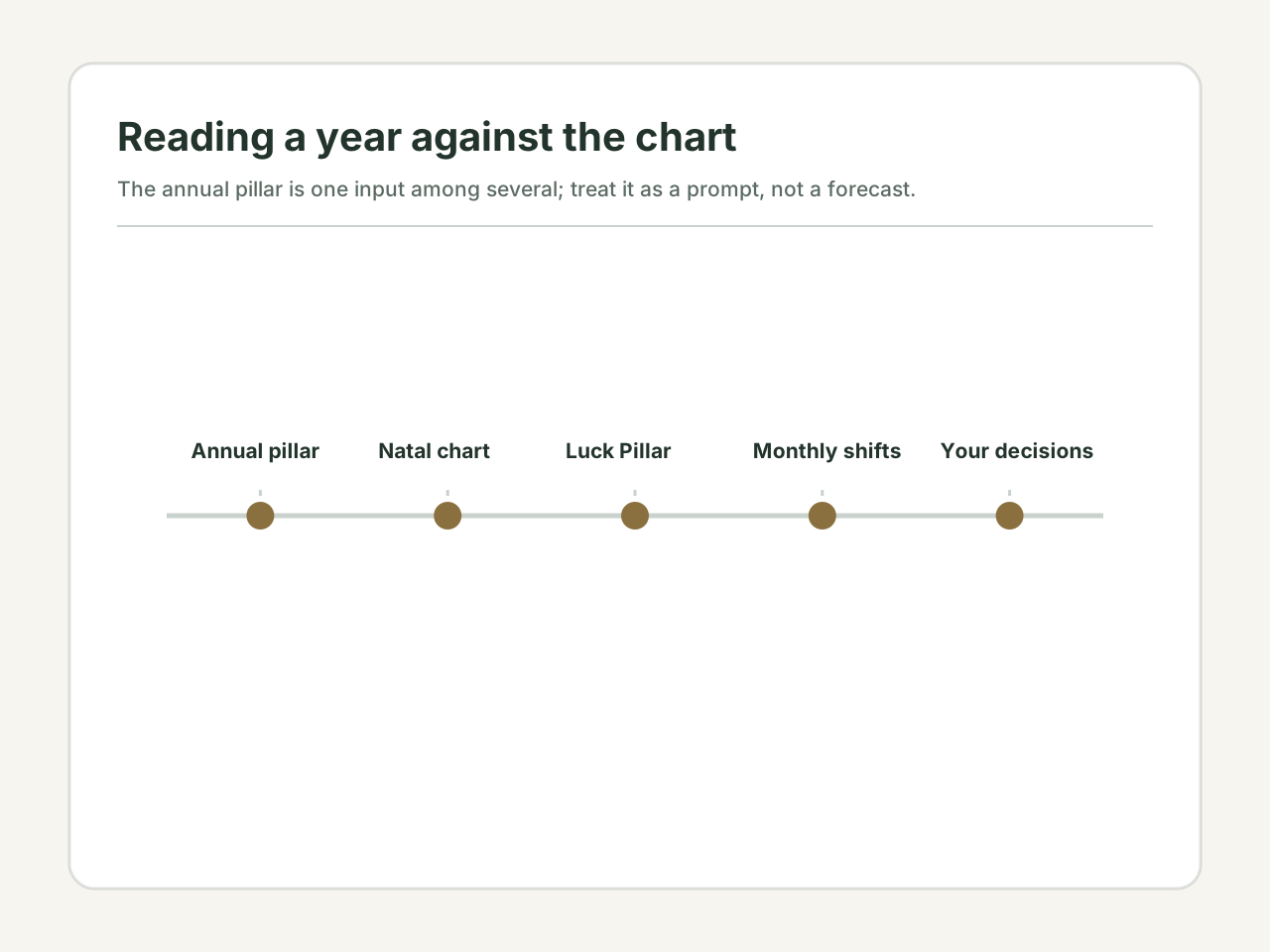
Liu Nian (流年), or the annual pillar, adds a yearly layer of stems and branches that interact with both the natal chart and the current Luck Pillar. Each year brings a different combination — 2025 is Yi Si (乙巳, Yin Wood over Yin Snake), 2026 is Bing Wu (丙午, Yang Fire over Yang Horse). The annual pillar is the most time-sensitive layer of BaZi reading.
The honest view: annual influences are like seasonal weather. A hot summer does not mean the climate has permanently changed, and a cold winter does not mean the planet is freezing. The annual pillar describes temporary conditions that last for one year. They are real — you feel them — but they are not the foundation of your chart. Do not make life-altering decisions based on a single year's reading.
How to read the annual pillar
Here are the four key interactions between the annual pillar and the natal chart:
| Interaction | What it means | Example |
|---|---|---|
| Combination (合) | The annual stem or branch combines with a natal stem or branch, creating a new element or strengthening an existing one | The annual Yin Water (癸) combines with a natal Yang Earth (戊) to create Fire. A year of Water may bring relationship or opportunity themes through the combination |
| Clash (冲) | The annual stem or branch clashes with a natal stem or branch, creating instability in that pillar's domain | The annual Yang Horse (午) clashes with a natal Yang Rat (子) in the day branch. The spouse palace is clashed — expect relationship adjustments or increased communication needs this year |
| Harm (害) | The annual branch harms a natal branch, creating subtle friction or misunderstanding | The annual Yin Rooster (酉) harms a natal Yang Dog (戌). This is not as dramatic as a clash but signals minor irritations, miscommunications, or hidden tensions |
| Punishment (刑) | The annual branch punishes a natal branch, creating internal conflict or self-sabotage | The annual Yin Rooster (酉) self-punishes with another Rooster. The theme is internal struggle — overthinking, regret, or difficulty making decisions |
What annual analysis is actually useful for
Annual BaZi analysis is not for predicting the future. It is for planning. Here is what it is actually useful for:
- Timing decisions. If the annual pillar clashes with your career pillar (month branch), this may not be the best year to quit your job impulsively. The clash signals instability in the career domain. Wait for a year that combines with or supports the career pillar. If the annual pillar combines with your wealth pillar, this may be a good year to start a business or make an investment — the conditions are favourable.
- Preparing for relationship stress. If the annual pillar clashes with your spouse palace (day branch), you are not doomed to a breakup. But you should be more conscious about communication, more patient with your partner, and more aware that small issues can escalate. The clash is a warning, not a verdict.
- Understanding your own mood. Some years, you feel inexplicably restless, anxious, or energised. Annual analysis can give you a vocabulary for understanding why. A year where the annual stem is your Hurting Officer may make you feel rebellious and creative. A year where the annual stem is your Direct Officer may make you feel constrained and responsible. Neither is good or bad. Both are useful information.
A worked example: a year of career clash
A man has a Yang Earth (戊) Day Master. His month branch is Yin Ox (丑) — his career pillar. The year 2026 is Bing Wu (丙午), Yang Fire over Yang Horse. The annual branch Wu (午) harms the month branch Chou (丑). This is a harm between the annual pillar and the career pillar.
He reads online that 'a harm in the career pillar means trouble at work' and becomes anxious. He starts looking for a new job preemptively, even though he is happy in his current role.
A more useful reading: the harm between Wu and Chou is a subtle friction, not a destructive clash. It may manifest as minor disagreements with colleagues, a project that goes slightly off-track, or a period of feeling unmotivated. It does not mean he will lose his job. The advice is: pay attention to workplace relationships this year, communicate clearly, and do not make impulsive career decisions. The harm is a signal to be careful, not a reason to panic.
He takes the advice. He has a few tense meetings during the year but navigates them by being more deliberate about communication. By year-end, he is still in the same job and has actually strengthened his working relationships. The harm was real — the friction happened — but he handled it because he was prepared.
A realistic view of annual influences in BaZi
Annual BaZi analysis is a planning tool, not a prediction tool. It tells you what themes are more likely to be prominent in a given year — career change, relationship stress, financial opportunity, creative output. It does not tell you what will happen. The difference between a clash that destroys a relationship and a clash that makes a relationship stronger is how you handle it. Use annual analysis to prepare, not to panic. A year of 'bad' annual influences can be navigated with awareness. A year of 'good' annual influences can be wasted through inaction. The year is a set of conditions; your choices are what matter.
Disclaimer: This content is for informational and cultural reference purposes only. It does not constitute professional medical, legal, financial, or psychological advice. Readers should exercise their own judgment and consult qualified professionals for specific concerns.
Sources and review basis
Traditional references explain historical vocabulary and context. Official practical sources support only the observable safety, comfort, or environmental points noted in the article; they do not validate metaphysical claims.
Traditional reference
Yuanhai Ziping (渊海子平)Wikisource digital text · Accessed 2026-07-14
A classical source for Four Pillars terminology, element relationships, and the Day Master framework.
Traditional reference
Sanming Tonghui (三命通会)Wikisource digital text · Accessed 2026-07-14
A historical compilation used to cross-check traditional BaZi concepts; it is not scientific validation.