Health analysis describes tendencies, not diagnoses
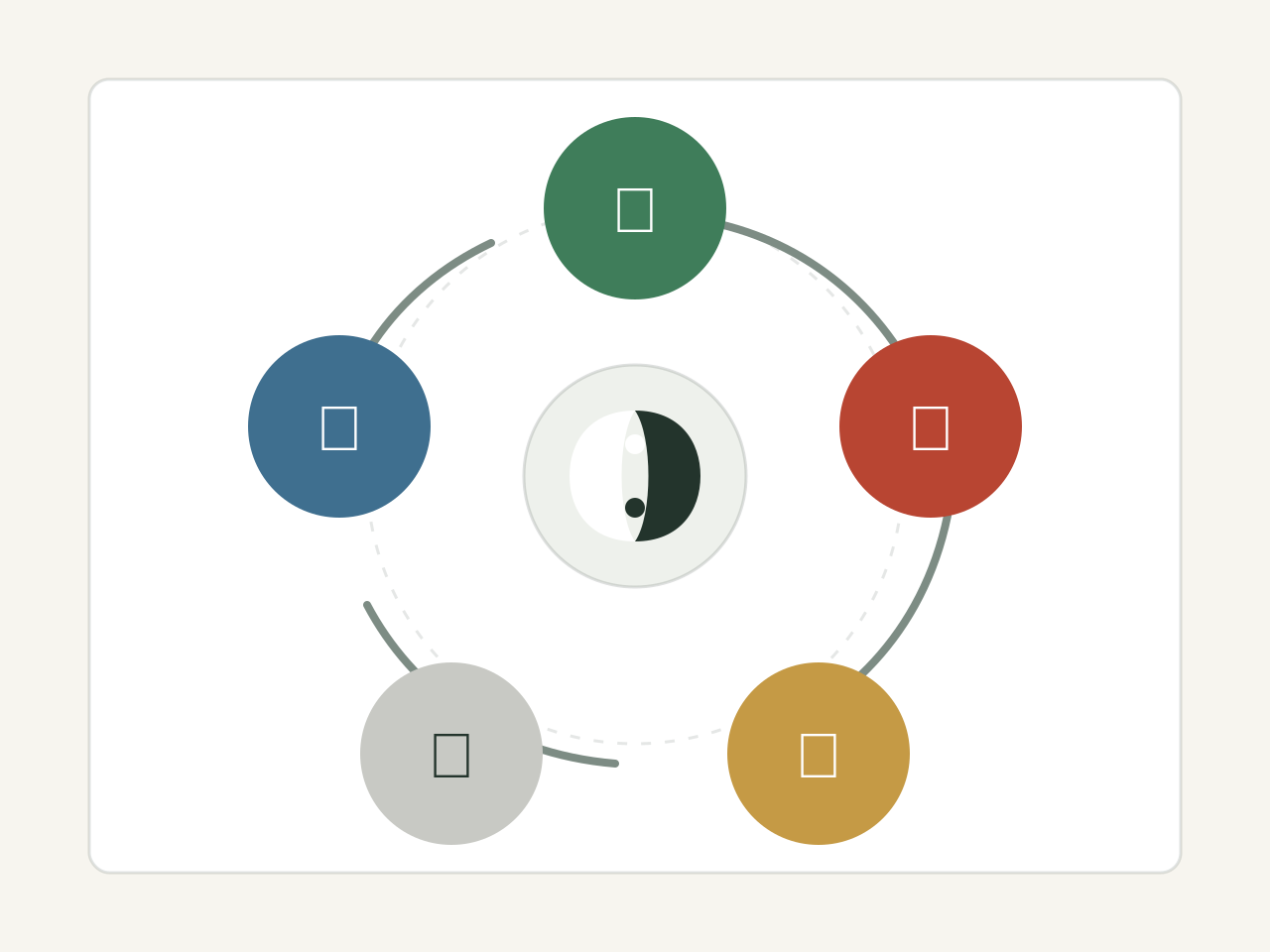
Each of the five elements in BaZi corresponds to organ systems in traditional Chinese medicine: Wood to the liver and gallbladder, Fire to the heart and small intestine, Earth to the spleen and stomach, Metal to the lungs and large intestine, Water to the kidneys and bladder. Imbalances in the chart — elements that are excessively strong, excessively weak, or missing — may suggest areas of health vulnerability.
The honest view: BaZi health analysis is a traditional wellness reference, not a medical diagnosis. It uses the same framework as traditional Chinese medicine, which is a different system from modern medicine. The correspondences are suggestive, not scientific. A chart with weak Metal does not mean you will have lung disease. It means the traditional framework associates Metal with the respiratory system, and an imbalance may suggest paying extra attention to lung health. Always consult a qualified healthcare professional for health concerns.
Element-organ correspondences and what they suggest
Here is the traditional mapping, with the honest caveat that this is a pre-modern framework:
| Element | Associated organs | What an imbalance may suggest |
|---|---|---|
| Wood (木) | Liver, gallbladder, tendons, eyes | Excess Wood: tension, headaches, irritability, high blood pressure. Weak Wood: fatigue, indecision, difficulty detoxifying. Pay attention to: stress management, alcohol consumption, eye strain |
| Fire (火) | Heart, small intestine, blood vessels, tongue | Excess Fire: anxiety, insomnia, inflammation, rapid heartbeat. Weak Fire: poor circulation, cold extremities, low energy. Pay attention to: cardiovascular exercise, sleep hygiene, emotional regulation |
| Earth (土) | Spleen, stomach, muscles, mouth | Excess Earth: digestive sluggishness, weight gain, overthinking. Weak Earth: poor digestion, nutritional deficiencies, worry. Pay attention to: diet, meal timing, gut health |
| Metal (金) | Lungs, large intestine, skin, nose | Excess Metal: respiratory rigidity, skin issues, excessive grief. Weak Metal: frequent colds, weak immunity, dry skin. Pay attention to: breathing, air quality, immune support |
| Water (水) | Kidneys, bladder, bones, ears | Excess Water: fluid retention, fear, kidney stress. Weak Water: lower back pain, fatigue, hearing issues, premature aging. Pay attention to: hydration, rest, stress on the lower back |
How to use health analysis responsibly
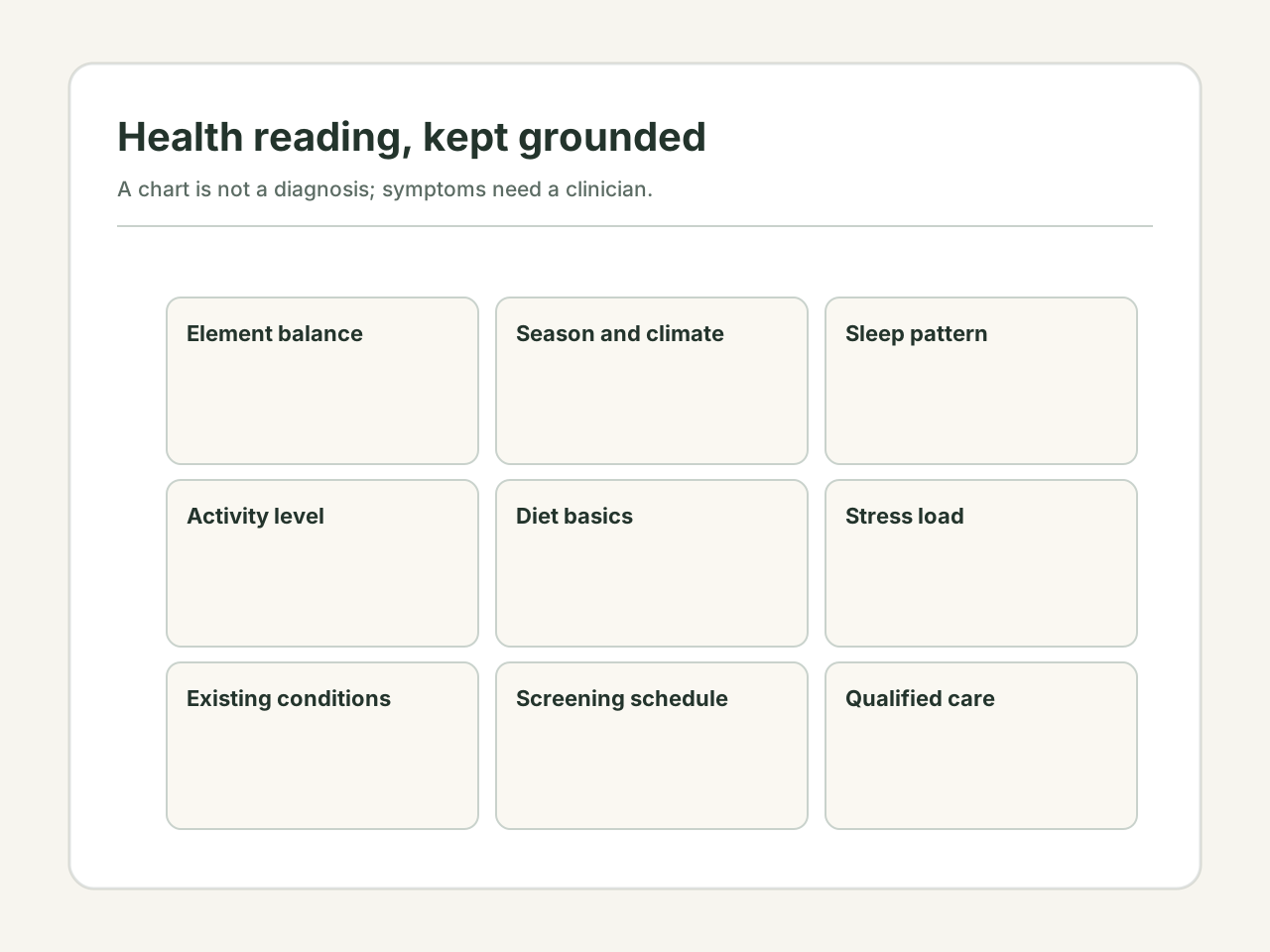
BaZi health analysis is not for diagnosing illness. It is for identifying lifestyle patterns that may need attention. Here is how to use it responsibly:
- Use it as a wellness check, not a diagnosis. If your chart shows weak Metal, do not assume you have lung disease. Instead, pay attention to respiratory health: do not smoke, exercise regularly, maintain good air quality at home. The chart suggests a tendency, not a condition.
- Look at the whole picture. A single element imbalance is not the whole story. The interactions between elements — generating and controlling cycles — matter more than any single element's strength. A chart with weak Fire but strong Wood may have hidden Fire support because Wood generates Fire. The imbalance may be less significant than it first appears.
- The chart describes tendencies, not certainties. A person with a 'perfectly balanced' chart can still get sick. A person with a 'highly imbalanced' chart can live a long, healthy life. Lifestyle, environment, genetics, and access to healthcare matter far more than BaZi element balance. The chart is a suggestion, not a prediction.
A worked example: when a chart 'warns' of something that never happens
A man's chart shows extremely weak Water — he was born in summer (Fire season), all his stems are Fire and Earth, and he has no Water stems or roots. According to traditional BaZi health analysis, weak Water suggests kidney and urinary system vulnerability. He reads this and becomes anxious, convinced he has kidney problems.
He goes to his doctor for tests. The tests come back completely normal. His kidneys are fine. He is 35, exercises regularly, drinks plenty of water, and has no family history of kidney disease. The chart suggested a tendency, but his actual lifestyle and genetics overrode it.
The lesson: the chart is one data point among many. His weak Water element may manifest in other ways — he is not naturally drawn to rest and reflection, he tends to push himself too hard, and he sometimes struggles with fear-based decision-making. These are Water-element tendencies (Water governs wisdom, adaptability, and the ability to rest). But his kidneys are fine. The chart described a pattern, not a medical condition.
The real limit of BaZi health analysis
BaZi health analysis is a traditional wellness framework that maps the five elements to the body's organ systems. It is a useful lens for thinking about lifestyle and balance, but it is not a substitute for medical advice. If you have health concerns, see a doctor. If your BaZi chart suggests a health vulnerability, use it as a reminder to take care of that area — not as a reason to panic. The chart describes possibilities, not certainties. Your health is determined by your choices, your environment, your genetics, and your access to care — not by the balance of elements in your birth chart.
Disclaimer: This content is for informational and cultural reference purposes only. It does not constitute professional medical, legal, financial, or psychological advice. Readers should exercise their own judgment and consult qualified professionals for specific concerns.
Sources and review basis
Traditional references explain historical vocabulary and context. Official practical sources support only the observable safety, comfort, or environmental points noted in the article; they do not validate metaphysical claims.
Traditional reference
Yuanhai Ziping (渊海子平)Wikisource digital text · Accessed 2026-07-14
A classical source for Four Pillars terminology, element relationships, and the Day Master framework.
Traditional reference
Sanming Tonghui (三命通会)Wikisource digital text · Accessed 2026-07-14
A historical compilation used to cross-check traditional BaZi concepts; it is not scientific validation.
Practical source
US NIH/NHLBI: Healthy Sleep HabitsNational Heart, Lung, and Blood Institute, NIH · Accessed 2026-07-14
Health background for sleep routines and bedroom conditions; it does not endorse directional feng shui claims.