Feng Shui

Door Conflict Solutions: Remedies and Cures

This page explains Door Conflict Solutions: Remedies and Cures as a practical cultural reference, covering the core idea, common use cases, careful checks, and responsible limits so readers can compare traditional guidance with real conditions.

2026-03-20 · Updated 2026-06-07

B

Reviewed by BaZi Report Editorial Team

Our editorial team researches classical Chinese metaphysics and feng shui texts, fact-checks references against the original sources, and reviews every article before publication. We aim to keep traditional concepts clear and practical, and we stay transparent about what these readings can and cannot tell you.

Use this guide to understand Door Conflict Solutions: Remedies and Cures in context, compare several signals, and avoid treating any single traditional rule as a fixed promise.

Door conflicts are about flow, not bad luck

Feng shui door conflicts (门冲) are among the most commonly discussed problems in home feng shui, and they are also among the most misunderstood. The classical idea is that when two doors face each other directly, energy rushes between them too quickly, creating conflict and instability. The practical version: a door is a threshold. When two thresholds are aligned, the space between them becomes a channel rather than a room, and the rooms on either side lose their sense of privacy and containment.

The most common door conflicts — front door facing back door, bedroom door facing bathroom door, bedroom door facing another bedroom door — are not omens of bad luck. They are spatial arrangements that create a feeling of exposure, and the fix is to restore the sense of each room being a contained, private space.

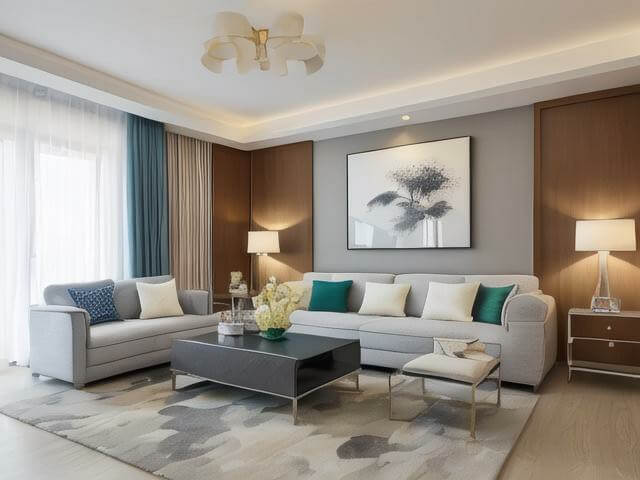
Door conflict feng shui solutions reference showing screens plants and layout adjustments for door alignment

Three door conflicts that actually affect how a home feels

Not all aligned doors are a problem. The ones that matter are those where the alignment undermines the function of one or both rooms:

ConflictWhat it looks likeWhy it mattersLightest fix
Front door aligned with back doorYou can see straight through the house from the front door to the backThe entryway becomes a corridor instead of a threshold. Visitors (and energy) rush through without stopping. The home feels like a public passage.Place a screen, console table, or tall plant between the two doors to break the sightline.
Bedroom door facing bathroom doorThe bedroom door opens directly opposite the bathroom doorThe bedroom is a rest space; the bathroom is a drainage space. Having them face each other creates a visual and energetic link that feels unclean. The practical concern: bathroom odours and humidity travel directly into the bedroom.Keep both doors closed when not in use. Hang a curtain or place a small screen in the hallway between them.
Bedroom door facing another bedroom doorTwo bedroom doors open directly opposite each other across a hallwayBoth rooms lose privacy. When one door is open, the occupant of the other room can see directly in. This creates tension between family members.Stagger the doors if renovating. If not, hang a curtain or place a narrow console table in the hallway between them.

A worked example: the front-to-back door problem

A family lives in a terraced house where the front door opens into a hallway that runs straight to the back door in the kitchen. From the front doorstep, you can see the garden fence at the back of the property. The family complains that the house never feels warm in winter — drafts come straight through — and guests never linger in the entryway; they walk straight through to the kitchen.

The feng shui diagnosis is straightforward: the front and back doors are aligned, creating a 'drain' of energy from the front to the back. The practical problems are equally clear: the sightline from the street to the garden makes the house feel exposed, and the draft makes the hallway cold.

The solution: a tall, narrow console table is placed against the wall between the front door and the hallway, with a large vase of dried flowers on it. This breaks the sightline without blocking the walkway. A heavy curtain is hung on a tension rod just inside the front door, creating a soft barrier that stops drafts and adds visual privacy. In the kitchen, a folding screen is placed between the back door and the kitchen table, angled so the back door is not visible from the front of the house.

The result: the house feels warmer and more private. Guests stop in the entryway instead of walking straight through. The family keeps the front door curtain closed on cold days and open on warm days. The total cost was under £200.
Solutions ranked by effort and cost

Not every door conflict needs a renovation. Here are the options, from lightest to heaviest:

  • Keep the doors closed. The simplest fix: if two doors face each other, keep at least one of them closed. This is free and immediately effective.
  • Hang a curtain or bead screen between the doors. A fabric curtain, a string of beads, or a bamboo screen hung in the doorway or hallway breaks the visual alignment. This costs very little and can be removed by a renter.
  • Place a physical object between the doors. A console table, a tall plant, a floor lamp, or a bookshelf placed in the sightline between the two doors. The object should be tall enough to interrupt the line of sight but not block the walkway.
  • Use a rug to define zones. A rug placed between two aligned doors creates a visual 'pause' zone that signals a transition. This is subtle but effective in wider hallways.
  • Stagger the doors. If you are renovating, move one door a few feet to the side so the two doors are no longer aligned. This is the most expensive option but the most permanent.

The honest limit

Door conflicts are a spatial issue, not a cosmic one. Aligned doors create a feeling of exposure and a loss of privacy, and fixing them makes a home feel more contained and restful. But a door facing another door does not cause arguments, financial problems, or health issues. It is a design problem with a design solution. If it bothers you, fix it with a screen, a curtain, or a plant. If it does not bother you, move on to something that matters more. The feng shui tradition is a useful diagnostic tool for why a space feels uncomfortable, but it is not a system of supernatural cause and effect.

Disclaimer: This content is for informational and cultural reference purposes only. It does not constitute professional medical, legal, financial, or psychological advice. Readers should exercise their own judgment and consult qualified professionals for specific concerns.

Keep reading

Related articles

Content Note

This article is based on publicly available materials in traditional Chinese metaphysics and feng shui. It is intended as cultural reference and background knowledge only. Metaphysical predictions and feng shui suggestions are not substitutes for professional medical, legal, financial, or psychological advice. We encourage readers to apply their own judgment when interpreting the content. Learn more about our content guidelines