Why aligned doors get flagged at all
Feng shui treats doors as the mouths where energy and people enter and leave. Two doors directly facing each other are read as a channel that moves things through too fast, with no chance to settle. The plain-language version is real enough: a straight run between two openings does create a draft, a sightline, and a sense that a space is a corridor rather than a room. The tradition is pointing at something you can actually feel.
Not all door clashes are equal
The mistake is treating every facing pair as a crisis. They are not the same, and ranking them keeps you from wasting effort:
- Front door aligned with back door or a large window. The most cited one. Energy (and, practically, a draft and a straight sightline) runs in and straight out. Worth addressing.
- Front door directly facing the stove, bed, or toilet. Flagged because the first thing you see sets the tone of the home; a toilet or stove on the entry axis is the usual worry. Worth a simple screen or repositioning.
- Two interior doors of equal rooms facing each other. Often labelled a confrontational clash between rooms. Usually minor unless the doors actually bang or the sightline is awkward.
- Bedroom or bathroom doors slightly offset. Frequently fine. An offset is not a true face-off and rarely needs a cure.
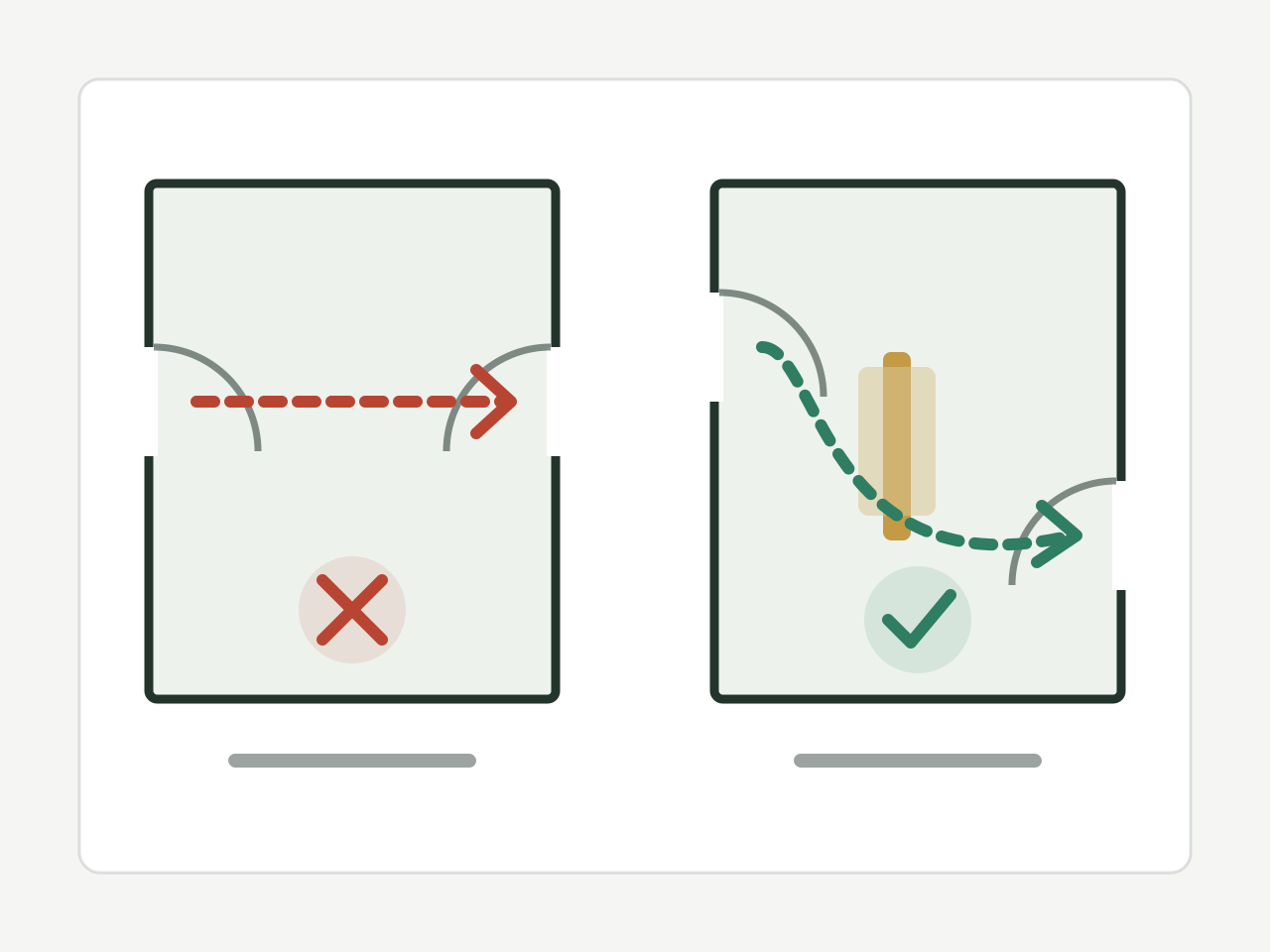
A worked example: front door looking straight through to the balcony
You open the front door and see clear through the living room to a balcony door opposite. This is the classic front-to-back run, and it is genuinely worth softening, both for the tradition and for the draft.
You do not need to wall anything off. The job is to interrupt the straight line and give the eye a pause: place a console table or a low cabinet to one side, add a screen or an open shelf as a partial divider, or use a rug and a plant to break the runway. The test is simple, stand at the door; if your eye now lands on something a step or two in rather than shooting straight outside, you are done.
Remedies, matched to the problem
Pick the lightest fix that interrupts the sightline; stacking cures is its own kind of clutter.
| Situation | Lightest effective fix | When to do more |
|---|---|---|
| Front door to back door/window | Console, screen, or plant to break the line | If the draft is strong, a proper partition or curtain |
| Door facing stove or toilet | Keep the inner door closed; add a screen | Reposition the door swing if you own the place |
| Two interior doors clashing | Soft bumper so they do not bang; a small offset | Usually nothing else is needed |
| Narrow hallway of facing doors | Lighting and a runner to slow the eye | Rarely structural |
Keep it proportionate
Most door alignments are not emergencies, and the internet tends to inflate them. The honest question is not whether two doors technically face each other, but whether the space feels exposed, rushed, or like a through-route instead of a room. If it does, a single visual pause fixes it. If it does not, you can leave it alone with a clear conscience.
Disclaimer: This content is for informational and cultural reference purposes only. It does not constitute professional medical, legal, financial, or psychological advice. Readers should exercise their own judgment and consult qualified professionals for specific concerns.
Sources and review basis
Traditional references explain historical vocabulary and context. Official practical sources support only the observable safety, comfort, or environmental points noted in the article; they do not validate metaphysical claims.
Traditional reference
Huangdi Zhaijing (黄帝宅经)Wikisource digital text · Accessed 2026-07-14
Historical context for traditional residential orientation and spatial vocabulary. Modern recommendations are reviewed separately.
Practical source
US EPA: Indoor Air QualityUnited States Environmental Protection Agency · Accessed 2026-07-14
Practical background for ventilation, pollutants, combustion sources, and indoor air concerns.