Face reading is pattern recognition, not fortune telling
Face reading (Mian Xiang, 面相) is the Chinese practice of interpreting facial features to understand personality, temperament, and life patterns. It has been practiced for over 2,000 years, with roots in traditional Chinese medicine and philosophy. The core idea is that the face reflects a person's inner state — health, emotions, character — and that these are visible in the structure and features of the face.
The honest view: face reading is not a magical system that predicts your future. It is a pattern-recognition framework that connects facial features to personality traits and life tendencies. Some of these connections have intuitive logic — for example, a person with expressive eyes tends to be emotionally expressive. Others are cultural associations that have been passed down through generations. Face reading is best understood as a traditional system for reading character, not a science or a fortune-telling method.
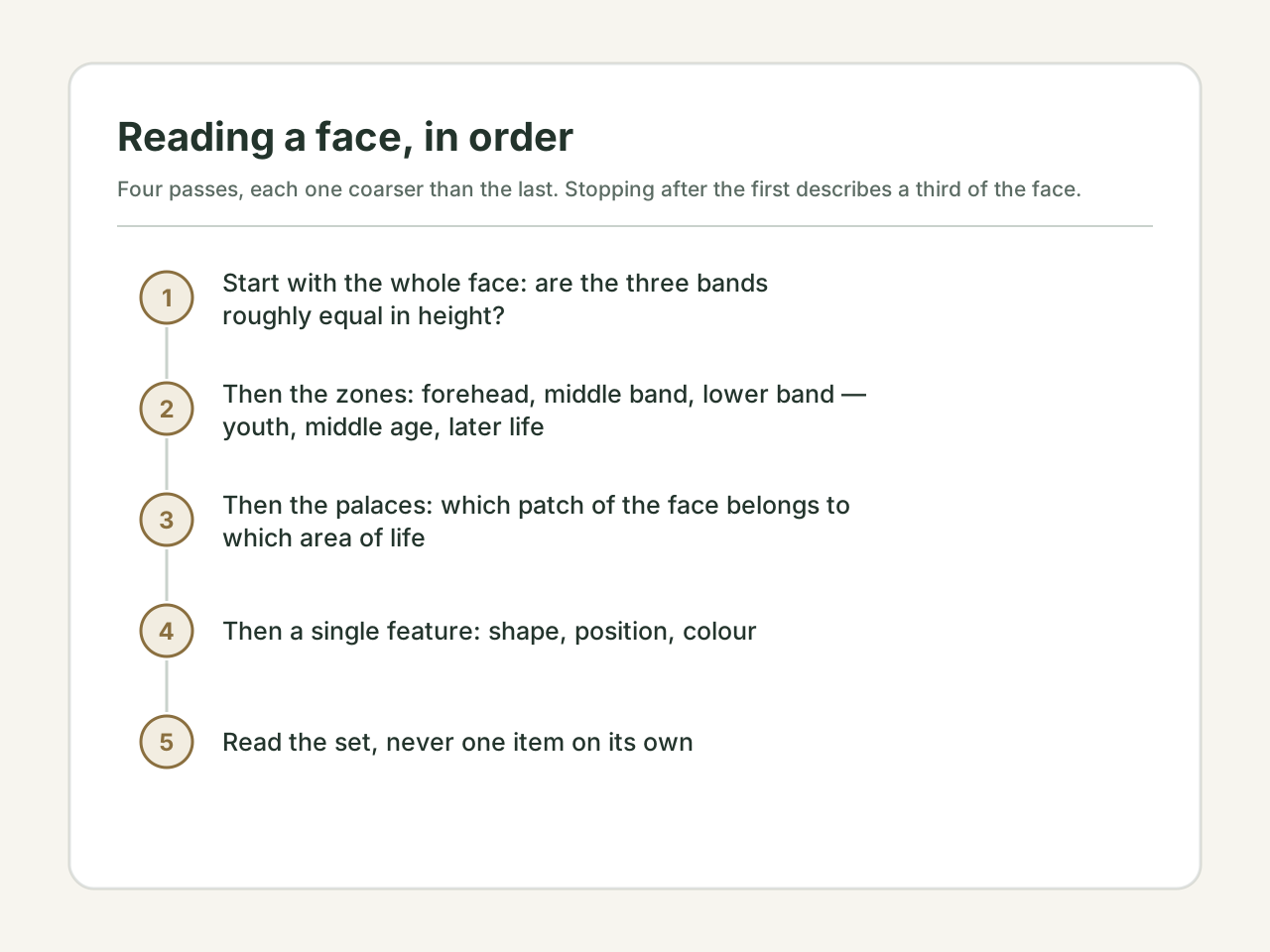
The three zones of the face
The face is traditionally divided into three zones, each representing a different life period and aspect of life:
| Zone | Location | Life period | What it represents | What to look for |
|---|---|---|---|---|
| Heaven (上停) | Forehead, from hairline to eyebrows | Youth (0-30 years) | Intellectual capacity, family background, early life opportunities, inherited traits | A broad, smooth, and well-proportioned forehead suggests a good start in life and intellectual ability. A narrow or receding forehead may indicate a more challenging early life or a more practical, less intellectual orientation |
| Human (中停) | From eyebrows to tip of nose | Middle age (30-50 years) | Career, relationships, personal development, social standing | A well-formed nose and strong eyebrows suggest stability and achievement in middle years. The nose is the central feature of this zone and is especially important for career and wealth indicators |
| Earth (下停) | From tip of nose to chin | Later life (50+ years) | Security, legacy, relationships, final years | A full, rounded chin and well-defined mouth suggest a comfortable later life. A weak or receding chin may indicate a less secure later period |
Four rules for practical face reading
Here is how to approach face reading as a practical tool:
- Read the whole face, not one feature. A single feature — a big nose, small eyes, thin lips — means nothing in isolation. Face reading is about the relationship between features. A big nose with a strong chin and high forehead means something different from a big nose with a weak chin and low forehead. Always interpret features in context.
- Look for balance and harmony. The traditional ideal in face reading is balance — features that are proportional and harmonious. A face where all features are in proportion suggests a balanced personality. A face with one feature dramatically different from the rest suggests a personality with a strong emphasis in one area. Balance is not about being 'good' or 'bad' — it is about describing tendencies.
- Face reading describes tendencies, not destiny. A person with a 'strong' nose (career indicator) is not guaranteed career success. They may have a tendency toward ambition and achievement. But their actual career depends on their effort, education, opportunities, and choices. Face reading describes what is likely, not what is certain.
- The face changes over time. Unlike your bone structure, your facial expression lines, muscle tone, and even the 'feel' of your face change with your life experiences, habits, and emotional patterns. A person who smiles often develops different lines than a person who frowns often. Face reading at age 20 and face reading at age 50 can give different results because the face has changed — and so has the person.
A worked example: reading a face in context
A woman wants to understand her face reading. She has a high, broad forehead (Heaven zone — strong intellectual start), a small nose (Human zone — modest career indicator), and a full, rounded chin (Earth zone — comfortable later life).
The traditional interpretation: strong early life and intellectual ability, a modest career, and a comfortable later life. But this is a surface-level reading. A more nuanced reading considers the relationship between features: her strong forehead and full chin 'support' the modest nose. She may not be ambitious in a conventional sense, but she has the intelligence (forehead) and security (chin) to build a satisfying life on her own terms. She is not lacking career — she has a different kind of career path, one that values quality of life over status.
The point: face reading is about understanding the whole picture. A single feature tells you little. The relationship between features tells you more. And the interpretation should always be grounded in the person's actual life, not in rigid rules.
Where face reading basics advice stops
Face reading is a traditional framework for understanding personality and life patterns through facial features. It is not a science. It is not a prediction system. It cannot tell you what will happen in your life. It can offer a way of thinking about character and tendencies, but it should not be used to make important life decisions. The best use of face reading is as a tool for self-reflection and understanding others — not as a replacement for getting to know people or making your own choices.
Disclaimer: This content is for informational and cultural reference purposes only. It does not constitute professional medical, legal, financial, or psychological advice. Readers should exercise their own judgment and consult qualified professionals for specific concerns.
Sources and review basis
Traditional references explain historical vocabulary and context. Official practical sources support only the observable safety, comfort, or environmental points noted in the article; they do not validate metaphysical claims.
Traditional reference
Huangdi Zhaijing (黄帝宅经)Wikisource digital text · Accessed 2026-07-14
Historical context for traditional residential orientation and spatial vocabulary. Modern recommendations are judged against real conditions.
Practical source
APA Dictionary of Psychology: Barnum effectAmerican Psychological Association · Accessed 2026-07-14
A psychology reference for why broad, favourable personality descriptions can feel personally accurate. It does not evaluate BaZi calculations themselves.