The three zones are a life-stage framework, not a verdict
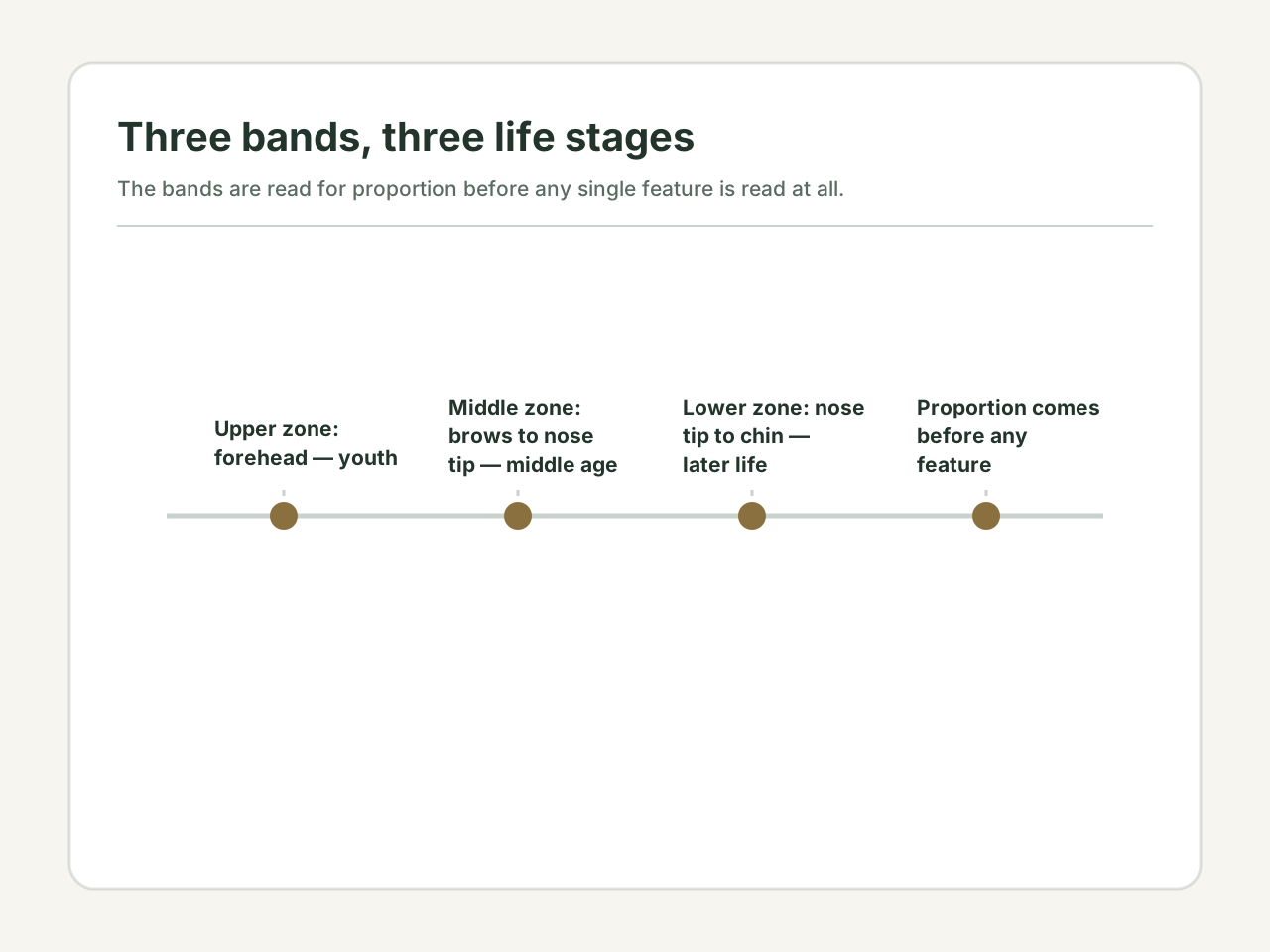
The three zones (San Ting, 三停) are the foundational structure of Chinese face reading. The face is divided horizontally into three sections: the upper zone (Heaven, 上停), the middle zone (Human, 中停), and the lower zone (Earth, 下停). Each zone corresponds to a stage of life, a set of life domains, and a set of personality characteristics.
The honest view: the three zones are a framework for understanding how different parts of the face relate to different aspects of life. They are not a prediction of your life trajectory. A person with a 'weak' upper zone is not doomed to a difficult childhood. A person with a 'strong' lower zone is not guaranteed a comfortable retirement. The zones describe tendencies and patterns. They are useful for understanding the overall structure of a face and the relationship between its parts.
The three zones in detail
Here is a detailed breakdown of all three zones:
| Zone | Boundaries | Life stage | Key indicators | Strong features | Weak features |
|---|---|---|---|---|---|
| Heaven (上停) | Hairline to eyebrows | Youth (0-30 years) | Intellect, family background, inheritance, early education, relationship with parents and elders | Broad, high, smooth, and well-proportioned forehead. Even hairline. No prominent scars or indentations. Suggests good early opportunities, intellectual ability, and supportive family | Narrow, low, or receding forehead. Uneven hairline. Prominent scars or indentations. May suggest a more challenging early life, less family support, or a more practical than intellectual orientation |
| Human (中停) | Eyebrows to tip of nose | Middle age (30-50 years) | Career, wealth, relationships, marriage, personal achievement, social status | Strong, straight nose with good height. Well-defined eyebrows. Balanced proportions between eyes, nose, and cheekbones. Suggests career achievement, good relationships, and social standing | Small, weak, or crooked nose. Sparse or uneven eyebrows. Disproportionate features. May suggest career challenges, relationship difficulties, or a quieter middle life |
| Earth (下停) | Tip of nose to chin | Later life (50+ years) | Security, stability, legacy, relationships in later life, children, financial security | Full, rounded chin. Well-defined mouth. Strong jawline. Balanced proportion to the rest of the face. Suggests a comfortable and secure later life, good relationships, and financial stability | Weak, receding, or pointed chin. Thin lips. Weak jawline. May suggest a less secure later life, financial challenges, or a more solitary later period |
Three rules for interpreting the zones
Here is how to use the three zones framework practically:
- Balance is more important than individual zone strength. The ideal in face reading is proportional balance across all three zones. A face with one zone dramatically larger or smaller than the others suggests an emphasis or imbalance in that life stage. For example, a very large upper zone with a small lower zone suggests a person whose early life was more significant than their later life — but this is a tendency, not a prediction.
- The zones interact with each other. A strong upper zone (intellect) can compensate for a weaker middle zone (career) — the person may use their intelligence to build a career path that works for them. A strong middle zone (career) can compensate for a weaker lower zone (later life) — the person may build enough security in middle age to carry them through later years. Always read the zones in relation to each other.
- The zones are about life stages, not life quality. A 'weak' zone does not mean a bad life stage. It means a life stage that may require more effort, or a life stage where the person's focus is less conventional. A person with a 'weak' middle zone may not have a traditional career, but they may have a rich personal life or creative pursuits. The zones describe emphasis, not quality.
A worked example: reading the three zones
A man has a face with a relatively small upper zone (forehead), a very strong middle zone (nose and eyebrows), and a balanced lower zone (chin).
The traditional interpretation: challenging early life, strong career in middle age, and a comfortable later life. But the nuanced reading goes deeper: his small forehead suggests he may not have had an easy or privileged start. He may have had to work harder than others in his early years. His strong middle zone suggests he compensated for this — he built his career through effort and determination, not through inherited advantage. His balanced lower zone suggests he will enjoy the fruit of his labour.
If he had the opposite — a strong upper zone and a weak middle zone — the interpretation would be different. That pattern suggests a person with good early advantages who may struggle to translate them into career achievement. The point is that the zones tell a story about a person's life pattern, not a verdict about their life outcome.
Keeping three facial zones in proportion
The three zones framework is a traditional way of understanding how facial structure relates to life stages. It is not a scientific system. It cannot predict your life. It offers a way of thinking about life patterns, but it should not be taken as a definitive statement about your past, present, or future. The best use of the three zones is as a framework for self-reflection — understanding your tendencies and patterns, not as a prediction of what will happen.
Disclaimer: This content is for informational and cultural reference purposes only. It does not constitute professional medical, legal, financial, or psychological advice. Readers should exercise their own judgment and consult qualified professionals for specific concerns.
Sources and review basis
Traditional references explain historical vocabulary and context. Official practical sources support only the observable safety, comfort, or environmental points noted in the article; they do not validate metaphysical claims.
Traditional reference
Huangdi Zhaijing (黄帝宅经)Wikisource digital text · Accessed 2026-07-14
Historical context for traditional residential orientation and spatial vocabulary. Modern recommendations are judged against real conditions.
Practical source
APA Dictionary of Psychology: Barnum effectAmerican Psychological Association · Accessed 2026-07-14
A psychology reference for why broad, favourable personality descriptions can feel personally accurate. It does not evaluate BaZi calculations themselves.