Individual features indicate tendencies, not fixed traits
In Chinese face reading, each facial feature carries specific meanings. The five main features are the eyes, eyebrows, nose, mouth, and ears. Each feature is associated with different aspects of personality and life. The eyes relate to intelligence and emotional expression. The eyebrows relate to relationships and temperament. The nose relates to wealth and self-esteem. The mouth relates to communication and sensuality. The ears relate to early life and longevity.
The honest view: facial features are not destiny. A person with 'good' features is not guaranteed a good life. A person with 'poor' features is not doomed to struggle. The features describe tendencies and patterns. They are useful for understanding personality and behaviour, but they do not determine your fate. Your life is shaped by your choices, not by your nose.
The five main features and their meanings
Here is a detailed breakdown of each facial feature:
| Feature | What it represents | Ideal characteristics | Less ideal characteristics | What it actually means in practice |
|---|---|---|---|---|
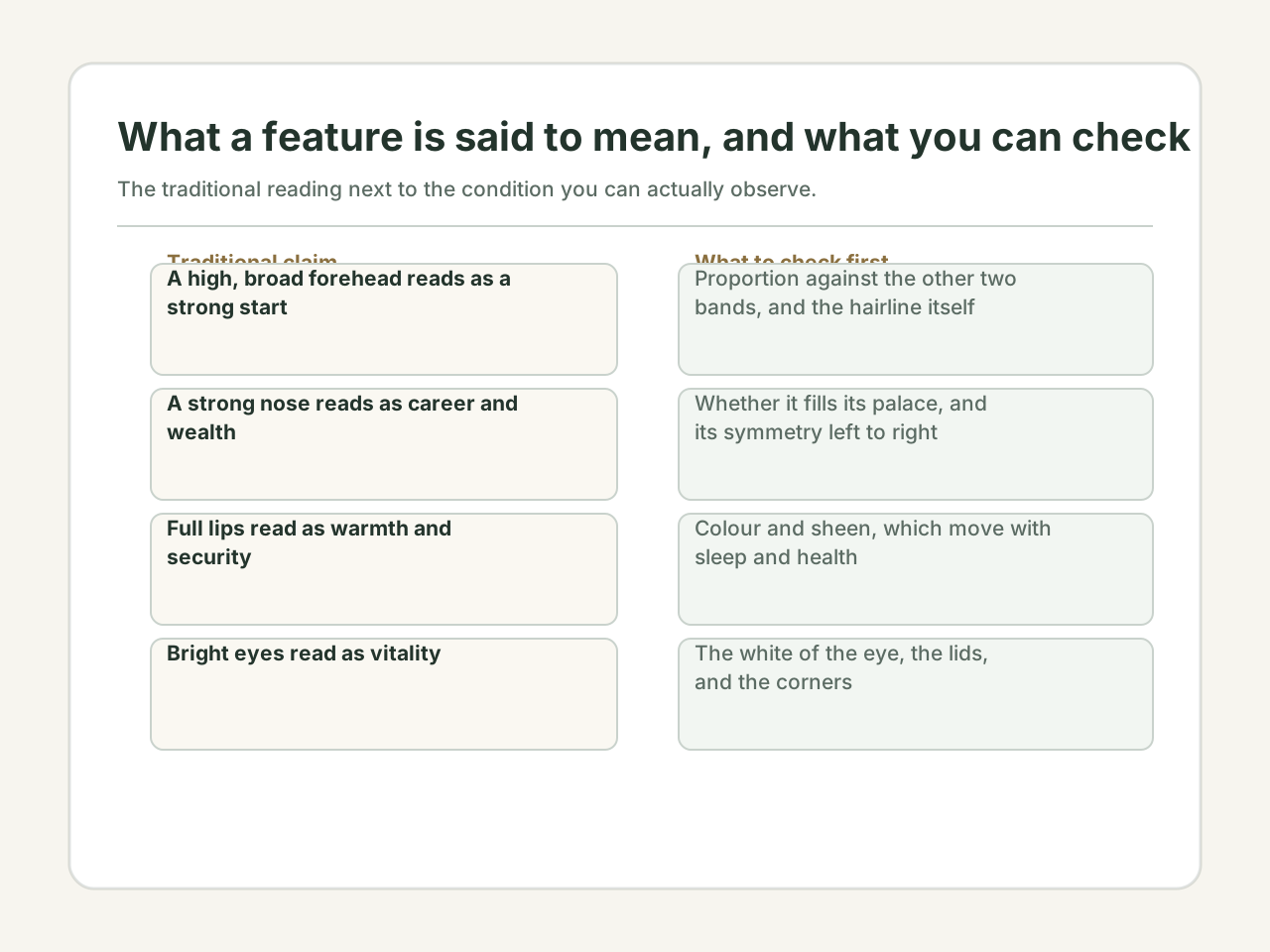
| Eyes (眼) | Intelligence, emotional expression, vitality, spirit | Bright, clear, well-set, with a visible sparkle. Proportionate size. Slightly upturned corners | Dull, unfocused, or overly small. Drooping corners. Constant shifting gaze | Bright eyes suggest mental alertness and emotional openness. The eyes are the most important feature in face reading. They reveal more about a person's inner state than any other feature. But eye expression can change with mood, health, and life circumstances |
| Eyebrows (眉) | Relationships, temperament, social style, decision-making | Thick, well-shaped, even, longer than the eyes. Smooth arch. Clear definition | Sparse, uneven, very short, or unkempt. Heavy unibrow. Overly thin or over-plucked | Well-shaped eyebrows suggest good relationships with siblings and peers, and a balanced temperament. Eyebrows frame the eyes and influence how others perceive your emotional expression. They are about social presentation |
| Nose (鼻) | Wealth, self-esteem, ambition, career | Straight bridge, rounded tip, well-proportioned to the face. Good height. Nostrils not visible from front | Crooked, very small, or overly large. Flat bridge. Visible nostrils from the front | The nose is the wealth indicator. A well-formed nose suggests financial ability and self-confidence. But wealth is not about nose size — it is about financial behaviour. A person with a 'strong' nose who makes poor financial decisions will still struggle |
| Mouth (口) | Communication, sensuality, relationships, enjoyment of life | Well-defined lips, slightly upturned corners. Clear outline. Proportionate size. Rosy colour | Thin, pale, or downturned lips. Very small mouth. Drooping corners. Uneven lips | The mouth indicates how you communicate and how you enjoy life. A well-defined mouth suggests clear communication and a capacity for enjoyment. The mouth changes the most with expression — smiling changes the mouth shape over time |
| Ears (耳) | Early life, longevity, wisdom, ability to listen | Well-formed, positioned at eye level or slightly above. Fleshy lobes. Proportional to head | Very small, misshapen, or positioned very low. Thin or absent lobes. Protruding excessively | The ears indicate early life conditions and the ability to listen and learn. Well-formed ears suggest a good start in life and a capacity for learning from others. But early life is what it is — you cannot change your ears, and you cannot change your past. Focus on what you can control |
Three rules for reading facial features
Here is how to read facial features practically:
- Read the eyes first. The eyes are the most important feature in face reading. They reveal intelligence, emotional state, and vitality. A person with bright, lively eyes has a fundamentally different energy from a person with dull, tired eyes — regardless of what their other features indicate. The eyes are the 'window' to the person's inner state.
- Features work together. A strong nose (ambition) with bright eyes (intelligence) suggests a capable and driven person. A strong nose with dull eyes suggests ambition without direction. A weak nose with bright eyes suggests intelligence without ambition. The combination of features tells the story. A single feature is like a single word — it has meaning, but the sentence is the combination.
- Features change with expression and age. The face is not static. A person who smiles often develops upturned mouth corners and eye crinkles over time. A person who frowns often develops furrowed brows and downturned mouth corners. Face reading at different ages can give different results — not because the reading is wrong, but because the face has changed. Your expressions shape your face over decades.
A worked example: reading a face feature by feature
A man has bright, lively eyes (intelligence, emotional openness), thick but uneven eyebrows (strong temperament but inconsistent social relationships), a strong, straight nose (ambition, self-confidence), thin lips (understated communication style), and well-formed ears (good early life).
The interpretation: he is intelligent and emotionally open (eyes), has a strong personality but may have inconsistent relationships with peers (eyebrows), is ambitious and self-confident (nose), communicates in a reserved way (mouth), and had a good start in life (ears). The overall picture is of a capable and driven person who is somewhat reserved in his communication and may not always get along smoothly with peers. He is likely respected for his competence but not necessarily known for his warmth.
If he had the same features but with full, well-defined lips (open communication) instead of thin lips, the interpretation would be different: he would be both capable and socially engaging. The point: each feature adds a layer to the overall picture. Change one feature, and the whole picture changes.
The practical boundary of facial features and their meanings in mian xiang
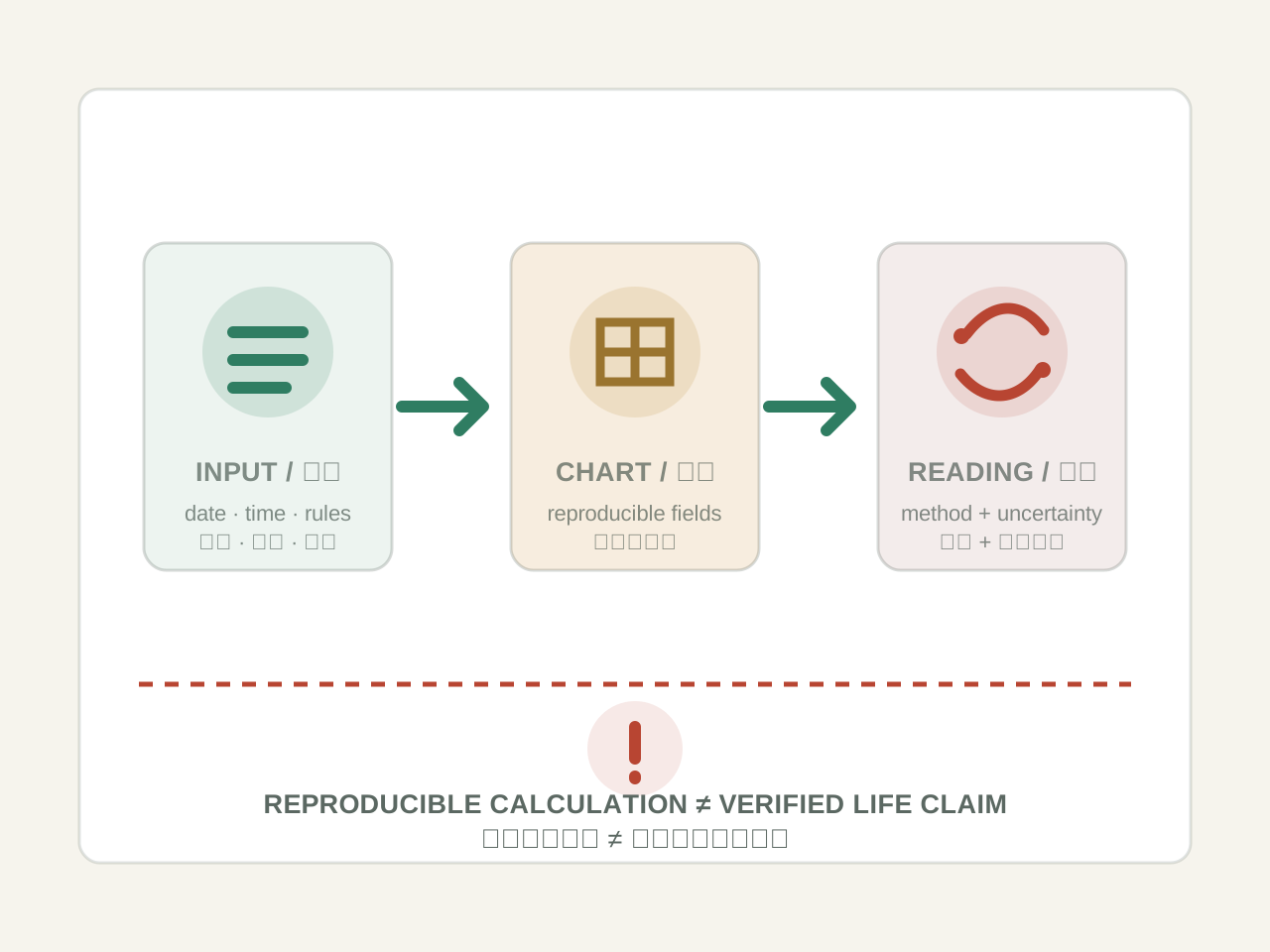
Facial feature reading is a traditional framework for understanding personality through physical characteristics. It is not a science. It cannot predict your future or determine your worth. It offers a way of thinking about how facial features relate to personality, but it should not be used to judge people or make important decisions about them. The best use of facial feature reading is as a tool for understanding yourself and others — not as a replacement for getting to know people or making your own judgments.
Disclaimer: This content is for informational and cultural reference purposes only. It does not constitute professional medical, legal, financial, or psychological advice. Readers should exercise their own judgment and consult qualified professionals for specific concerns.
Sources and review basis
Traditional references explain historical vocabulary and context. Official practical sources support only the observable safety, comfort, or environmental points noted in the article; they do not validate metaphysical claims.
Traditional reference
Huangdi Zhaijing (黄帝宅经)Wikisource digital text · Accessed 2026-07-14
Historical context for traditional residential orientation and spatial vocabulary. Modern recommendations are judged against real conditions.
Practical source
APA Dictionary of Psychology: Barnum effectAmerican Psychological Association · Accessed 2026-07-14
A psychology reference for why broad, favourable personality descriptions can feel personally accurate. It does not evaluate BaZi calculations themselves.