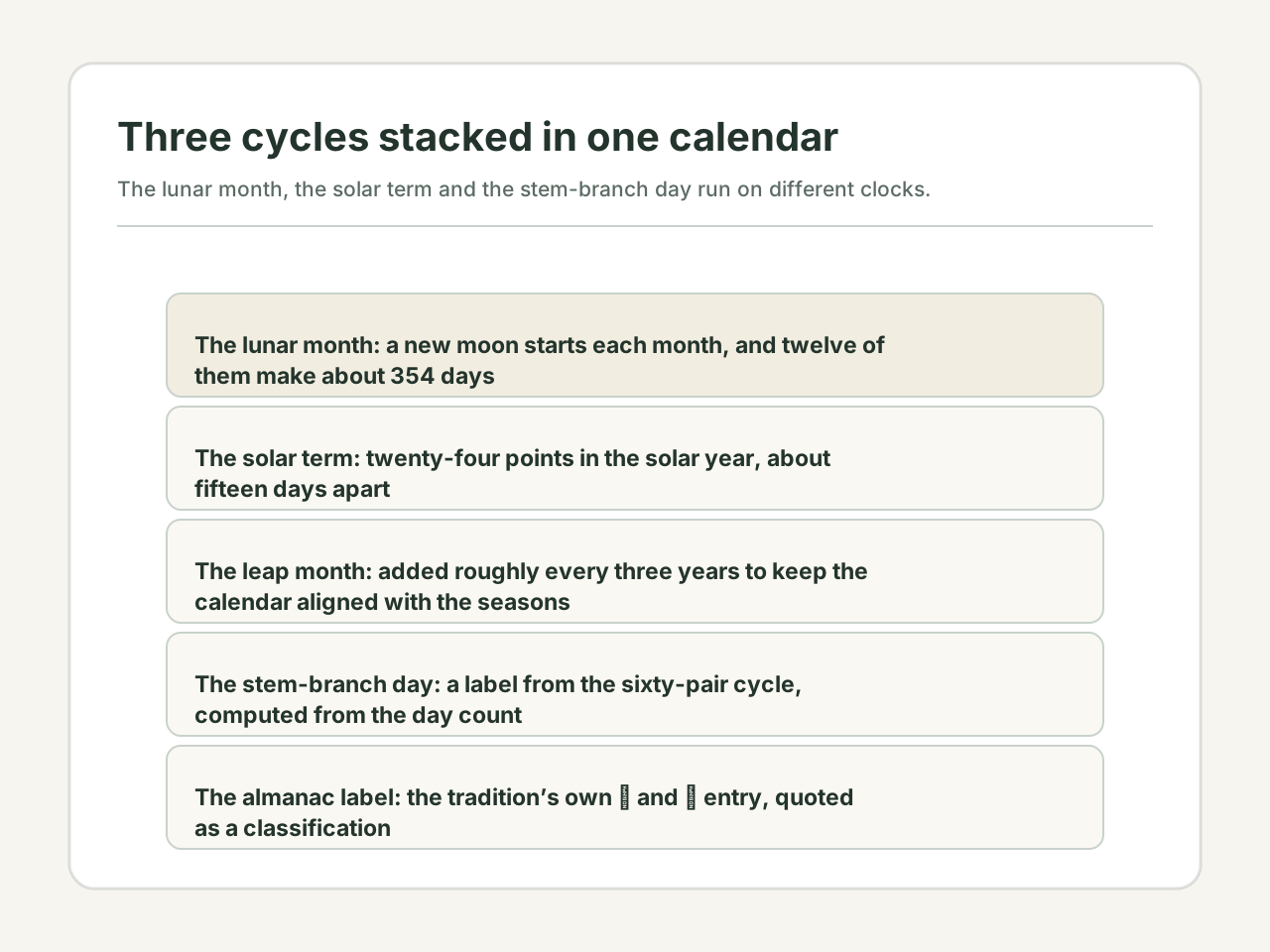
Moving date selection is about starting well, not about magical timing
Traditional Chinese moving date selection involves checking the stem-branch of the proposed moving date against the family members' BaZi charts. The idea is to choose a day when the energy is compatible with the people moving in, so the household starts on a harmonious note.
The honest view: moving date selection is a traditional practice that helps people feel confident about their move. It is not a guarantee that the new home will be happy or problem-free. The quality of the home — its location, condition, layout, and the relationships of the people living in it — matters far more than the date on which the boxes are carried in. Choose a moving date that is logistically convenient. The traditional checks are a nice addition, not a substitute for choosing a good home.
What to check when selecting a moving date
Here are the key factors in traditional moving date selection, in order of importance:
| Factor | What to check | Practical advice |
|---|---|---|
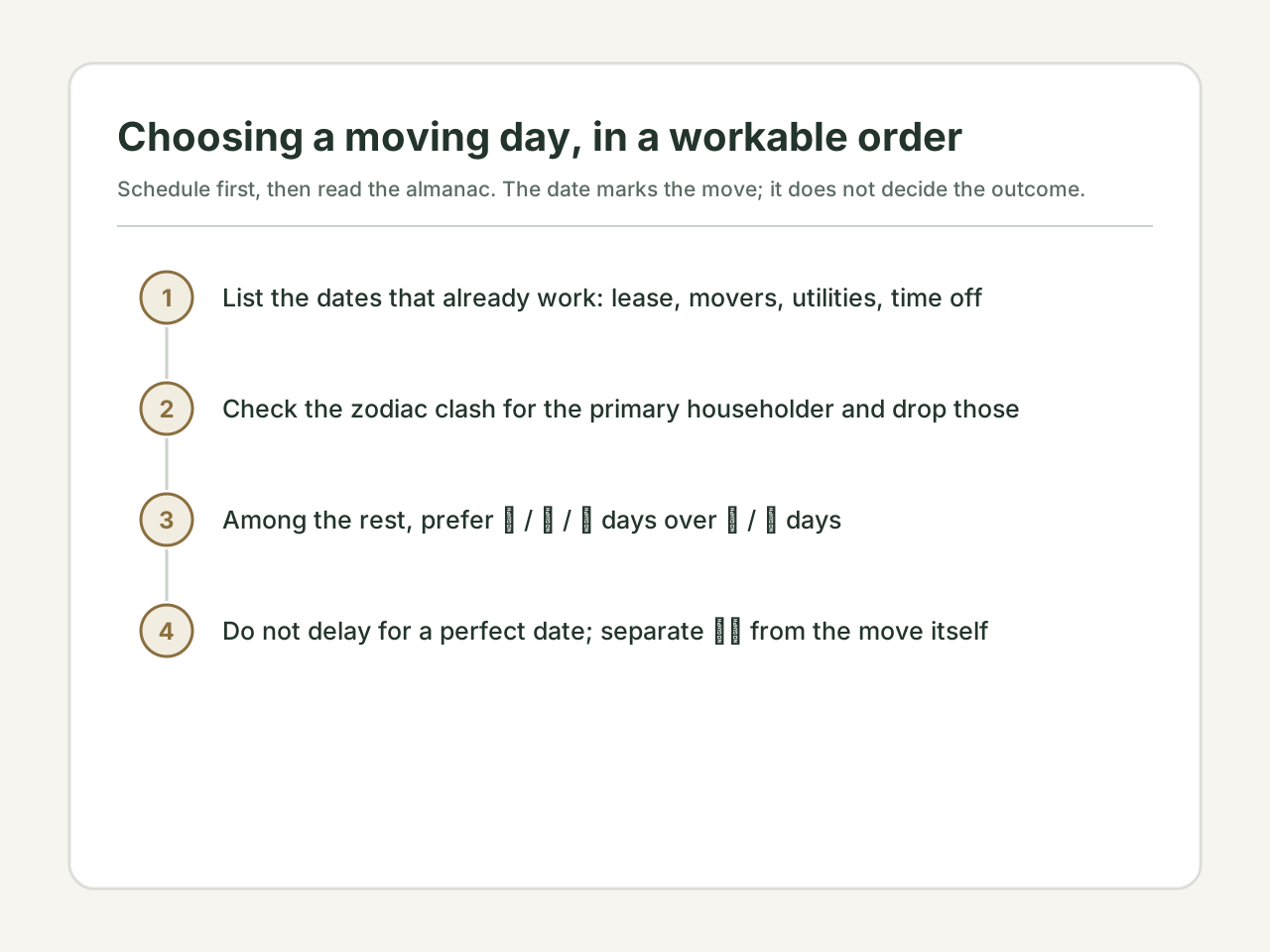
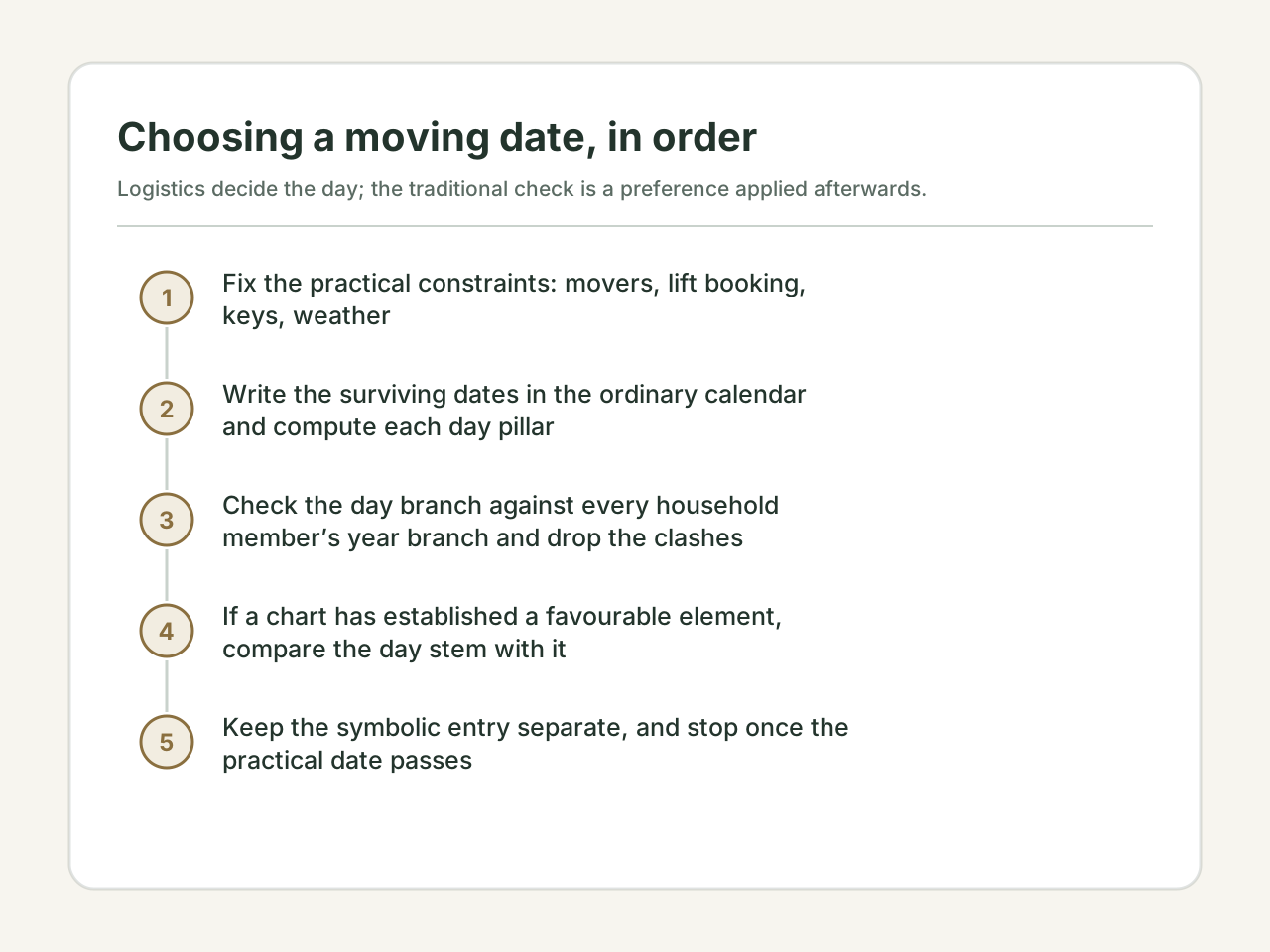
| Practical logistics | Is the date available? Can you get movers? Is the weather likely to be cooperative? | This is the most important factor. A date that passes all traditional checks but is logistically impossible is useless. Start with the practical constraints and narrow down from there |
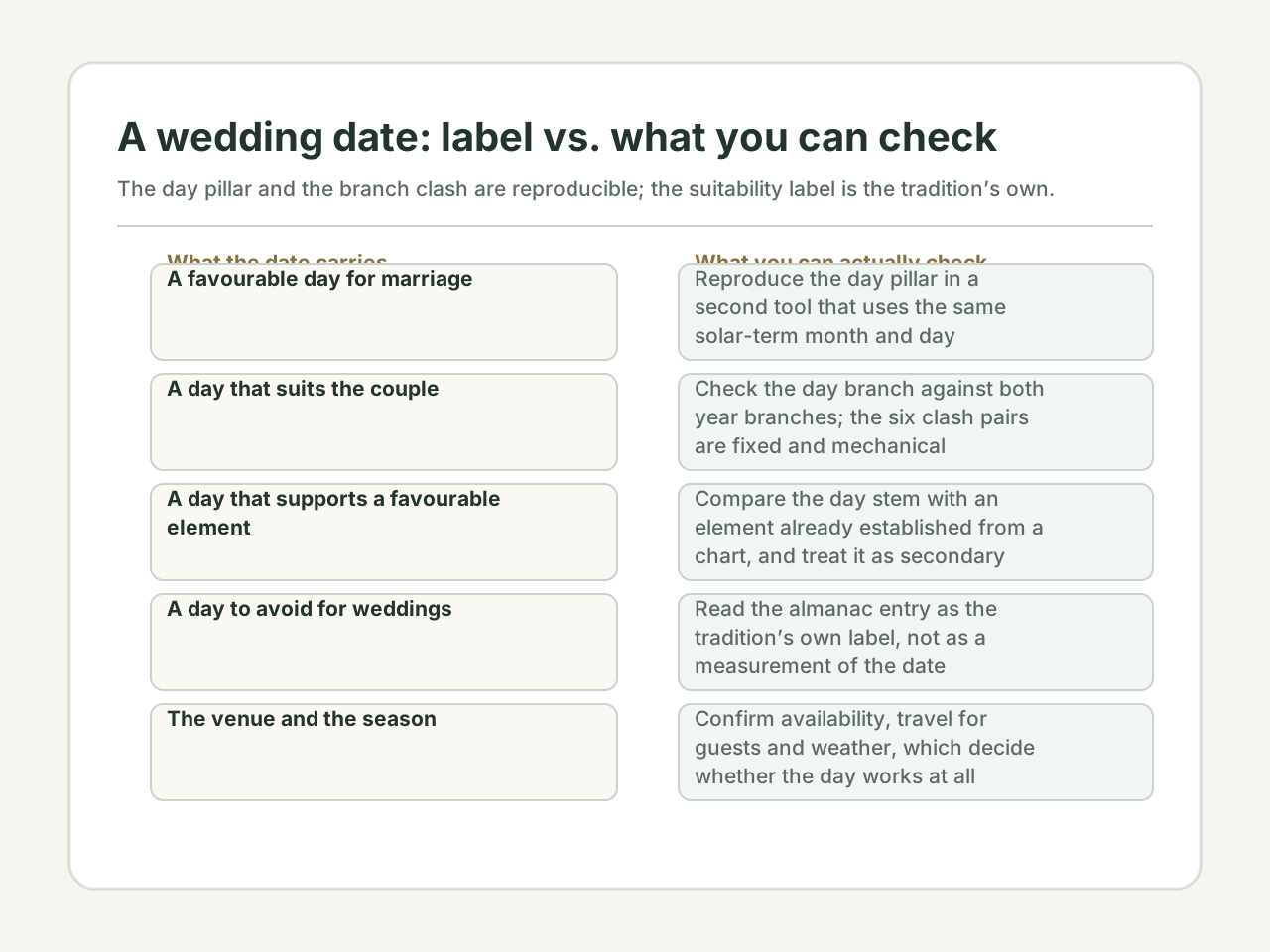
| Year branch clash | Does the day's branch clash with any family member's year branch? | Check the day branch against the year branch of every person who will live in the home. Eliminate dates that clash with anyone's year branch. This is a mechanical check — the clash pairs are fixed |
| Avoid certain days | Is the day marked as inauspicious for moving in the traditional almanac? | Some days are traditionally considered unsuitable for moving. These are marked in the almanac (通书). If you are consulting an almanac, avoid these days. If you are not using an almanac, skip this check |
| Favourable elements | Does the day's stem support the family's favourable elements? | A day whose stem is the favourable element of the primary breadwinner is preferred. This is a secondary consideration. If the day passes the clash check and is logistically workable, the element check is a bonus, not a requirement |
A worked example: choosing a moving date
A family of three is moving to a new apartment. They need to move on a weekend in November 2026. The father's year branch is 辰 (Chen, Dragon). The mother's year branch is 酉 (You, Rooster). The child's year branch is 子 (Zi, Rat).
They have four weekends available. They check the day branches for each Saturday: November 7 is 庚辰 (Geng Chen), November 14 is 庚寅 (Geng Yin), November 21 is 庚申 (Geng Shen), November 28 is 庚午 (Geng Wu).
Clash check: Chen (辰) clashes with Xu (戌) — none of the four dates. You (酉) clashes with Mao (卯) — none of the four dates. Zi (子) clashes with Wu (午) — November 28 (Wu branch) clashes with the child's year branch. Eliminate November 28.
Three dates remain. They check the almanac: November 14 is marked as generally auspicious. They check the weather: November 14 is forecast to be clear. They book the movers for November 14. The traditional checks are satisfied, and the logistics work. They move on November 14. The move goes smoothly, mostly because they planned well and hired reliable movers — not because of the date.
Separating the physical move from the symbolic entry
Traditional practice often splits a move into two events: the day the furniture is carried in, and a separate symbolic entry (入宅) performed at a chosen hour. That split is more useful than it first looks, because it lets the physical move happen on whatever day the movers, the lift booking and the handover of keys actually allow, while the ritual keeps a date of its own. If you want to keep both, decide in advance which of the two the traditional checks are for, and write it down, so that a later change of moving day does not feel like breaking the ritual.
- Book the move on the day the logistics work, and treat the traditional check as a preference for the symbolic entry rather than a veto on the physical one
- Clean, ventilate and test the utilities before anything is carried in — a damp or unlit room is a real problem and no date repairs it
- Keep an inventory of what left the old home and what arrived at the new one, and photograph anything that was already damaged
- If the symbolic entry falls on a different day, a short and reversible action at the chosen hour is enough; nothing needs to be carried in twice
What best days for moving house can and cannot do
Moving date selection is a traditional practice that helps people feel confident about their move. It is not a guarantee of a happy home. The quality of the home — its location, condition, layout, and the relationships of the people living in it — matters far more than the date. Choose a moving date that is logistically convenient. The traditional checks are a nice addition, not a requirement.
Disclaimer: This content is for informational and cultural reference purposes only. It does not constitute professional medical, legal, financial, or psychological advice. Readers should exercise their own judgment and consult qualified professionals for specific concerns.
Sources and review basis
Traditional references explain historical vocabulary and context. Official practical sources support only the observable safety, comfort, or environmental points noted in the article; they do not validate metaphysical claims.
Traditional reference
Yuxia Ji (玉匣記)Wikisource digital text · Accessed 2026-10-15
A household almanac whose 入宅 and 移徙 sections show how traditional date selection for moving house was organised. It documents a convention, not evidence that a date changes an outcome.
Traditional reference
Huangdi Zhaijing (黄帝宅经)Wikisource digital text · Accessed 2026-07-14
Historical context for traditional residential orientation and spatial vocabulary. Modern recommendations are reviewed separately.