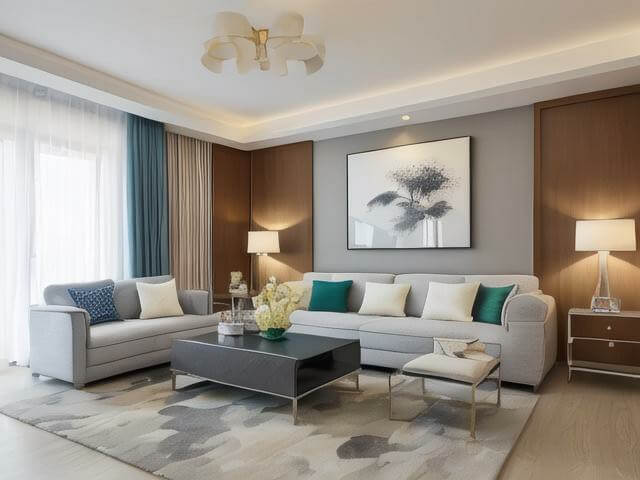
A couple rents a ground-floor apartment where the living room window faces directly down a straight residential street — a classic T-junction (丁字路口). At night, car headlights sweep across the living room wall. During the day, people walking down the street can see directly into the apartment. The couple feels like they have no privacy, and they spend most of their time in the back bedroom instead of the living room, which is the largest room in the apartment.
The feng shui diagnosis: road rush sha (路冲煞) aimed directly at the living room window. The traditional remedies include a Bagua mirror above the window, a row of potted plants, or a screen. But the practical problem is simpler: the window is a visual channel from the street into the private space, and the couple cannot relax when they feel exposed.
The solution: instead of a Bagua mirror (which is visually aggressive and may annoy neighbours), they install sheer curtains that let in light but block the view from outside. They place a row of tall plants on the windowsill — a living screen that softens the line of sight without blocking the light. They also rearrange the living room so the main seating faces away from the window, toward the interior of the room, with a bookshelf against the window wall to create a sense of enclosure.
The result: the living room becomes usable again. The car headlights are diffused by the curtains. The street view is screened by the plants. The couple no longer feels like they are on display. The sha qi is not 'cured' in a mystical sense — it is managed by blocking the visual channel that was creating the discomfort.