Travel date selection is about practical planning, not magical protection
Traditional Chinese date selection for travel involves checking the stem-branch of the proposed travel date against the traveller's BaZi chart. The idea is to choose a date when the energy is supportive of travel and unlikely to bring disruption.
The honest view: travel date selection is a traditional practice with limited practical impact. Travel safety depends on the mode of transport, the destination, the weather, and the traveller's preparedness — not on the date. An 'auspicious' travel date does not protect you from flight delays, lost luggage, or bad weather. A well-planned trip on an 'inauspicious' date is safer than a poorly planned trip on an 'auspicious' date. The traditional checks are a nice ritual, but they are not a substitute for practical travel planning.
What to check when selecting a travel date
Here are the traditional factors, ranked by practical importance:
| Factor | What to check | Practical advice |
|---|---|---|
| Practical considerations | Are flights available? Is the weather favourable? Is the destination safe? Are documents in order? | This is the most important factor. Do not choose a travel date based on traditional checks if the practical conditions are unfavourable. Travel safety and logistics come first |
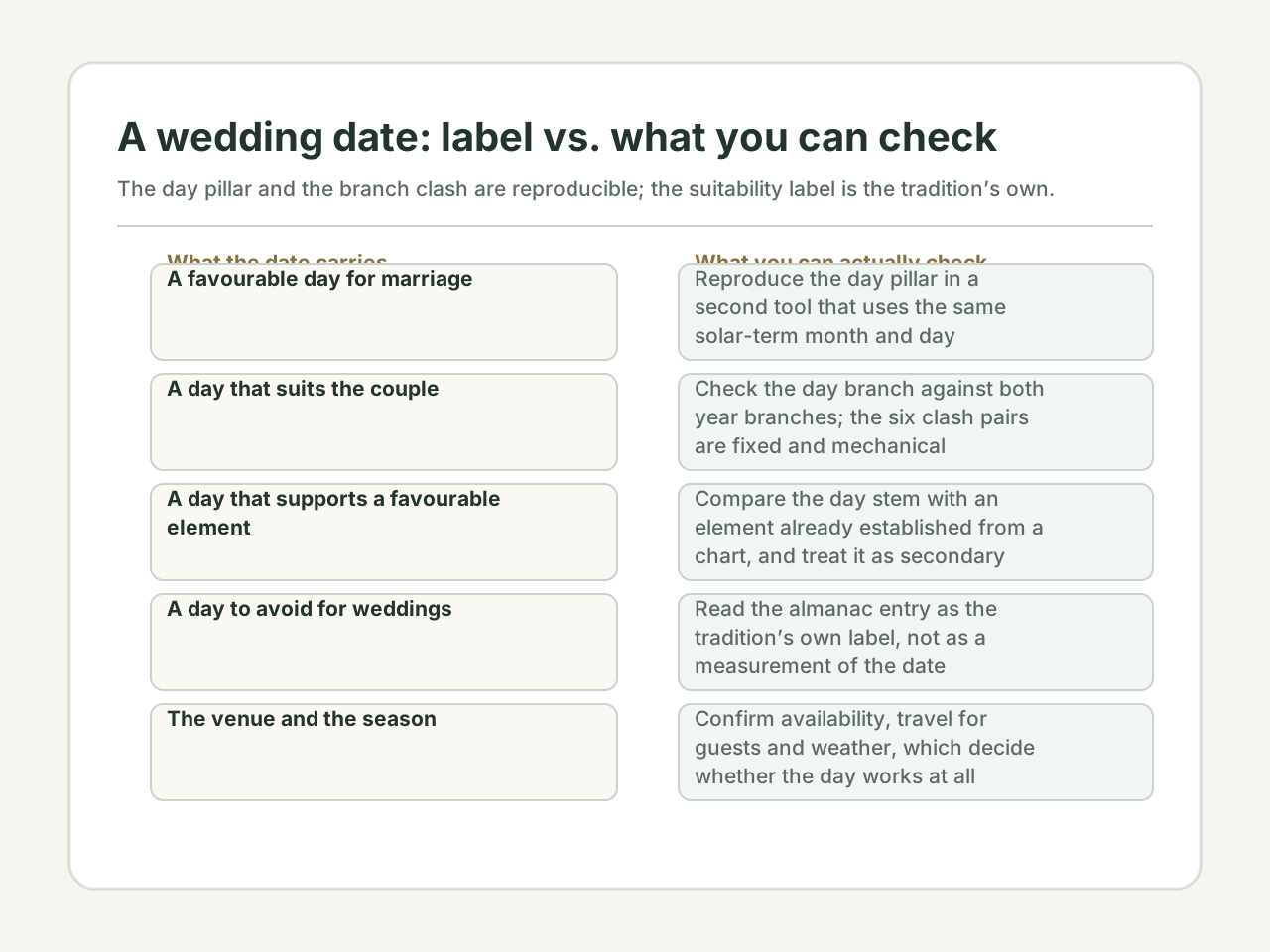
| Year branch clash | Does the day's branch clash with the traveller's year branch? | A day that clashes with the traveller's year branch is traditionally avoided. This is the primary traditional check. If the clash exists, avoid travelling on that day if you have flexibility |
| Directional considerations | Is the traveller heading in a direction that is favourable for the day? | Each day is associated with energies that favour or disfavour certain directions. If you are heading east and the day's energy is unfavourable for east, you may want to avoid that day. This is a secondary check and should not override practical considerations |
| Shen Sha (神煞) indicators | Are there any travel-related stars active on the day? | Some traditional systems check for travel-related stars such as 驿马 (Yi Ma, the Traveling Horse). A day with Yi Ma is traditionally considered favourable for travel. This is a minor factor and should not be the primary basis for choosing a travel date |
A worked example: planning a trip
A man is planning a trip to Japan. He was born in 1990 (庚午, Metal Horse, Wu branch). He has two possible departure dates: April 5, 2027 and April 12, 2027.
April 5, 2027 is a 甲子 (Jia Zi) day. The day branch is Zi (子). Zi does not clash with Wu (午). April 12, 2027 is a 戊午 (Wu Wu) day. The day branch is Wu (午). Wu clashes with Wu — this is a self-clash, which is traditionally considered inauspicious for travel.
He checks the practical factors: flights are available on both dates, and the weather forecast is similar. He chooses April 5. The traditional check supports it, and the logistics are fine.
He travels on April 5. The flight is delayed by two hours. The traditional check did not prevent the delay. But he had planned for the possibility, so he was not stressed. The lesson: the traditional check is a nice addition, but practical preparedness — having a buffer in your schedule, travel insurance, and a backup plan — is what actually makes travel smooth.
What actually decides whether a journey goes well
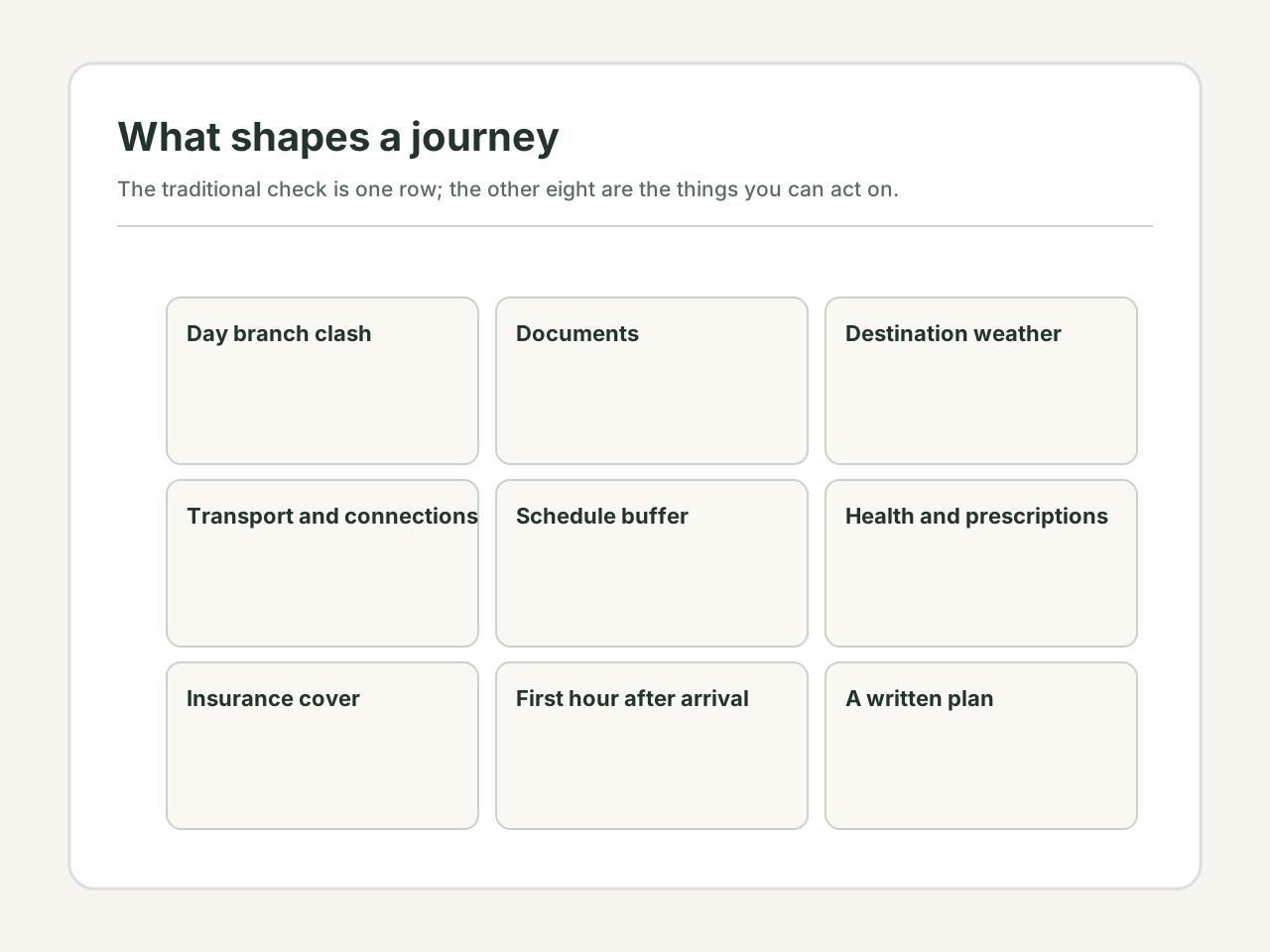
Once the traditional check is done, the things that shape a trip are ordinary and unglamorous. They are also the only ones you can act on, which is why a short list is worth keeping next to the almanac.
- Documents first: passport validity, visas, transit rules, and a copy of each kept separately from the originals
- Weather and season at the destination rather than at home, checked close enough to departure that the forecast still means something
- A buffer in the schedule — a connection you can afford to miss, a day you can afford to lose, an arrival that does not have to be on time
- Health basics: prescriptions, vaccinations where required, and travel insurance that genuinely covers what you are going to do
- A written plan for the first hour after arrival: how you leave the airport, where the keys are, and who to call if the plan breaks
Keeping safe travel date selection in proportion
Travel date selection is a traditional practice that can help travellers feel more confident about their journey. It is not a guarantee of safe or smooth travel. Travel safety depends on practical factors — the mode of transport, the destination, the weather, and the traveller's preparedness. Choose a travel date that is logistically convenient. The traditional checks are a nice ritual, not a substitute for practical travel planning.
Disclaimer: This content is for informational and cultural reference purposes only. It does not constitute professional medical, legal, financial, or psychological advice. Readers should exercise their own judgment and consult qualified professionals for specific concerns.
Sources and review basis
Traditional references explain historical vocabulary and context. Official practical sources support only the observable safety, comfort, or environmental points noted in the article; they do not validate metaphysical claims.
Traditional reference
Yuxia Ji (玉匣記)Wikisource digital text · Accessed 2026-10-15
A household almanac whose 入宅 and 移徙 sections show how traditional date selection for moving house was organised. It documents a convention, not evidence that a date changes an outcome.
Practical source
APA Dictionary of Psychology: Barnum effectAmerican Psychological Association · Accessed 2026-07-14
A psychology reference for why broad, favourable personality descriptions can feel personally accurate. It does not evaluate BaZi calculations themselves.