Yang house feng shui is about the home you actually live in
Feng shui splits into two large branches: yin house (阴宅, tombs and burial sites) and yang house (阳宅, the homes of the living). Yang house feng shui is the part that concerns you, and it is grounded in a handful of observable principles that map cleanly onto modern ideas about comfort, light, and flow.
The classical texts, especially the Yang Zhai Shi Shu (阳宅十书, Ten Books of Yang House) and the Ba Zhai Ming Jing (八宅明镜, Bright Mirror of Eight Mansions), spend most of their pages on three things: how the site sits in the land, how rooms relate to each other, and how doors and windows direct movement. Strip away the period-specific building details, and you are left with a surprisingly practical system.
The three core principles, stripped of the jargon
Yang house feng shui can be reduced to three ideas that work across every school and every century:
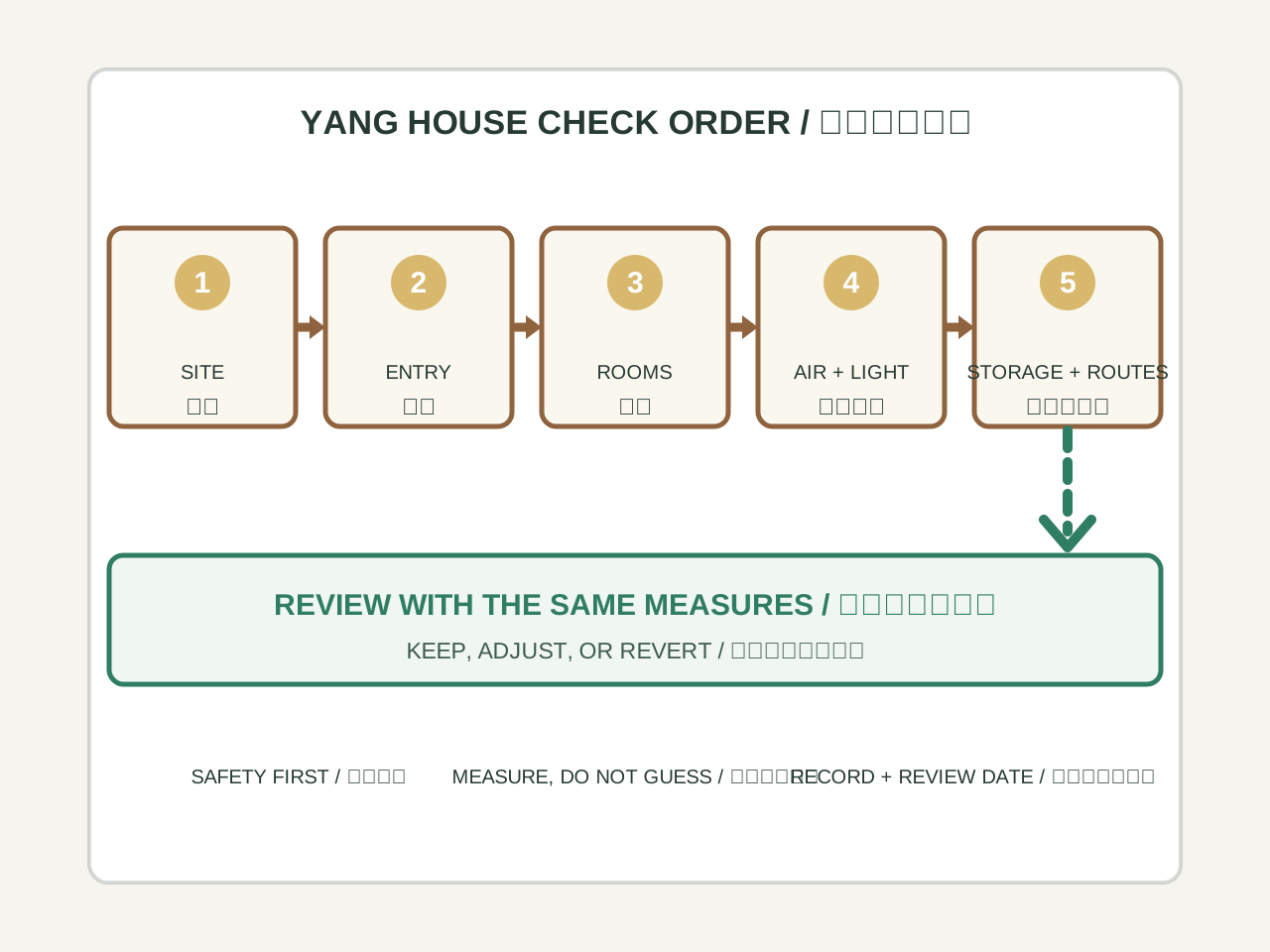
- The site matters before the building. The classical priority order is: first the mountain context (靠山, the backing landform), then the water (水, water features and roads), then the orientation (向, the facing direction), and only then the interior layout. In modern terms: check the neighbourhood, the street, the light, and the noise before you worry about the sofa.
- The centre should feel open and calm. The traditional bright hall (明堂) is the open space in front of the main structure, and inside the home it translates to the central living area. A home with a dark, cluttered, or blocked centre feels unsettled regardless of what you do to the corners.
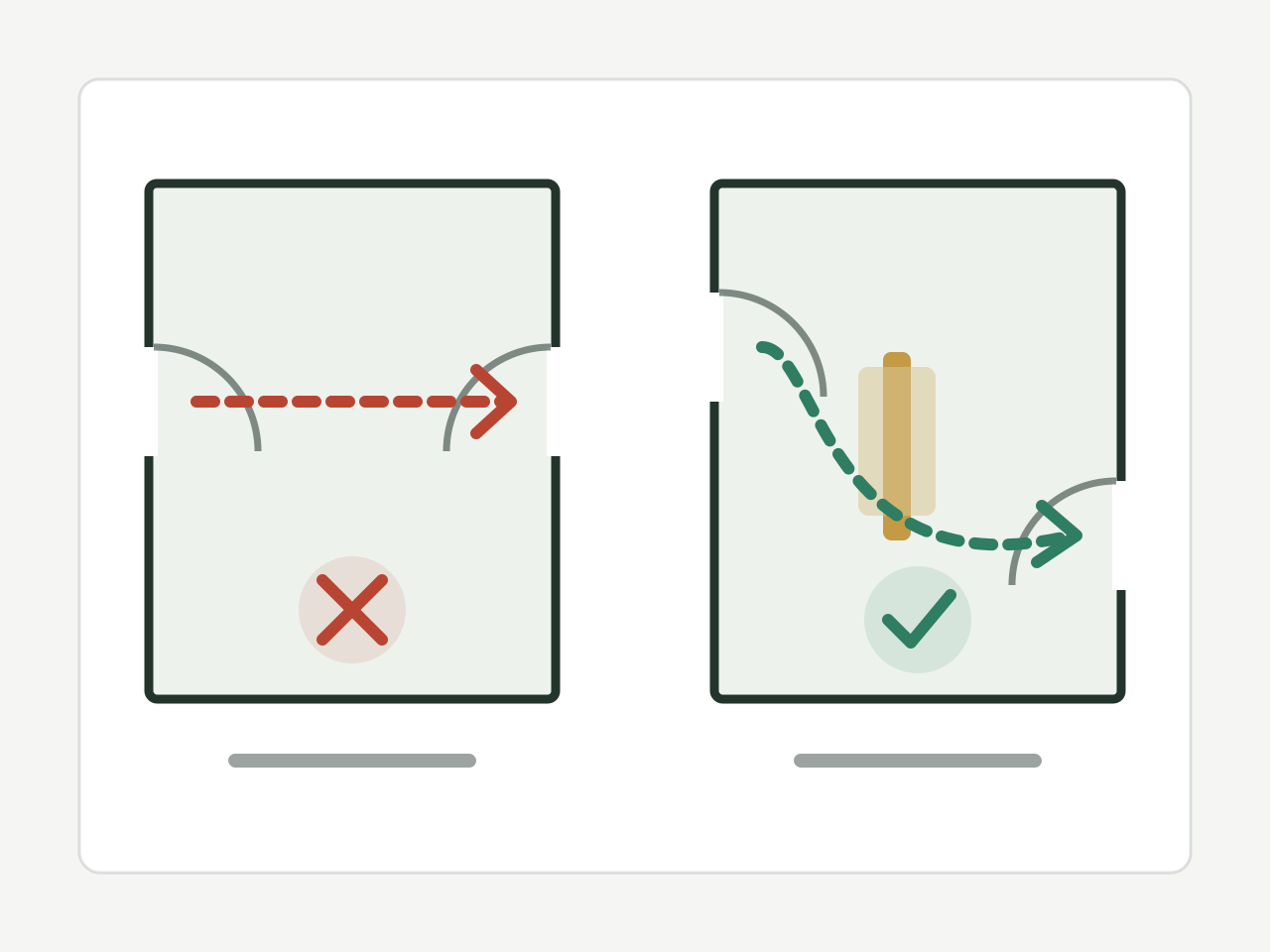
- Doors are the most important interior feature. The front door is the mouth of qi (气口), and every interior door directs movement. A home where the front door aligns with a back door or a toilet door is flagged not because it is cursed, but because it creates a straight run that feels like a corridor rather than a settled space.
A worked example: reading a flat like a yang house
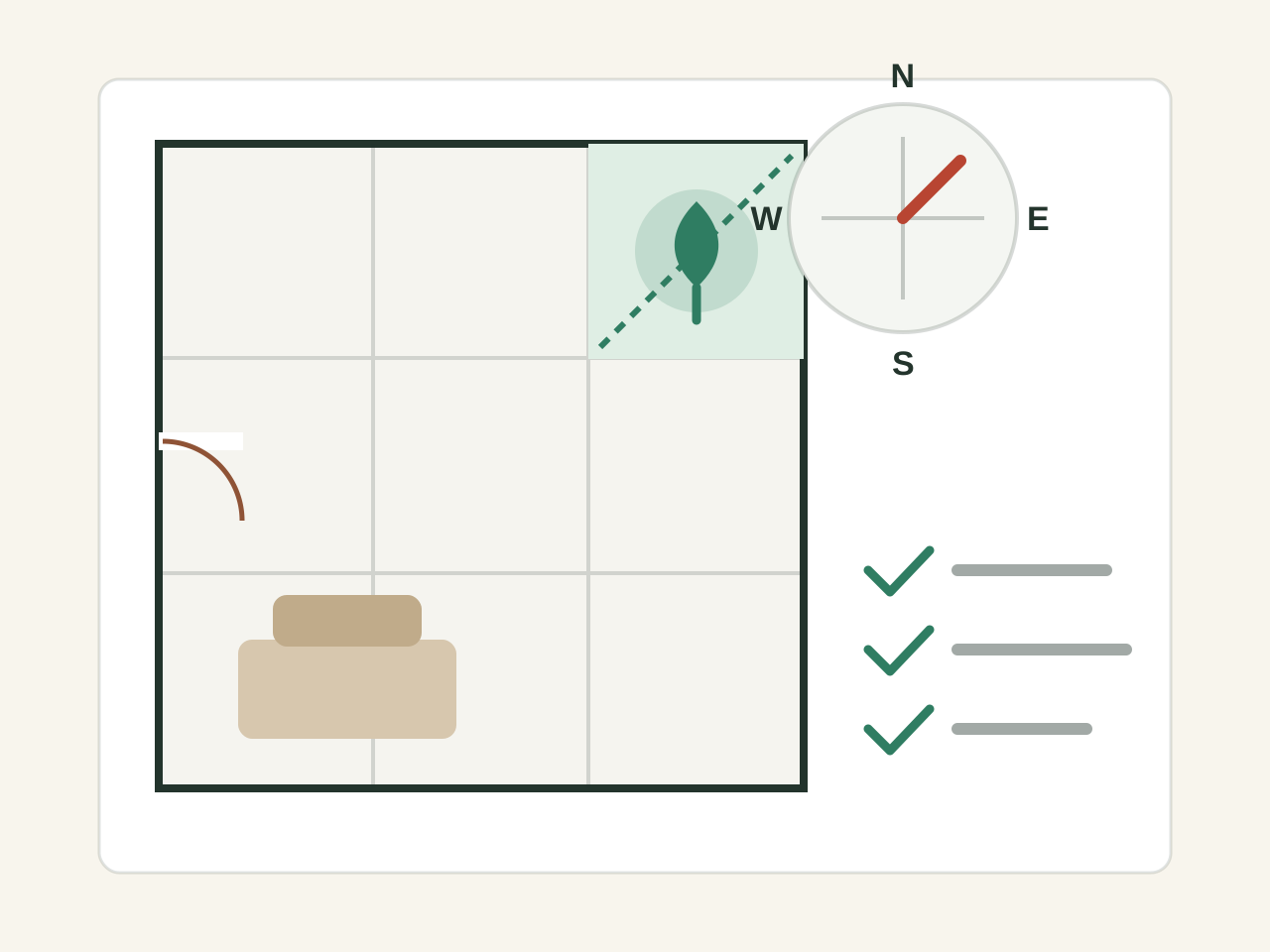
Take a standard urban apartment: a rectangular unit of about 80 square metres, with the entrance on the east side, a living room in the centre, a kitchen and bathroom off the hallway, and two bedrooms on the west end.
A quick yang house read asks three questions. First, what does the front door face? If it opens to a view of the kitchen stove or the bathroom door, the first impression is of service areas rather than living space; a screen or a closed door fixes it. Second, is the centre open? In this flat the living room is the centre, and if it is bright and uncluttered the home passes the most important test. Third, are the bedrooms quiet? The west end with the bedrooms away from the street is good; what matters is that they are dark and quiet at night. That is a yang house reading: it is a checklist of how a home feels, not a prediction of what will happen to the people inside it.
Room-by-room: what the tradition actually flags
The classical texts give each room a role, and the useful part is the hierarchy of care, not the symbolism:
| Room | Traditional role | Practical modern read |
|---|---|---|
| Front door | Mouth of qi; the first encounter | First impression sets the tone; keep it clean, lit, and unobstructed |
| Living room | The bright hall; gathering and receiving | The centre should be the most open and welcoming room in the house |
| Kitchen | The stove represents the household's resources | A clean, well-ventilated, well-lit kitchen is a functional kitchen; the symbolism follows |
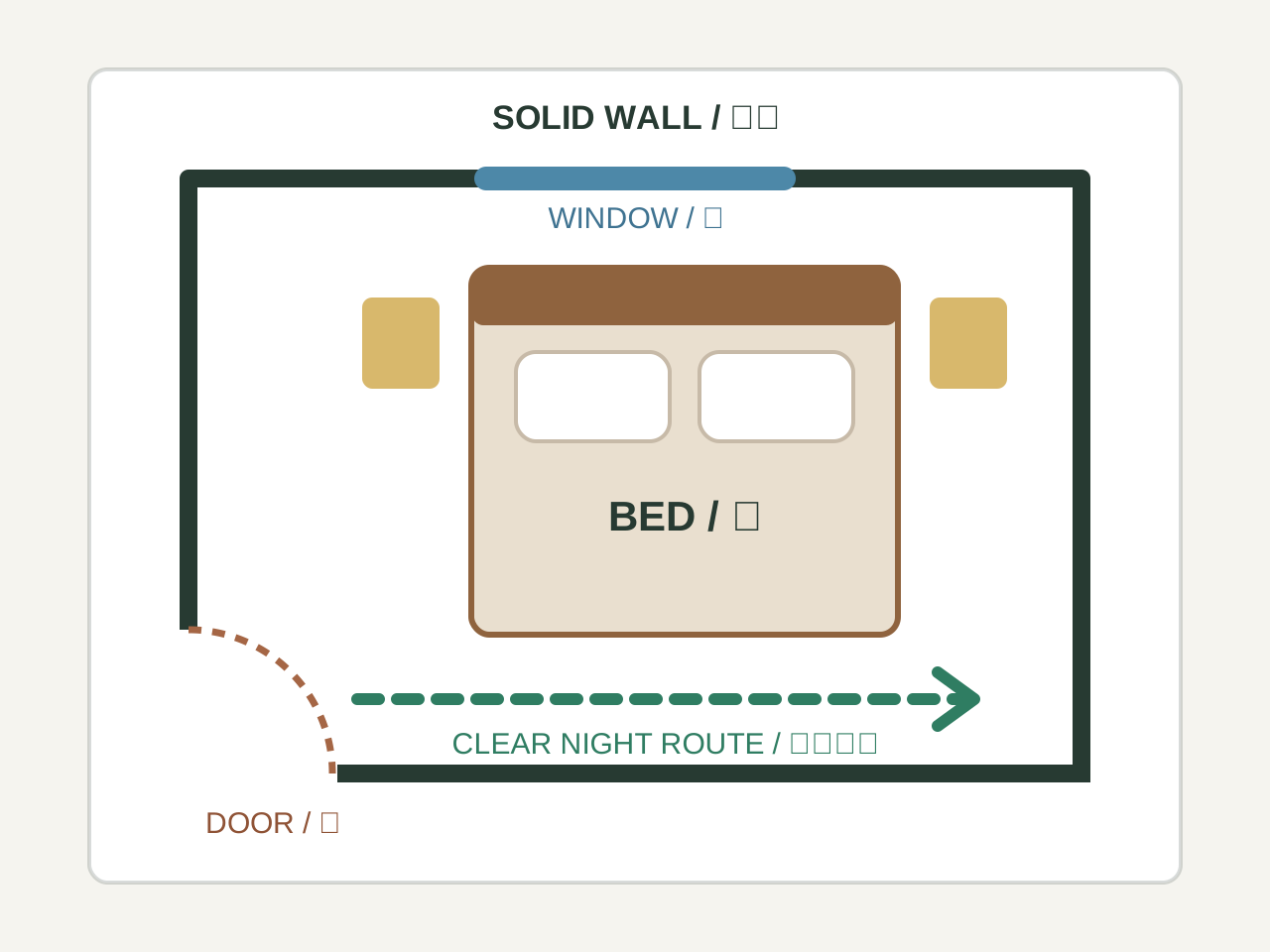
| Bedroom | Yin space; rest and restoration | Dark, quiet, and private are the real requirements; the command position covers the rest |
| Bathroom | Water and drainage; potential loss | Ventilation and cleanliness are the real issues; keep the door closed and the room dry |
| Study or home office | Knowledge and career | A stable desk with a view of the door and good light; the rest is ergonomics |
The thing about the centre: why it matters more than the corners
Most yang house advice fixates on corners, missing sectors, and the bagua overlay. But the oldest texts, particularly the Form School (峦头) tradition, spend far more time on the centre. The centre is the heart of the house, and a home with a dark, cluttered, or blocked centre reads as unsettled. In practical terms, the central area, usually the living room or a main hallway, should be the brightest, most open, and least cluttered part of the home. If you only have energy for one thing, clear and light the centre.
What yang house feng shui can and cannot do
Yang house feng shui is a framework for making a home feel better. It helps with light, flow, privacy, and the intuitive sense that a space is settled. It does not predict health, wealth, relationships, or career outcomes, and any practitioner who claims otherwise is overreaching. Use it as a practical design language, keep what makes the home feel better, and leave the rest.
Assess the dwelling before interpreting it
Begin with a survey of the building rather than a reading of its symbolism. Record the orientation as measured, the floor level, neighbouring structures and their height, prevailing wind, sun path through the day, drainage away from the walls, damp and mould evidence, noise sources, and how the entrance is actually reached. Note the construction era and any known structural or waterproofing history.
Separate the conditions you can measure from the ones you can only describe. Daylight hours, humidity readings, a damp patch, a cracked wall, a blocked drain, and a noisy road are facts with practical consequences. A direction, a sector, or a symbolic label is an interpretation that depends on a stated method. Write the two lists on different pages so a symbolic conclusion never replaces a repair.
Then compare two realistic options for the same problem and rank them by cost, reversibility, disruption, maintenance, and expected practical benefit. Test the cheapest reversible one first and set a review date. Where the building is rented, listed, or shared, describe the range of acceptable measures, name the constraints, and involve the owner or a qualified professional for structural, damp, electrical, or gas concerns.
- Measure orientation, daylight, damp, noise, and drainage before interpreting anything.
- Keep a separate list of measurable conditions and symbolic variables.
- Rank options by cost, reversibility, and disruption before choosing.
What the classical text can and cannot support
The Huangdi Zhaijing (宅经) reference below is a historical source for dwelling selection and orientation language. It is useful for checking whether a modern explanation still resembles the tradition it cites, and for understanding why the tradition distinguishes between sitting and facing. It cannot demonstrate that a dwelling position determines health, wealth, relationships, or events.
Where the question is really about indoor air, moisture, or safety, use evidence that measures those conditions. The EPA indoor-air reference supports checking ventilation, combustion, and pollutant sources; it does not support the claim that one compass sector improves wellbeing. When a traditional statement and a measurable condition point in different directions, repair and remediation come first.
State the limits of the reading in the page itself. If the orientation is uncertain, if the building has been altered, or if the household cannot act on the recommendation, lower the specificity instead of filling the gap with a confident conclusion. Never use a traditional claim to discourage necessary maintenance or to justify delaying professional advice.
Dwelling survey record
Complete the measurable columns before writing any interpretation. The record is what allows a later reader to tell whether a disagreement comes from the measurement method or from the interpretation.
| Condition | How to record it | Value | Practical consequence | Priority |
|---|---|---|---|---|
| Orientation | Compass reading at the main entrance and along the longest façade | Degrees and facing | Which rooms receive morning or afternoon sun | Confirm the input before quoting a direction |
| Damp evidence | Visible staining, musty smell, humidity reading, drying time | Location and severity | Mould risk and damage to finishes | Stop the water source before anything else |
| Daylight | Hours of direct sun by room, and where glare occurs | Hours per room | Comfort, lighting cost, and usable seating | Correct glare before adding ornaments |
| Noise | Source, time of day, and where it is heard indoors | Source and level | Sleep and rest quality in affected rooms | Treat as a building or planning matter |
| Drainage and exterior | Where rainwater goes; condition of gutters and ground levels | Route and any pooling | Damp penetration at walls and floors | Escalate to the owner or a qualified trade |
Disclaimer: This content is for informational and cultural reference purposes only. It does not constitute professional medical, legal, financial, or psychological advice. Readers should exercise their own judgment and consult qualified professionals for specific concerns.