An aquarium is a commitment, not a feng shui cure
The aquarium is the most high-maintenance feng shui object. The tradition values it as a water element that brings movement, life, and the energy of flowing water into a space. But water in feng shui is also associated with risk, and a poorly maintained aquarium is worse than no aquarium. A tank with murky water, dead fish, or a broken filter is the opposite of what feng shui aims for.
Before you worry about placement, direction, or the number of fish, ask yourself whether you are willing to maintain the tank. An aquarium requires weekly water changes, daily feeding, filter maintenance, and a commitment of years. If the answer is no, choose a different water element, like a small tabletop fountain, or skip the water element entirely.
Three rooms an aquarium should not go in
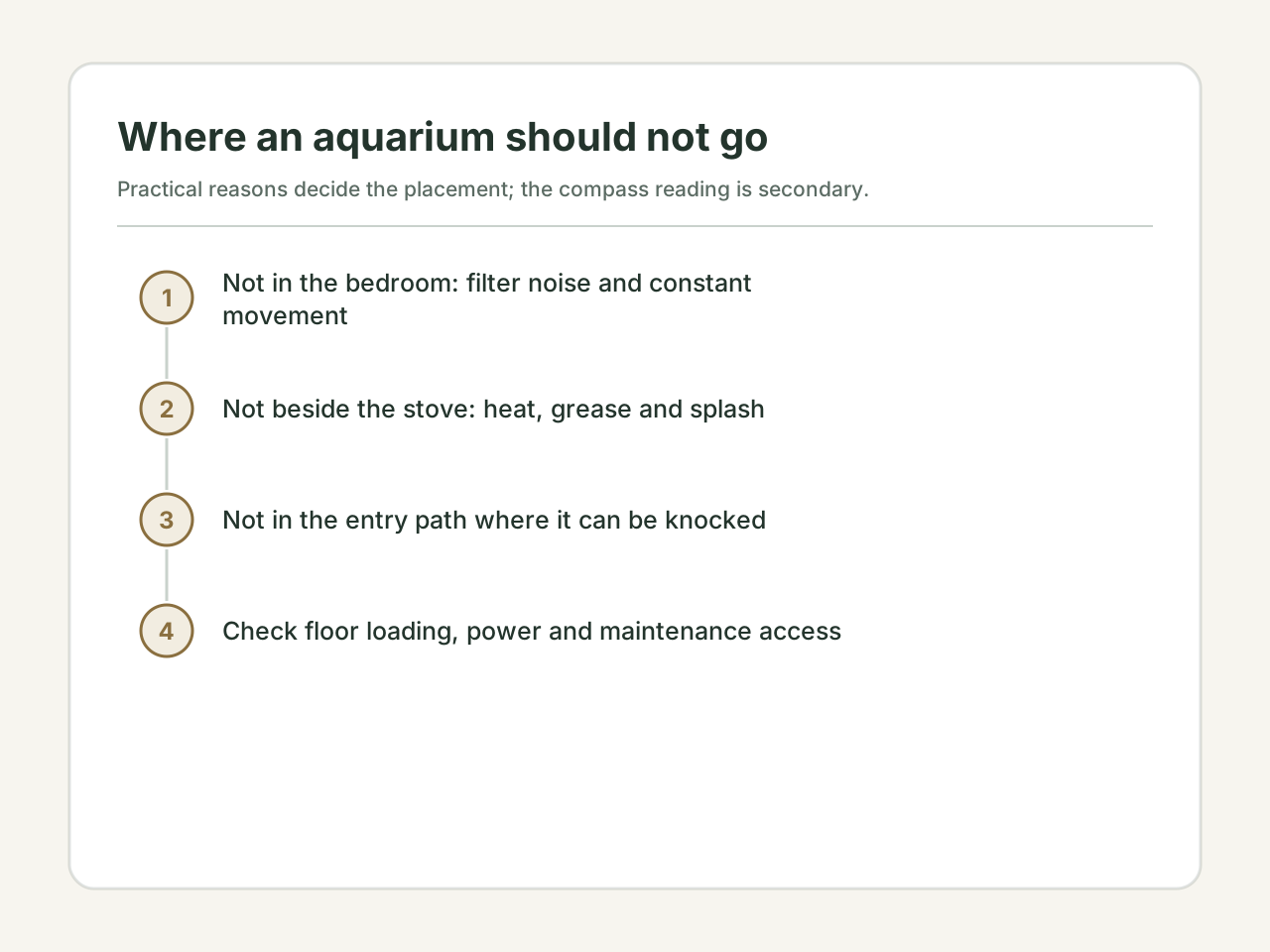
The placement of an aquarium is more about practicality than about compass directions:
- Not in the bedroom. The sound of the filter and the movement of the water are stimulating, not calming. The bedroom is a yin space for rest; an aquarium is a yang object with constant movement and sound.
- Not in the kitchen. The kitchen is a fire-element space (the stove). Placing a large water element directly opposite or next to the stove is a traditional clash of elements. The practical concern is that cooking heat and grease are bad for the tank.
- Not directly opposite the front door. The traditional concern is that water flowing out the door represents wealth leaving. The practical concern is that a tank directly opposite the door is visually jarring and can be knocked over.
A worked example: the aquarium that became a chore
A family bought a large aquarium on the advice of a feng shui consultant who said it would activate the wealth corner. They placed it in the southeast corner of the living room, stocked it with eight goldfish and one black fish (the traditional number), and for the first month it was beautiful. By month three, the water was cloudy, two fish had died, and the filter needed cleaning. The family felt guilty every time they looked at the tank.
The fix was not a feng shui adjustment. They reduced the tank to a smaller, more manageable size, kept three fish, and moved it to a spot where it was easier to access for maintenance. The tank became a pleasant feature of the room instead of a source of stress. The lesson: a small, well-maintained tank is infinitely better feng shui than a large, neglected one.
Fish count, direction, and the things that are mostly superstition
The traditional advice about fish numbers and compass directions is elaborate but largely optional. The number eight is traditionally associated with wealth, and the combination of eight goldfish and one black fish is the most common recommendation. The black fish is said to absorb negative energy. The practical truth: the number of fish matters less than the health of the tank. A tank with three healthy fish is better feng shui than a tank with nine struggling fish. The direction the tank faces matters less than whether the tank is clean, the fish are healthy, and the water is clear.
| Traditional belief | Practical take |
|---|---|
| 8 goldfish + 1 black fish = wealth | The number is cultural symbolism; the health of the fish is what matters |
| Southeast placement = wealth activation | Place the tank where it is easy to maintain and where you can enjoy it; the compass direction is secondary |
| Moving water attracts money | The sound and sight of moving water is pleasant, which is a genuine benefit; the financial benefit is not proven |
| A dead fish is a bad omen | A dead fish is a sign that the tank needs maintenance; remove it, check the water, and do not read it as a cosmic sign |
Tank size and shape decide how hard the tank is to keep
Tank size is the single choice that most affects whether an aquarium stays healthy. A larger volume of water is chemically more stable: temperature and waste levels move slowly, so small mistakes are absorbed instead of turning into a crisis. A small tank is the harder tank, not the easier one, because the same mistake changes the water far faster.
Surface area matters as much as volume, because gas exchange happens at the surface. A tall narrow tank holds the same water as a long shallow one but supports fewer fish. Rectangular tanks are also easier to light evenly, to view, and to clean than round or irregular shapes, which is why they remain the practical default. Where glass quality is a choice, low-iron glass shows the fish colour without the green cast of ordinary glass.
- Volume before shape. For a first tank, roughly 60 to 120 litres is the range where maintenance stays manageable and water chemistry stays forgiving.
- Footprint over height. A long, shallow tank exposes more surface to the air than a tall one of the same volume, which helps oxygen exchange.
- Rectangular over round. Flat panels are easier to light, easier to view without distortion, and easier to scrub.
Water quality and equipment: the routine that keeps a tank stable
Water quality is most of aquarium keeping, and it is a routine rather than a single fix. The filter sits at the centre of it: rinse the media in water taken from the tank, never under the tap, because chlorine kills the bacteria doing the work. Change 20 to 30 percent of the water weekly, using water that has stood for 24 hours or been dechlorinated and matched to the tank temperature. A heater should hold tropical fish at a steady 24 to 28 degrees, and lighting should run 8 to 10 hours a day, because a longer photoperiod feeds algae rather than plants. A simple schedule prevents most of what gets blamed on placement:
| Frequency | What to do | Why it matters |
|---|---|---|
| Daily | Feed a measured amount; watch how the fish swim and look | Overfeeding is the most common cause of poor water quality, and early signs of illness are easiest to treat in isolation |
| Weekly | Change 20 to 30 percent of the water; rinse the pre-filter; wipe the glass | Dilutes nitrate as it accumulates and keeps filtration working instead of clogging |
| Monthly | Rinse the media in tank water; check the heater and the pump | Tap-water chlorine destroys the nitrifying bacteria, and equipment failure can put a whole tank at risk within hours |
| Quarterly | Re-check the stand and its weight load, the power supply, and the waterproofing | A tank concentrates a great deal of weight in one place; leaks and electrical faults are real safety issues, not symbolic ones |
Decor and aquascaping: what actually belongs in the tank
Once the water and equipment are settled, decoration is where an aquarium becomes something you enjoy looking at. The substrate is the base layer: natural sand, gravel, or a planted-tank soil in a muted colour reads better than bright dyed gravel and gives rooted plants something to hold. Live plants do double duty, providing cover for the fish and taking up the nutrients that algae would otherwise use; easy starters such as Java fern, Vallisneria, and mosses tolerate low light and need no injected carbon dioxide. Rock and driftwood add structure, but should be chosen for neutrality, since some stones release calcium and harden the water, which suits only certain species.
- Substrate first. Choose a natural, muted colour before you fill the tank, because changing it later means emptying the tank.
- Live plants where light allows. They consume the nutrients that would otherwise feed algae, and they give shy fish somewhere to retreat.
- Inert rock and wood only. A stone that fizzes when a drop of acid is applied will alter water chemistry, so leave it out.
- A dark background earns its place. It hides cables and makes fish colour read stronger against the glass.
What aquarium placement feng shui does and does not change
An aquarium is a beautiful, living feature that adds movement, sound, and life to a room. It is also a significant maintenance commitment. If you are willing to maintain it, place it where it is easy to access, where you can enjoy it, and where it is not in the bedroom, not in the kitchen, and not directly opposite the front door. If you are not willing to maintain it, do not get one. A clean, well-maintained tank is good feng shui. A neglected tank is worse than no tank at all.
Disclaimer: This content is for informational and cultural reference purposes only. It does not constitute professional medical, legal, financial, or psychological advice. Readers should exercise their own judgment and consult qualified professionals for specific concerns.
Sources and review basis
Traditional references explain historical vocabulary and context. Official practical sources support only the observable safety, comfort, or environmental points noted in the article; they do not validate metaphysical claims.
Traditional reference
Huangdi Zhaijing (黄帝宅经)Wikisource digital text · Accessed 2026-07-14
Historical context for traditional residential orientation and spatial vocabulary. Modern recommendations are reviewed separately.
Practical source
US EPA: MoldUnited States Environmental Protection Agency · Accessed 2026-07-14
Practical guidance for moisture control and mold prevention in bathrooms, homes, and renovation work.