Home feng shui is simpler than the internet makes it look
Home feng shui can feel overwhelming because the internet presents it as a thousand rules you must follow or risk disaster. The reality is that most of those rules are variations on a handful of simple ideas: light, flow, cleanliness, and the feeling of being settled. A home that is bright, clean, easy to walk through, and free of visual noise is already doing 80% of what feng shui asks.
This article is a short, actionable list of the things that actually make a difference, stripped of the esoteric language and the fear-based marketing. None of these tips predict wealth or health. They make a home feel better, which is a worthwhile goal on its own.
The ten-minute daily reset
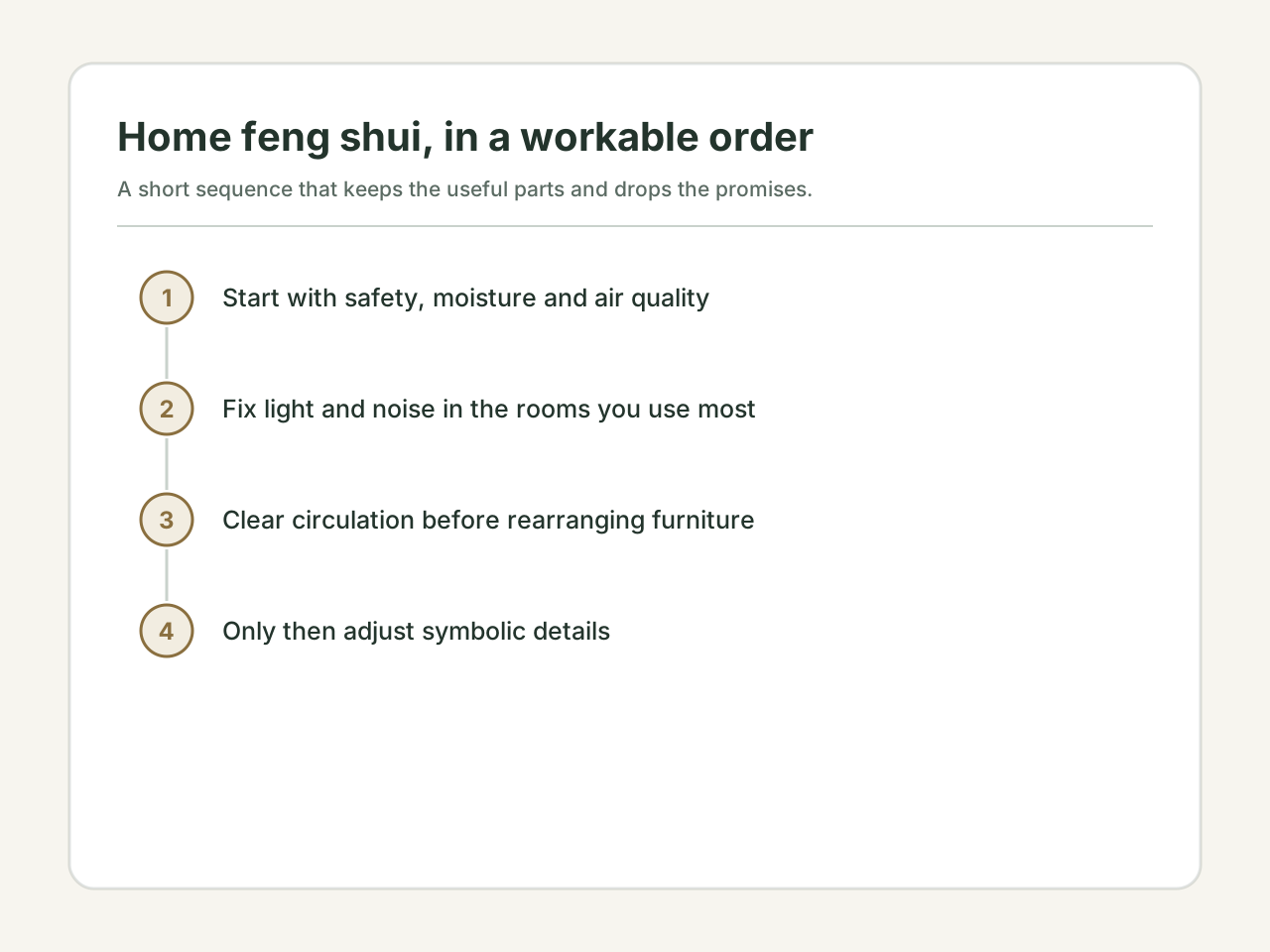
The single most effective feng shui practice is not a ritual or an object. It is a quick daily reset of the visible surfaces. In ten minutes, you can change how a home reads:
- Clear every visible horizontal surface: kitchen counters, coffee table, dining table, desk. Put things away, not in a pile.
- Open the curtains or blinds. Natural light is the cheapest and most effective feng shui tool.
- Make the bed. A made bed signals that the bedroom is a restful space, not a chaotic one.
- Take out the rubbish and recycling. Smell and visual clutter are the two fastest ways to drain a room.
- Wipe down the kitchen sink and bathroom surfaces. Clean, dry surfaces read as intentional and cared for.
The five things worth fixing once
Some home feng shui issues are not daily maintenance; they are one-time fixes that pay back every day:
| Issue | Why it matters | Fix |
|---|---|---|
| A front door that sticks or squeaks | The first physical experience of the home every day is friction | Lubricate the hinges, sand the edge if it sticks, or replace the door closer |
| A dripping tap | The sound of a drip is a low-level stressor that never stops | Replace the washer or the cartridge; it is a 15-minute job |
| A broken light fixture | Dark spots in a room read as neglected | Replace the bulb or the fixture; light is the cheapest room upgrade |
| A window that does not open | Stale air is the literal opposite of what feng shui aims for | Fix the mechanism or replace the window; fresh air is a basic need |
| A room you never use | An unused room is stagnant space | Give it a purpose, even if it is just a reading corner or a plant room |
A worked example: the home that always felt off
A couple moved into a new flat and could not explain why it never felt quite right. The layout was fine, the furniture was new, but something was off. A walk-through revealed three small issues: the front door stuck slightly and required a shoulder to open, the living room had only one overhead light and no other light sources, and the bedroom had a pile of unpacked boxes in the corner that had been there for six months.
The fixes took less than a day: lubricated the door hinges, added a floor lamp and a table lamp to the living room, and unpacked the boxes. The flat felt different immediately. None of this was mystical. The door was a daily friction point, the lighting was harsh and unlayered, and the boxes were a visual reminder of tasks undone. Fixing these three things resolved the feeling of unease, and no bagua mirror or crystal was required.
What to ignore
The internet is full of home feng shui rules that are either nonsense or so specific to a particular school and a particular century that they do not apply to modern homes. You do not need to worry about the exact compass direction of your sofa, the colour of your front door matching your birth element, or whether your house number adds up to a lucky number. These are distractions. A clean, bright, well-maintained home with clear pathways and a sense of intention is good feng shui. Everything else is elaboration.
Disclaimer: This content is for informational and cultural reference purposes only. It does not constitute professional medical, legal, financial, or psychological advice. Readers should exercise their own judgment and consult qualified professionals for specific concerns.
Sources and review basis
Traditional references explain historical vocabulary and context. Official practical sources support only the observable safety, comfort, or environmental points noted in the article; they do not validate metaphysical claims.
Traditional reference
Huangdi Zhaijing (黄帝宅经)Wikisource digital text · Accessed 2026-07-14
Historical context for traditional residential orientation and spatial vocabulary. Modern recommendations are reviewed separately.
Practical source
US EPA: Indoor Air QualityUnited States Environmental Protection Agency · Accessed 2026-07-14
Practical background for ventilation, pollutants, combustion sources, and indoor air concerns.