Mirrors are the most useful and most overthought feng shui tool
Mirrors get more feng shui rules than almost any other household object, and most of those rules are overblown. The core idea is simple: a mirror reflects light, expands visual space, and doubles whatever it faces. The practical questions are: what is it doubling, and is that doubling helpful or harmful?
A mirror that reflects a window, a plant, or a pleasant view is doubling something good. A mirror that reflects clutter, a toilet, or a blank wall is doubling something you would rather not see more of. A mirror that reflects a door can startle you when someone enters. These are the real concerns, and they are about visual comfort, not about energy.
Where a mirror helps a room, and where it unsettles it
These are the mirror placements that make a real difference to how a room feels:
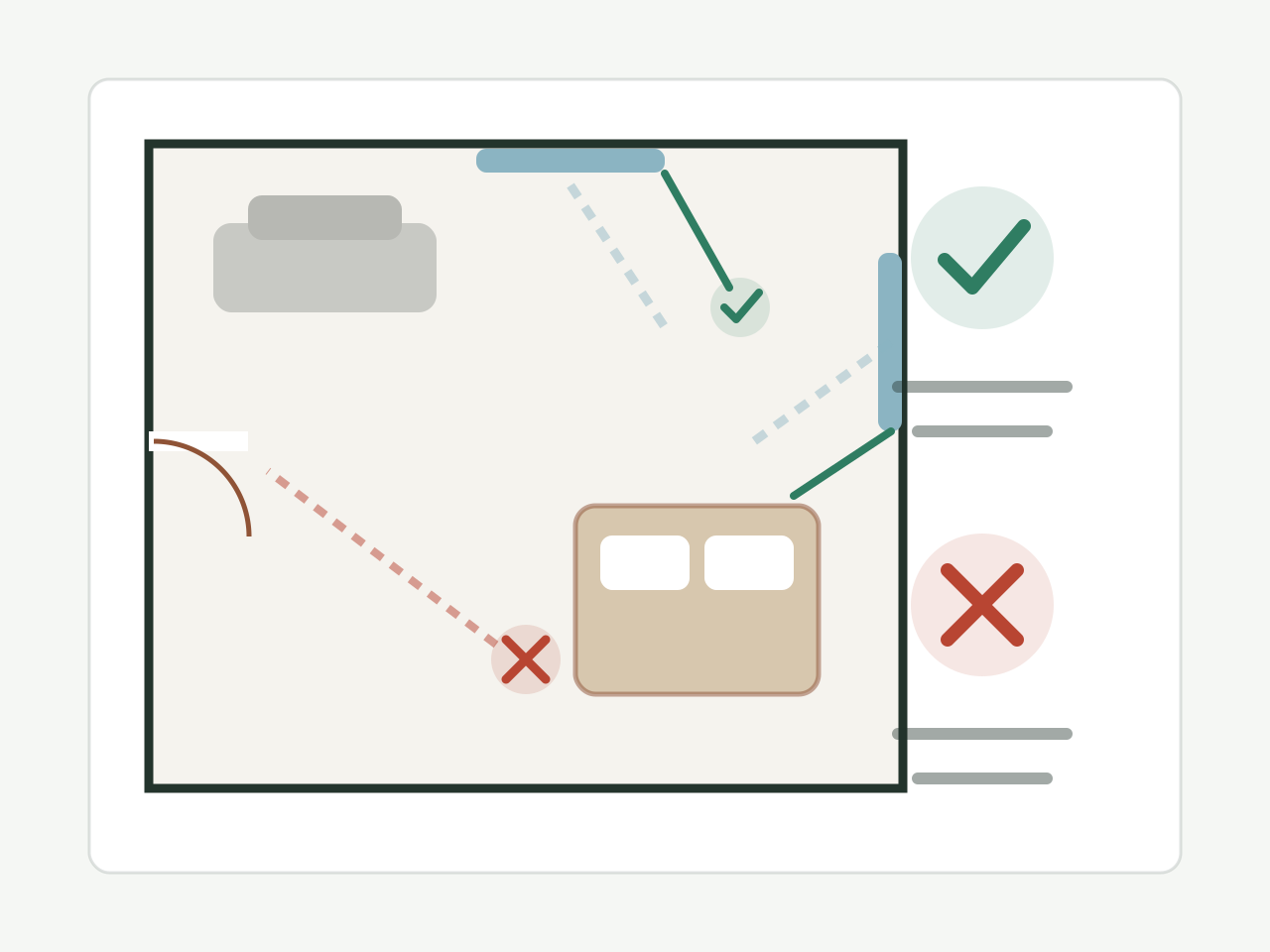
- No mirror facing the bed. A mirror that reflects the bed can be startling when you wake up and see movement, and it can make the room feel less private. If you have one, cover it at night or angle it away from the bed.
- No mirror directly facing the front door. A mirror that catches the door as you enter can startle you. Place mirrors on side walls in the entryway, not directly opposite the door.
- Use mirrors to bring light and space into dark or narrow areas. A mirror opposite a window doubles the natural light in a room. A mirror at the end of a narrow hallway makes it feel wider and less oppressive.
A worked example: the mirror that made the bedroom feel exposed
A bedroom has a large mirrored wardrobe door directly facing the bed. The occupant wakes up multiple times a night, sees movement in the mirror, and has trouble falling back asleep. The feng shui concern is that the mirror disturbs rest, and the practical concern is the same: a mirror reflecting the bed creates a sense of being watched, even if you know it is your own reflection.
The fix: if the wardrobe doors cannot be replaced, hang a curtain or a fabric panel over the mirror at night. During the day, the mirror is functional for dressing. At night, the fabric turns the mirror into a soft wall. The room feels immediately more private, and sleep quality improves. This is not about energy; it is about the psychological effect of seeing movement in a dark room.
Where mirrors are genuinely useful, and where they are not
Mirrors are excellent in some places and counterproductive in others:
| Good mirror placement | Bad mirror placement |
|---|---|
| Opposite a window to double natural light | Facing the bed, especially at the foot of the bed |
| On a side wall in the entryway to check appearance before leaving | Directly facing the front door, which can startle |
| In a dining room to reflect the table and food (a traditional symbol of abundance) | Reflecting the toilet from the bed or a seating area |
| At the end of a dark hallway to expand the space | Reflecting clutter, a messy desk, or an unmade bed |
| In a bathroom, on a side wall, not facing the toilet | Facing another mirror, which creates an infinite-reflection tunnel that can feel disorienting |
Check the reflection at the time you use the room
A mirror can look harmless in daylight and behave differently after dark. Check the reflection from the bed, the doorway, and the main seat at the times those places are used. Note whether a lamp or passing headlight creates glare, whether a moving curtain appears in the reflection, and whether the mirror exposes a private area when a door opens. This is a direct observation, not a rule that every room must follow.
Keep an entryway mirror out of the walking route
In an entryway, a mirror is useful only if people can approach it without blocking the door or colliding with bags and shoes. A side wall usually gives a calmer sightline than the wall directly opposite the entrance. Check that the mirror does not narrow an accessible route, catch a sharp corner at face height, or make visitors feel they are being watched as they enter.
Treat an exterior Bagua mirror as a shared-space decision
An outward-facing mirror can affect neighbours as well as the person who hangs it. Before attaching one, check whether it reflects a window, a public walkway, a road, or another home; consider glare at different times of day, the fixing method, wind exposure, and building or tenancy rules. If the concern is a direct sightline, a curtain, planting or an indoor screen may solve it without sending a reflection across a property line.
Test a reversible change before drilling or replacing furniture
Use removable film, a fabric cover, or a temporary change of angle for several evenings before making a permanent change. Write down what you want to improve—glare, a startling reflection, privacy, or a blocked route—and check that one feature after the trial. If nothing changes, undo the adjustment. If the mirror is cracked, loose, unusually heavy, or mounted above a bed, address the physical safety issue first rather than treating it as a symbolism question.
The practical boundary of mirror placement feng shui
A mirror is a piece of glass that reflects light and images. It does not trap spirits, absorb bad luck, or multiply your wealth. It can make a room feel larger, brighter, and more pleasant, or it can make a room feel exposed, cluttered, and restless. The feng shui tradition gets this right: a mirror doubles what it faces. Use that principle to double the good things in a room, and avoid doubling the things you would rather not see more of.
Disclaimer: This content is for informational and cultural reference purposes only. It does not constitute professional medical, legal, financial, or psychological advice. Readers should exercise their own judgment and consult qualified professionals for specific concerns.
Sources and review basis
Traditional references explain historical vocabulary and context. Official practical sources support only the observable safety, comfort, or environmental points noted in the article; they do not validate metaphysical claims.
Traditional reference
Huangdi Zhaijing (黄帝宅经)Wikisource digital text · Accessed 2026-07-14
Historical context for traditional residential orientation and spatial vocabulary. Modern recommendations are reviewed separately.
Practical source
CCOHS: Lighting ErgonomicsCanadian Centre for Occupational Health and Safety · Accessed 2026-10-14
Summarises lighting levels, glare, and contrast guidance for indoor work, reading, and circulation areas.