Purple crystal is a decorative object, not a healing device
Purple crystal, most commonly amethyst, is marketed in feng shui circles as a stone of spiritual growth, career advancement, and mental clarity. It is associated with the Fire element (because of its colour) and is often placed in the South sector of a home or on a desk to 'activate' intellectual and spiritual energy.
The honest view: an amethyst crystal is a piece of quartz with iron impurities that give it a purple colour. It is a mineral. It does not emit healing energy. Its value is aesthetic and psychological: it is a beautiful object that can make a room feel more intentional. If having a purple crystal on your desk makes you feel calmer and more focused, that is a real effect — but it is coming from you, not from the crystal.
What purple crystal is and what it is not
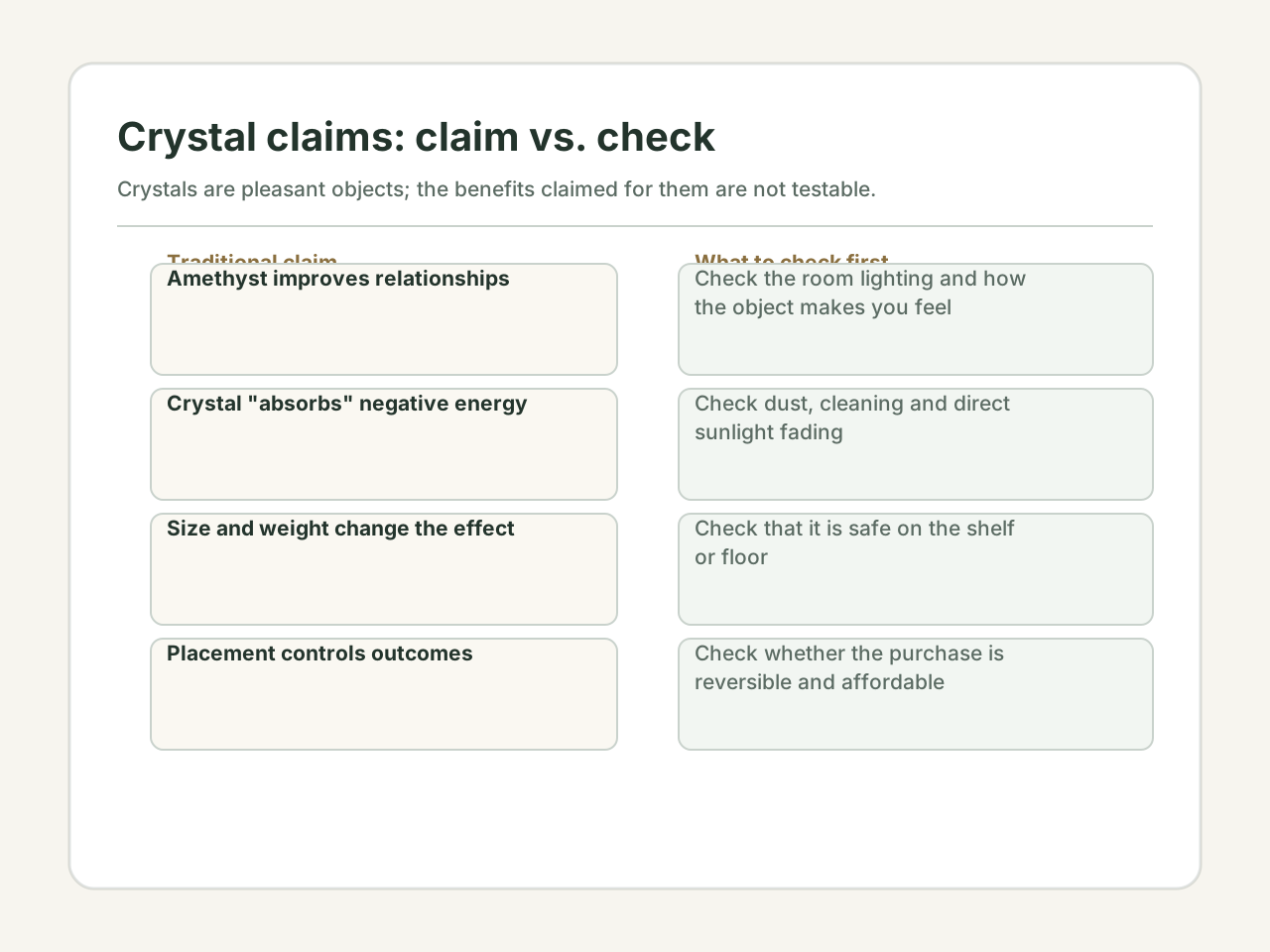
The properties attributed to purple crystals in feng shui are symbolic associations, not scientific facts. Here is the honest distinction:
| Claim | What the tradition says | What it means in practice |
|---|---|---|
| Spiritual growth | Purple crystal opens the crown chakra and enhances spiritual awareness | A beautiful object on your desk may encourage you to take a few minutes for quiet reflection. The reflection is what helps, not the crystal |
| Career advancement | Placing purple crystal in the South sector activates fame and recognition energy | The South sector is associated with the Fire element in feng shui. A purple object in the South is a visual focal point. If it reminds you to work on your career goals, it is useful |
| Mental clarity | Purple crystal clears mental fog and enhances decision-making | A clean, uncluttered desk with a single beautiful object on it is more conducive to clear thinking than a cluttered desk. The clarity comes from the environment, not the crystal |
| Sleep quality | Placing purple crystal under the pillow or on the nightstand improves sleep | There is no evidence for this. A dark, cool, quiet bedroom improves sleep. A crystal on the nightstand is at best neutral and at worst a distraction |
Placement: the three rules that matter
If you have a purple crystal and want to use it in your home, here is how to place it so it actually contributes to your space:
- Place it where you see it and enjoy it. A crystal on a shelf you never look at is wasted. A crystal on your desk, a side table in the living room, or a windowsill where it catches the light is a genuine addition to your space. The aesthetic value is the real value.
- Do not place it where it becomes clutter. A crystal among a pile of other objects on a crowded surface does not add anything — it just adds to the visual noise. One or two well-placed objects are better than a collection of crystals that looks like a shop display.
- Keep it clean. A dusty crystal does not look spiritual — it looks neglected. Rinse it under water occasionally, wipe it dry, and place it back. The act of cleaning it is a small ritual of care, and that ritual is more valuable than any property attributed to the crystal itself.
A worked example: using a crystal in a home office
A man works from home in a small office that doubles as a guest room. His desk faces a wall, and the room feels cluttered — papers, cables, and office supplies cover every surface. A friend gives him a small amethyst cluster and says it will improve his focus and career luck, a claim the stone itself cannot support.
He clears a space on the right side of his desk, removing a stack of old papers and a dead plant. He places the amethyst there, alone, with nothing around it. The purple crystal catches the light from his desk lamp in the evening, creating a small, pleasant focal point.
The effect: the crystal itself does nothing. But the act of clearing space for it forced him to declutter that corner of his desk. The crystal, being a deliberate object he chose to display, makes him less likely to pile papers on that spot again. His desk stays cleaner. A cleaner desk makes it easier to focus. The crystal is not the cause of the improvement — the decluttering is. But the crystal was the catalyst for the decluttering.
This is the honest value of feng shui objects: they are not magical. They are excuses to make your space better. The crystal gives you a reason to clear a surface, and the cleared surface is what improves your experience of the room.
Keeping purple crystal feng shui in proportion
Purple crystals are beautiful minerals. They can make a room feel more intentional, and the act of placing and caring for them can be a small, satisfying ritual. But crystals do not heal, do not attract wealth, do not improve relationships, and do not advance your career. Those outcomes come from your actions, your habits, and your decisions. If you enjoy crystals as decorative objects, enjoy them. If you are buying them because you believe they will solve problems in your life, you are being sold a story. The most feng shui thing you can do with a crystal is to use it as a reason to clean and organise your space.
Disclaimer: This content is for informational and cultural reference purposes only. It does not constitute professional medical, legal, financial, or psychological advice. Readers should exercise their own judgment and consult qualified professionals for specific concerns.
Sources and review basis
Traditional references explain historical vocabulary and context. Official practical sources support only the observable safety, comfort, or environmental points noted in the article; they do not validate metaphysical claims.
Traditional reference
Huangdi Zhaijing (黄帝宅经)Wikisource digital text · Accessed 2026-07-14
Historical context for traditional residential orientation and spatial vocabulary. Modern recommendations are reviewed separately.
Practical source
APA Dictionary: Placebo effectAmerican Psychological Association · Accessed 2026-10-14
Defines the placebo effect, which matters when an object or ritual is credited with a change that expectation alone could explain.